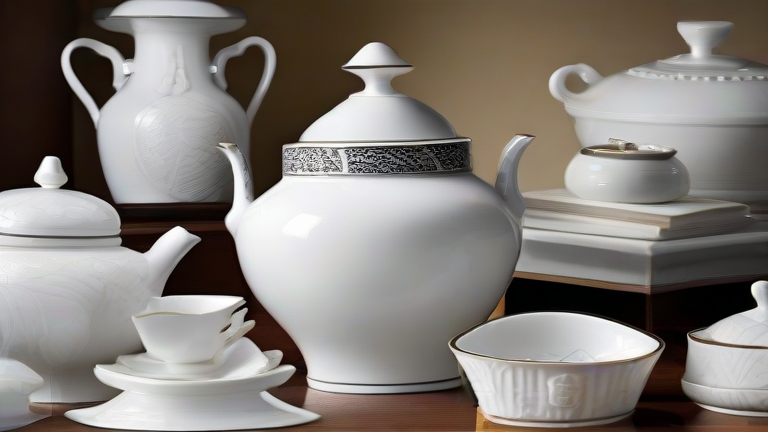
TL;DR: Chinese porcelain, often called “white gold,” is not just ceramic—it’s a 1,000-year saga of imperial power, global trade, and technological secrets. This review unpacks 10 cultural facts that transform any porcelain piece from a decorative object into a living museum of human ambition.
Porcelain History: 10 Cultural Facts Behind China’s White Gold
When you hold a thin-walled porcelain cup, you’re gripping a fragment of world history. Unlike stoneware or earthenware, true porcelain—fired above 1,280°C with kaolin and petuntse—emerged in China during the Eastern Han dynasty (25–220 AD). But the cultural depth goes far beyond chemistry. Here are the ten facts that make porcelain the ultimate cultural artifact.
If you want to dig deeper, check out our guide on Porcelain History & Culture: A Guide to Its Artistic Legacy.
1. The Emperor’s Private Factory. The Jingdezhen kilns in Jiangxi province were the world’s first industrial complex, operating under imperial monopoly from the Song dynasty (960–1279). Every piece was inspected; flawed items were smashed and buried, creating layers of “shard archaeology” that modern collectors now treasure.
2. The Silk Road’s Heavy Cargo. Porcelain traveled the maritime silk routes in ships carrying up to 100,000 pieces. Unlike silk, it survived shipwrecks—which is why 16th-century Portuguese shipwrecks yield intact Ming vases that sell for millions today.
3. The Blue-and-White Secret. Cobalt blue underglaze, imported from Persia, was a Yuan dynasty (1279–1368) innovation. The Chinese didn’t have local cobalt, so they traded silk for pigment—a literal fusion of two civilizations in one glaze.
4. The “Kraak” Craze. Dutch traders named the fragile export porcelain “Kraak” after the Portuguese carracks (ships) that carried it. Its uneven edges and rustic charm became so desired in Europe that Dutch potters at Delft faked Chinese marks—an early form of counterfeiting.
5. The Firing Gamble. Kiln masters believed a failed firing meant the kiln god had rejected the offering. They would throw a virgin or a child into the flames—a myth that persisted until the 18th century, reflecting how sacred the process was.
6. The “Rice Grain” Carving. Thin-walled translucent porcelain with pierced rice-grain patterns (called “linglong”) was invented in the Ming dynasty. These pieces were so fragile that only 1 in 10 survived firing, making them status symbols for the aristocracy.
7. The Tea Trade Link. Porcelain teacups with lids were designed to keep tea warm while allowing the drinker to sniff the aroma. This design directly influenced British “bone china,” which added animal bone ash to mimic Chinese translucency.
8. The “Famille Rose” Diplomacy. In the 18th century, Jesuit missionaries at the Qing court introduced enamel pigments that created soft pink and green overglazes. These “rose” wares became the ultimate diplomatic gift—offered to Russian czars and French kings as proof of Chinese technical superiority.
9. The Shard Economy. In modern China, “kiln-site shards” from failed imperial batches are legally sold. Collectors pay premium prices for a broken piece from a Ming emperor’s kiln because the shard carries the same glaze chemistry as museum masterpieces—at 1/100th the cost.
10. The Cultural Revolution Erasure. During the 1960s, Mao’s regime destroyed countless “feudal” porcelain pieces. Ironically, the surviving pre-1949 wares now carry a “revolutionary survival” premium, making them the most historically dense ceramics on the market.
Comparison: Versus Japanese Arita porcelain, Chinese pieces offer deeper historical continuity and finer clay. Versus European Meissen, Chinese origin
Leave a Reply