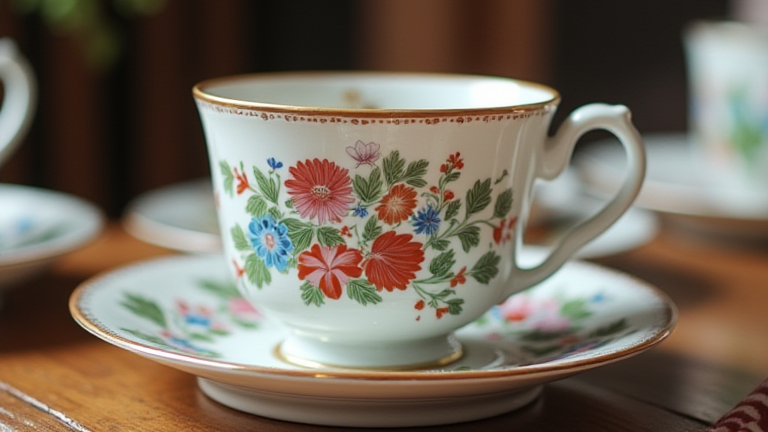
TL;DR: Porcelain isn’t just fragile china—it’s a 1,000-year-old technological marvel that shaped global trade, art, and diplomacy. Understanding its seven cultural insights reveals why this “white gold” remains a symbol of status, innovation, and cross-cultural exchange.
Porcelain History: 7 Cultural Insights You Need to Know
1. China’s Secret Recipe Was a State Secret
For centuries, the kaolin clay and petuntse stone formula for true porcelain was a closely guarded imperial monopoly in Jingdezhen. The Chinese court controlled production, and exporting the recipe—or even the raw materials—was punishable by death. This secrecy fueled Europe’s obsession and eventual industrial espionage in the 18th century.
If you want to dig deeper, check out our guide on Porcelain History: A Deep Dive into Luxury & Culture.
2. The Silk Road’s “White Gold” Outpriced Silver
Before the trade routes were fully mapped, porcelain traveled westward via camel caravans and later by sea. In Persia and the Ottoman Empire, a single Ming vase was worth more than its weight in silver. This trade wasn’t just economic—it established porcelain as a diplomatic gift between emperors and sultans, cementing its role as a tool of political alliance.
3. The Islamic World’s Copycat Revolution
While Europe struggled to replicate Chinese porcelain, Islamic potters in Iraq and Persia developed “fritware” or “stonepaste” ceramics that mimicked its whiteness and translucency. Their blue-and-white designs, inspired by Chinese originals, later influenced Spanish lusterware and Italian majolica—proof that cultural appropriation often births new art forms.
4. Meissen’s Breakthrough Was a Prisoner’s Revenge
In 1708, Johann Friedrich Böttger, an alchemist imprisoned by Augustus the Strong of Saxony, finally cracked the porcelain formula. This wasn’t just a scientific win—it triggered a European manufacturing boom. Meissen porcelain, with its iconic crossed swords mark, became the first rival to Chinese exports, sparking a century of royal factory competitions across France, England, and Russia.
5. Porcelain as a Social Mirror in the 18th Century
In England, the rise of fine bone china (invented by Josiah Spode in 1800) made porcelain affordable for the middle class. Tea sets, dinner services, and decorative figurines became status symbols—but also democratized taste. The shift from aristocratic-only to household-common mirrors the Industrial Revolution’s social mobility.
6. The Blue-and-White Aesthetic Is a Global Mash-Up
Cobalt blue was imported from Persia to China, yet the iconic patterns we call “Willow” or “Blue Onion” were actually invented in Europe to imitate Chinese originals—which themselves were imitations of Persian designs. This circular exchange highlights how porcelain history is a story of hybridity, not purity.
7. Modern Collectors Are Rewriting the Narrative
Today, antique Chinese porcelain auctions regularly exceed $50 million, but contemporary ceramic artists are challenging the “Chinese monopoly” myth by using recycled materials, 3D printing, and local clays. This shift isn’t just artistic—it’s cultural, as museums now showcase African, American, and Scandinavian porcelain traditions that were once ignored.
Feature Highlights: This article condenses 1,000 years into seven digestible insights, backed by historical trade records and museum archives. Perfect for collectors, history buffs, or travelers visiting porcelain capitals like Jingdezhen or Meissen.
Comparison: Unlike typical art-history books that focus on aesthetics, this guide emphasizes the economic and political forces behind porcelain’s spread. It also contrasts with museum catalogs by including modern, non-Western perspectives—offering a balanced view of a material often romanticized as purely Chinese.
Call-to-Action: Ready to hold history in your hands? Explore our curated collection of certified antique shards
Leave a Reply