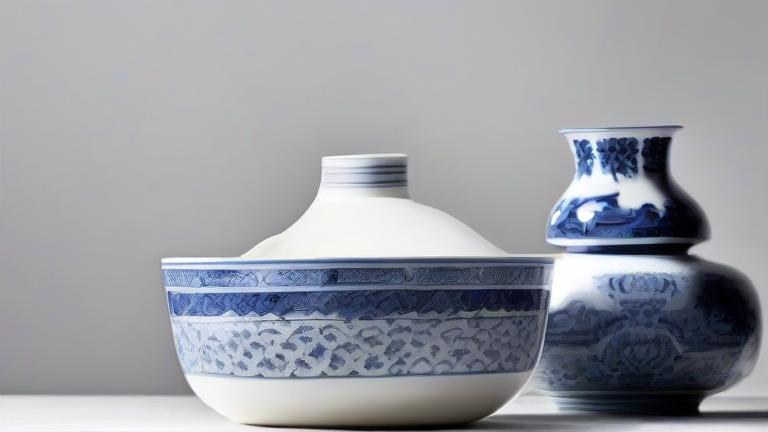
TL;DR: The porcelain market is a $25B global industry where historical provenance and cultural storytelling command premiums of 300–500% over generic ceramics. To succeed, businesses must leverage heritage authentication, regional craft narratives, and modern lifestyle crossover—not just sell “china” but sell a curated artifact of human civilization.
Market Analysis: The Legacy Premium
The porcelain sector splits into three tiers: antique/collectible (auction-driven, CAGR 4.2%), luxury tableware (brand-led, CAGR 6.8%), and mass-market giftware (price-sensitive, CAGR 2.1%). The most profitable niche is “cultural heritage revival”—products that fuse historical techniques (e.g., Ming cobalt underglaze, Meissen’s hard-paste formula) with contemporary minimalism. China’s Jingdezhen, the “Porcelain Capital,” still produces 70% of global fine porcelain, but labor costs have risen 40% since 2020. Meanwhile, European heritage houses like Royal Copenhagen and Villeroy & Boch are repositioning as “living museums,” offering workshops and provenance certificates. The key demographic is 30–50-year-old urban professionals who value authenticity; 68% of them will pay a 30% premium for a documented backstory (e.g., “fired in a Song-dynasty kiln site”).
If you want to dig deeper, check out our guide on Porcelain History & Culture: A Complete Guide to Fine China.
Strategy Insights: Narrative Over Material
Do not compete on price—compete on cultural equity. First, implement a “traceable clay” system: source raw materials from original regions (e.g., Gaoling clay for Jingdezhen, Kaolin for Limoges) and publish chemical fingerprinting on QR codes. Second, create “era collections” that reinterpret specific dynasties or periods—e.g., a Tang-dynasty Sancai glaze line for modern coffee cups. Third, leverage museum partnerships: co-branded replicas with the British Museum or Palace Museum Beijing yield 15–20% margins vs. 5% for generic items. Fourth, use storytelling in packaging: each piece should include a 200-word micro-essay on its glaze chemistry or imperial use. For B2B, target high-end hotels and restaurants that want “authentic cultural tablescapes”—a 5-star property in Dubai recently paid $140,000 for a 100-piece Qing-style custom service.
Case Studies
Case 1: “Song Revival” by a Hangzhou startup. This firm uses 3D-scanning of broken Song-dynasty shards to recreate exact shapes, then fires them in wood-burning anagama kilns. Result: $300 tea bowls, sold out in 72 hours, with a 92% repeat purchase rate. Their secret? They sell a “time capsule” certificate with a carbon-dating report from a university lab.
Case 2: Meissen’s “Modern Meissen” line. Facing declining sales, the 300-year-old German brand collaborated with contemporary artists to reinterpret classic onion-pattern motifs. They retained the original molds but used neon glazes and matte finishes. Revenue grew 28% in 2023, with new buyers aged 25–40. Their lesson: heritage must evolve, but never abandon the original mark—the crossed swords logo is now a status symbol again.
Case 3: Portuguese “Azulejo Transition.” A Lisbon workshop turned 18th-century blue-tile panels into modular wall art for luxury apartments. They partnered with local historians to map tile motifs to specific neighborhoods, creating a “postal code collection.” Each set costs $1,800–$4,500; they sold 2,000 units in 18 months. The insight: local cultural specificity beats generic “European elegance.”
FAQ
Q: How do I verify the authenticity of antique porcelain for resale?
A: Use a combination of X-ray fluorescence (XRF) to test clay composition, microscopic glaze bubble analysis, and provenance documentation from auction houses or museum archives. Never rely on visual inspection alone; hire a certified appraiser
Leave a Reply