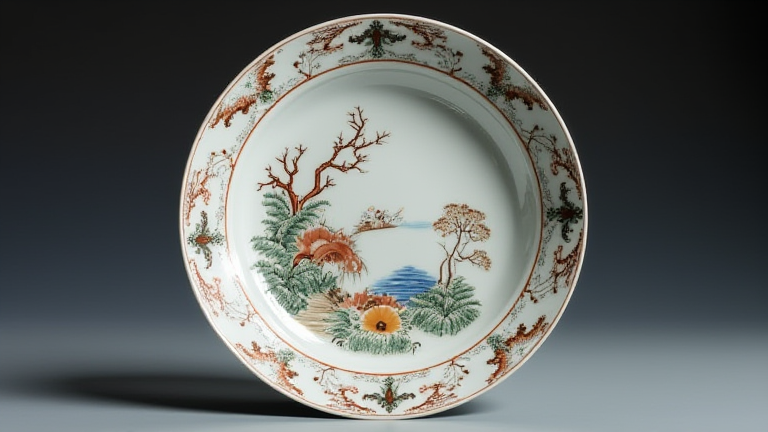
TL;DR: Porcelain is a high-fired ceramic born in China around 2,000 years ago, prized for its whiteness, translucency, and strength. This guide walks you through its dynastic origins, the secret of its recipe, its global trade impact, and how to identify and care for genuine pieces today.
Step 1: Understand the “Recipe” – What Makes Porcelain Different
Porcelain is not just any pottery. It is made from a specific blend of kaolin (white clay) and petuntse (feldspathic rock), fired at temperatures above 1,200°C (2,200°F). This vitrification fuses the materials into a glass-like, non-porous body. Unlike earthenware or stoneware, porcelain rings like a bell when tapped, and light passes through thin edges. To begin your cultural journey, memorize this core fact: porcelain’s magic is high heat + pure white clay.
If you want to dig deeper, check out our guide on Porcelain History: 5 Ancient Secrets & Cultural Trends.
Step 2: Trace Its Origins – Tang to Yuan Dynasties (618–1368)
Start with the Tang dynasty (618–907), where early “proto-porcelain” emerged in northern China. But the real breakthrough came in the Song dynasty (960–1279), with celadon and qingbai (bluish-white) wares. By the Yuan dynasty (1271–1368), the town of Jingdezhen became the porcelain capital, producing the famous blue-and-white pieces using cobalt imported from Persia. For a beginner, visit museum catalogs online or borrow books on Song and Yuan ceramics to see how shapes evolved from simple bowls to intricate vases.
Step 3: Learn the Golden Age – Ming and Qing Dynasties (1368–1912)
The Ming dynasty (1368–1644) perfected underglaze blue decoration, creating iconic patterns like the “dragon and phoenix.” The Qing dynasty (1644–1912) added new colors—famously the “famille rose” (pink enamel) and “famille verte” (green). During this period, porcelain became a diplomatic gift and a luxury export. To absorb culture, study the symbolism: dragons (imperial power), peonies (wealth), and bats (good fortune). Always check the reign mark on the base—Ming marks are often six-character script, while Qing marks may include a palace name.
Step 4: Explore the Global Trade – The Silk Road of Ceramics
Porcelain traveled the Silk Road by land and sea. By the 16th century, Portuguese traders brought it to Europe, where it was called “white gold.” The Dutch East India Company shipped millions of pieces, leading to the creation of Delftware (tin-glazed imitation) and later Meissen in Germany (1708), the first European true hard-paste porcelain. To appreciate culture, compare a Ming original with a Meissen copy—notice the Chinese motifs adapted to European tastes, like chinoiserie scenes of pagodas and willow trees.
Step 5: Identify Authenticity – Key Visual Tests
For beginners, use three tests (with permission from owners). First, look at the foot rim—genuine old porcelain often shows a slightly unglazed, sandy or creamy ring from kiln supports. Second, hold it to light; translucent edges indicate high-fired porcelain. Third, examine the glaze—ancient pieces have subtle crazing (fine cracks) from age, while modern fakes may look too glassy and even. When buying, ask for provenance and a UV light test—some modern replicas fluoresce under UV due to synthetic compounds.
Step 6: Care and Display – Preserving History
Handle porcelain with clean, dry hands; the oils in skin can dull the glaze over time. Wash gently with warm water and mild soap—never in a dishwasher. Use felt pads under bases to avoid scratches. Display in a cabinet away from direct sunlight to prevent fading of enamels. For storage, wrap each piece in acid-free tissue and place in padded boxes. If a piece chips, do not DIY repair
Leave a Reply