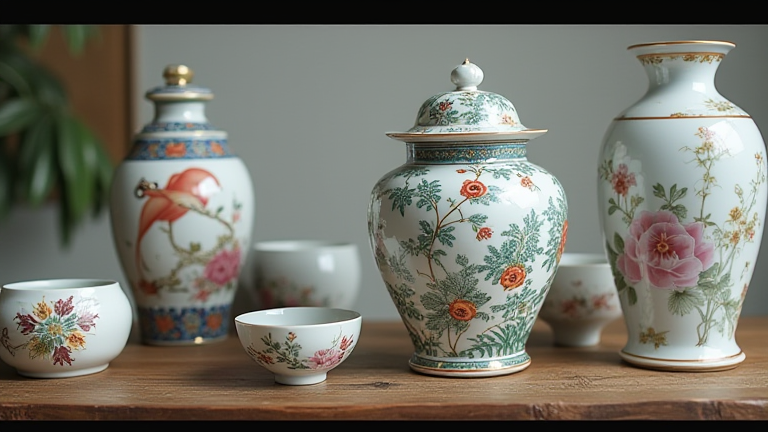
TL;DR: Porcelain history traces from ancient China’s secret manufacturing techniques to its global cultural impact on art, trade, and daily life. Beginners should start by understanding the material’s composition, key historical eras, and how to identify authentic pieces through glaze, weight, and sound.
Understanding the Material
Before diving into history, you must understand what porcelain actually is. Unlike earthenware or stoneware, porcelain is made from kaolin (china clay), petuntse (kaolinitic feldspar), and quartz. This specific mixture allows for high-temperature firing, resulting in a material that is white, translucent, and highly durable. To begin your study, locate a local museum or online archive that features comparative samples of earthenware, stoneware, and porcelain. Observe how light passes through the thin edges of porcelain pieces. This translucency is a primary identifier. Tip: Hold a thin porcelain shard up to a light source. If you can see the shadow of your fingers through it, you are looking at true porcelain rather than bone china or stoneware.
If you want to dig deeper, check out our guide on Porcelain History & Culture: A Complete Guide.
Tracing Historical Origins
Next, explore the origins in China. Porcelain production began during the Han Dynasty but reached perfection during the Tang and Song Dynasties. The most significant era for beginners is the Ming Dynasty, specifically the reign of Emperor Xuande and later Yongle. Focus on the development of blue and white techniques. Research how cobalt pigment was imported from Persia to create the iconic blue designs. Step two is to map the timeline of European attempts to replicate porcelain. Study the efforts of alchemists in Germany and France. The breakthrough came in Meissen, Germany, in the early 18th century. To engage with this history, read primary source letters from German alchemists detailing their failed attempts. Tip: Create a simple timeline chart. Mark the discovery in China, the secret’s export via the Silk Road, and the independent European discoveries. This visual aid helps connect the dots between East and West.
Examining Cultural Impact
Porcelain was not just a material; it was a status symbol and a trade commodity. In the 17th and 18th centuries, known as the “China Trade” era, porcelain was as valuable as gold. Study how this trade influenced global fashion and dining etiquette. For example, the shape of teacups in Europe evolved specifically to accommodate Chinese porcelain. To understand this cultural shift, visit a gallery specializing in 18th-century European art. Look for paintings that feature porcelain vases or tea services. Notice how artists highlighted the material’s whiteness and delicacy. Tip: When viewing these artworks, look for specific marks or signatures. Many European factories, like Sèvres or Wedgwood, developed unique styles to compete with Chinese imports. Identifying these marks helps you distinguish between authentic Chinese porcelain and European imitations.
Collecting and Care Tips
Finally, if you wish to collect, learn proper care. Porcelain is brittle and prone to chipping. Always handle pieces by the base or thick parts, never the rim. Clean only with a soft, dry cloth. Avoid harsh chemicals. To verify authenticity, check the underside for maker’s marks. Compare these marks against a reference book. Tip: Invest in a magnifying glass. It helps you see fine cracks or repairs that are invisible to the naked eye. Start with smaller, affordable pieces to build your confidence. Do not rush. The history of porcelain is vast, and every piece has a story. By understanding the material, the history, and the cultural context, you transform from a casual observer into an informed enthusiast. Your journey begins with curiosity and ends with appreciation.
FAQ
Q: What is the main difference between porcelain and bone china?
A: Bone china includes bone ash in the mixture, making it more translucent and durable, while traditional porcelain relies solely on kaolin and feldspar.
Q: How can I tell if a porcelain piece is antique?
A: Look for maker’s marks,
Leave a Reply