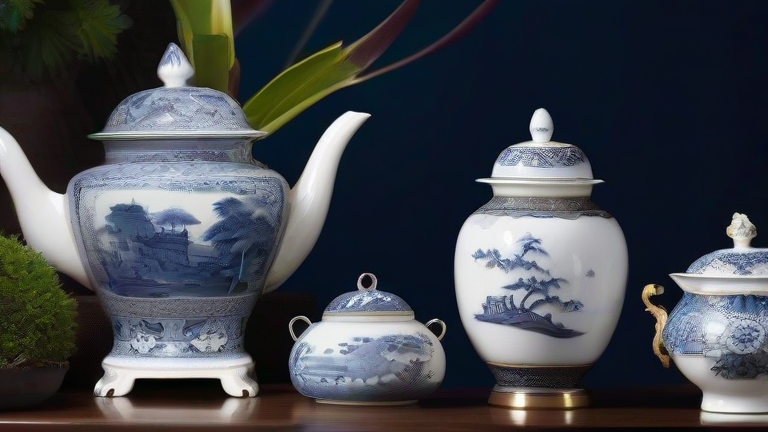
TL;DR: Porcelain, often called “fine china,” is a high-fired ceramic born in China over a thousand years ago, prized for its translucency, strength, and artistic glaze. This guide covers its dynastic origins, regional European reinventions, and how to identify authentic pieces for collecting or daily use.
Feature Highlights: What Makes Porcelain “Fine”?
Unlike earthenware or stoneware, true porcelain fires at 1,200–1,400°C, fusing kaolin and petuntse into a glassy, non-porous body. Key features include translucency (hold a cup to light—fingers should ghost through), ringing clarity when tapped, and resistance to chipping compared to bone china’s softer edge. Culturally, porcelain’s history is a story of imperial monopoly: Tang dynasty (618–907) saw the first white wares, but Song dynasty (960–1279) perfected celadon and cobalt blue. The Ming (1368–1644) exported “blue-and-white” to the Middle East and Europe, where it became a symbol of wealth—so much so that German alchemist Johann Böttger finally cracked the formula in 1708, launching Meissen. Today’s fine china often blends these traditions: Japanese Noritake uses modern kilns but preserves hand-painted rim details, while French Limoges remains bone-dry white and ultra-refined.
If you want to dig deeper, check out our guide on Porcelain History & Culture: A Business Guide.
Comparison: Ancient Craft vs. Modern Convenience
Antique Qing dynasty vases (17th–18th century) offer historical depth—their underglaze cobalt patterns tell trade routes and court aesthetics—but they’re fragile and costly (often $500–$5,000+). Modern brands like Wedgwood or Villeroy & Boch prioritize dishwasher-safe glazes and chip-resistant edges, sacrificing some hand-painted nuance for everyday durability. For collectors, a 19th-century Sèvres plate with gilded friezes is a museum-grade conversation piece; for families, a 12-piece set of Mikasa “Italian Countryside” delivers the same visual warmth at $150. The key comparison: authenticity vs. accessibility. Antiques require care and provenance checks (look for unglazed foot rims and irregular glaze pooling), while contemporary lines offer consistent patterns and lead-free safety—crucial for food use.
Why Culture Matters in Your Choice
Owning porcelain is owning a timeline. The secret of Chinese kaolin was guarded for centuries, and European “white gold” sparked wars of espionage—that history is baked into every plate. When you choose a Japanese Arita-yaki or a British fine bone china, you’re not just buying tableware; you’re preserving a craft lineage that survived dynastic falls, industrial revolutions, and global trade shifts. For cultural immersion, start with a “transitional” piece—a modern teapot that mimics Ming shapes but uses safe, food-grade glazes. Then, add one antique or vintage plate as an heirloom anchor. This blend lets you use history daily while honoring it in display.
Ready to start your collection? Browse our curated selection of certified antique and contemporary fine china—every piece includes a provenance card and care guide. Click here to explore the “Porcelain History & Culture” starter bundle, or book a free virtual appraisal for your inherited china.
FAQ
Q: How can I tell if my porcelain is genuinely antique vs. a modern reproduction?
A: Check the base—antique pieces often show unglazed, slightly gritty foot rims, uneven glaze pooling, and hand-painted brush strokes. Modern reproductions have machine-perfect edges, bright uniform glaze, and often a printed maker’s mark. Also, hold it to light: true antique porcelain shows subtle translucency variations; fakes are too uniformly thin or too opaque.
Q: Is ”
Leave a Reply