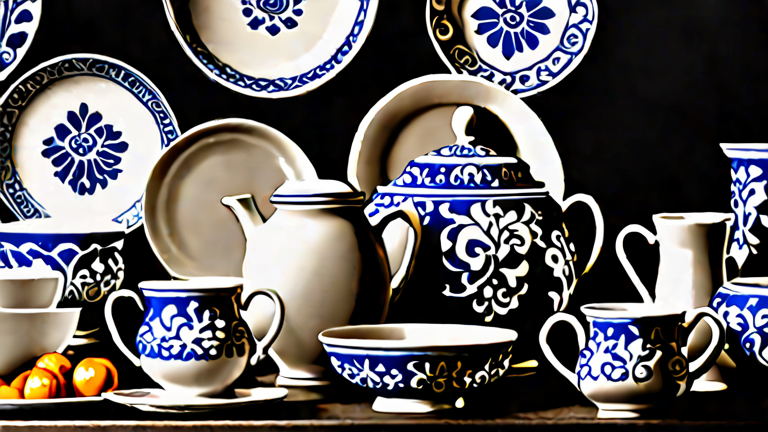
TL;DR: Porcelain is a lifestyle, not just a dishware category—born in China, perfected in Europe, and now a canvas for everyday rituals from tea to tablescapes. This guide traces porcelain history and culture so you can choose, use, and care for pieces that bring meaning to modern living.
From Kiln to Kitchen Table
Porcelain began in China during the Tang dynasty and matured in the Song and Yuan eras, where kaolin clay and high-temperature firing produced translucent, resonant wares. By the 14th century, Jingdezhen’s blue-and-white porcelain traveled the Silk Road and sea routes, becoming a global status symbol. Europe’s obsession peaked in the 18th century when Meissen cracked the formula, followed by Sèvres and Wedgwood—turning porcelain from imperial treasure into a marker of taste.
If you want to dig deeper, check out our guide on Porcelain History & Culture: The Tech Behind the White Gold.
Why It Still Matters in a Modern Lifestyle
Porcelain’s culture is about ritual: the weight of a cup, the ring of a lid, the way a glaze catches morning light. In Japan, kintsugi repairs cracks with gold, celebrating imperfection. In Britain, afternoon tea depends on bone china’s warmth and translucency. In Scandinavia, minimalist porcelain supports hygge and slow mornings. Choosing porcelain is choosing a daily pause.
How to Choose and Use Porcelain
Look for translucency, a clean ring when tapped, and a smooth foot ring. Bone china offers warmth and strength; hard-paste porcelain resists chipping; stoneware is casual but less delicate. For food, porcelain is non-porous and safe for acidic dishes. For travel, seek museum shops and artisan markets for regional patterns. For personal growth, start a capsule collection: one teapot, two cups, a serving platter. Mix eras and cultures—blue-and-white with celadon, gold repair with matte glaze.
Care as a Mindful Practice
Wash by hand with mild soap, avoid thermal shock, and store with felt pads. Display pieces where you’ll see them daily; use them, don’t save them. Porcelain rewards use with patina and memory.
FAQ
Q: Is porcelain safe for daily eating and drinking?
A: Yes, modern food-safe porcelain is non-porous and lead-free when labeled food-safe; avoid antique or decorative pieces with metallic glazes for hot or acidic foods.
Q: What’s the difference between bone china and hard-paste porcelain?
A: Bone china includes bone ash for warmth and translucency, while hard-paste porcelain uses kaolin and petuntse for durability and a cooler, glassier look.
Q: How can I start a porcelain collection without overspending?
A: Begin with one versatile teapot and two cups from a maker you love, then add a platter or bowl each season; prioritize pieces you’ll use weekly over rare display-only items.
Leave a Reply