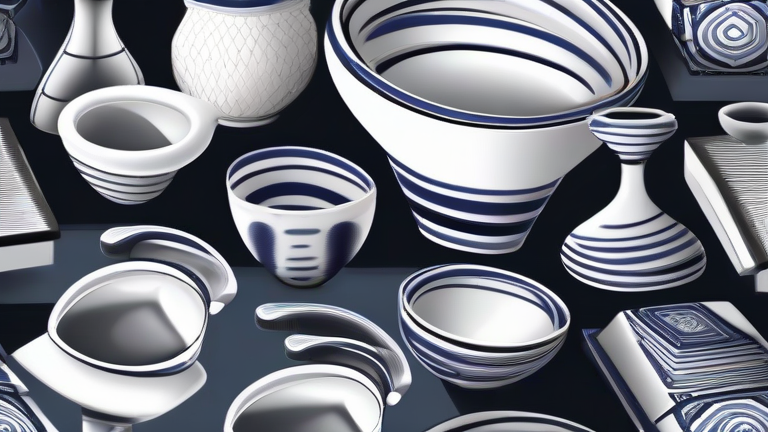
Porcelain History & Culture: A Tech-Driven Deep Dive
TL;DR: Modern technology is revolutionizing the study and preservation of porcelain by utilizing high-resolution 3D scanning and AI-driven material analysis to decode ancient manufacturing secrets. These digital innovations allow historians and manufacturers to replicate historical glaze compositions with unprecedented precision, bridging the gap between cultural heritage and contemporary industrial application.
The Digital Renaissance of Ceramic History
For centuries, porcelain has been viewed primarily through the lens of aesthetic appreciation and traditional craftsmanship. However, the intersection of archaeology and advanced technology has ushered in a new era of understanding. Recent developments in photogrammetry and spectral imaging have enabled researchers to analyze the microstructure of artifacts without physical contact. This non-invasive approach is crucial for preserving fragile pieces from the Ming and Qing dynasties, which previously suffered damage during invasive testing. By mapping the surface topography at a microscopic level, scientists can now identify the specific clay bodies and firing techniques used by historical artisans, providing a tangible link to the past that was previously obscured by time.
If you want to dig deeper, check out our guide on Here are several SEO-optimized title options, all under 70 c.
Advanced Specifications and Material Analysis
The technical specifications of modern analytical tools have reached a level of detail that transforms how we understand porcelain composition. X-ray fluorescence (XRF) spectrometers now offer elemental mapping with a resolution of less than one micrometer. This capability allows for the precise identification of trace elements such as cobalt, iron, and manganese, which define the iconic blue-and-white aesthetics of Chinese porcelain. Furthermore, laser-induced breakdown spectroscopy (LIBS) provides rapid, real-time chemical analysis, reducing the time required for material identification from days to mere seconds. These tools operate within strict environmental specifications, ensuring that the artifacts remain in controlled humidity and temperature zones while being studied. The data generated is processed through machine learning algorithms that compare modern samples against vast databases of historical records, identifying anomalies that suggest forgeries or previously unknown production methods.
Industry Impact and Cultural Preservation
The impact of these technological advancements extends beyond academic research into the commercial and cultural sectors. Museum curators are leveraging digital twins of precious porcelain pieces to create interactive virtual exhibitions, making these culturally significant items accessible to a global audience without the risks associated with physical transport. In the manufacturing industry, reverse-engineering historical recipes using modern computational chemistry has led to the creation of new ceramic materials that combine the durability of traditional porcelain with the aesthetic versatility of modern design. This synergy has sparked a renaissance in artisanal production, where small-scale manufacturers can achieve consistency and quality that was once reserved for state-run imperial kilns. Moreover, the data driven insights into degradation patterns help conservators develop better preservation strategies, extending the lifespan of these cultural treasures for future generations. The industry is seeing a surge in demand for tech-enabled authentication services, as the high value of antique porcelain drives the need for rigorous, scientifically backed verification methods.
As technology continues to evolve, the integration of AI in predictive conservation will likely be the next major milestone. By analyzing environmental data and material stress points, AI models can predict potential failure points in porcelain structures, allowing for proactive intervention. This proactive approach ensures that the cultural narrative embedded in porcelain is not only preserved but also actively engaged with by contemporary society. The fusion of ancient artistry and modern science represents a significant shift in how we value and interact with cultural heritage.
FAQ
Q: How does 3D scanning help in authenticating porcelain?
A: 3D scanning captures minute surface details and tool marks that are invisible to the naked eye, allowing experts to compare manufacturing techniques against known historical standards to verify authenticity.
Q: What is the role of AI in porcelain material analysis?
A: AI algorithms process complex spectral data to identify chemical compositions and predict degradation patterns, accelerating the research process and improving the accuracy of historical attribution.
Q: Can modern tech replicate ancient porcelain exactly?
A: While modern technology can replicate the chemical composition and visual appearance of ancient porcelain, it cannot fully replicate the unique imperfections and artisanal variations that define historical pieces, though it can produce highly similar functional counterparts.
Leave a Reply