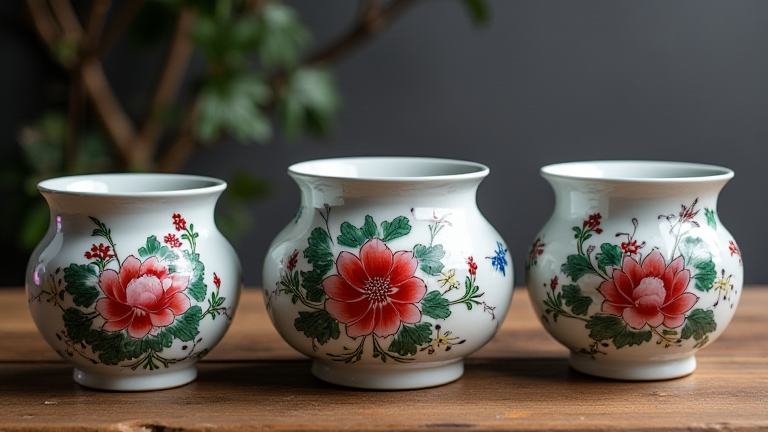
Porcelain History & Culture: A Tech Guide to Ancient Craft
TL;DR: Modern porcelain manufacturing integrates advanced robotics, high-temperature kiln automation, and digital design tools to preserve traditional aesthetics while enhancing production efficiency and consistency. This fusion of ancient art and contemporary engineering creates new market opportunities for high-value, customizable ceramic products.
The Intersection of Heritage and High-Tech
Porcelain, historically a Chinese secret guarded for centuries, is now undergoing a technological renaissance. While the fundamental chemistry of kaolin, feldspar, and quartz remains unchanged, the methods of extraction, processing, and firing have been revolutionized by industrial automation. Today, manufacturers use laser scanning to analyze raw material purity, ensuring that only the finest clay bodies enter the production line. This precision is critical for maintaining the translucency and strength that define premium porcelain. The cultural significance of this craft is preserved not just in museums, but in the digital archives and 3D modeling software used by designers to recreate historical patterns with micron-level accuracy.
If you want to dig deeper, check out our guide on Porcelain History: Unveiling the Art, Culture & Trends.
Latest Developments in Ceramic Manufacturing
The latest developments in the porcelain industry focus on sustainability and smart manufacturing. Traditional wood-fired kilns, while iconic for their unique glaze effects, are increasingly replaced by hybrid electric-gas systems that offer precise temperature control. These modern kilns can maintain temperatures up to 1,450°C with a variance of less than 5°C, a level of stability impossible in historical contexts. Additionally, additive manufacturing, or 3D printing, is being adopted for prototyping complex vase shapes and artistic sculptures. By using binder jetting technology with fine porcelain powders, artisans can produce intricate designs that would take weeks to throw on a wheel. This technology reduces material waste by up to 40% and allows for rapid iteration of designs, bridging the gap between artisanal creativity and industrial scalability.
Technical Specifications and Material Science
Modern porcelain specifications are defined by rigorous ISO standards. High-grade porcelain must exhibit water absorption rates below 0.5%, ensuring durability and hygienic properties suitable for both culinary and decorative uses. Recent advancements in material science have introduced nano-composite porcelains, where nanomaterials are added to the clay body to enhance thermal shock resistance. This makes the material more suitable for high-end tableware that undergoes frequent washing and heating cycles. Furthermore, digital colorimetry is now standard in glazing processes. Instead of relying on visual inspection, which is subjective, sensors measure the exact wavelength of light reflected from the glaze surface. This ensures color consistency across large batches, a significant challenge in traditional hand-glazed production. The integration of IoT sensors in kilns allows for real-time monitoring of oxygen levels and fuel flow, optimizing energy consumption and reducing carbon footprint.
Industry Impact and Market Trends
The impact of these technological shifts on the industry is profound. The market for “tech-enhanced” artisanal porcelain is growing, as consumers seek products that combine the soul of traditional craftsmanship with the reliability of modern engineering. Luxury brands are leveraging blockchain technology to authenticate pieces, providing a digital certificate of origin that traces the item back to specific clay mines and kiln batches. This transparency appeals to collectors and investors, adding a layer of financial value to the artistic object. Moreover, the ability to customize porcelain via digital platforms has opened new revenue streams for mid-sized manufacturers. Customers can upload their own designs, which are then 3D printed and fired, creating a personalized product experience that was previously limited to high-end commissions. This democratization of customization is driving sales in the e-commerce sector, where visual appeal and unique storytelling are key drivers of purchase decisions.
FAQ
Q: How does 3D printing affect traditional porcelain art?
A: It allows for the creation of complex geometries that are difficult to throw manually, while also enabling rapid prototyping and reducing material waste during the design phase.
Q: What is the primary benefit of digital colorimetry in glazing?
A: It ensures precise color consistency across large production batches by measuring light wavelengths objectively, eliminating human
Leave a Reply