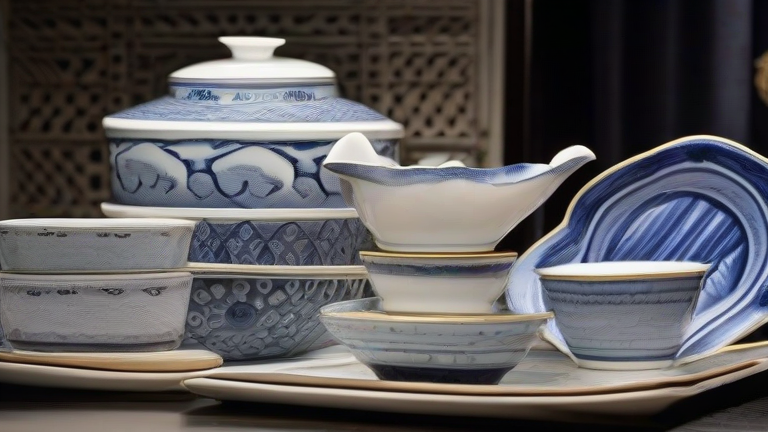
TL;DR: Porcelain’s business story is one of monopoly, disruption, and cultural branding—from Chinese imperial kilns to European counterfeit workshops. Modern brands win by pairing heritage storytelling with data-driven market segmentation, not by competing on raw material alone.
The Imperial Monopoly That Shaped Global Trade
For over 1,000 years, China held a de facto monopoly on true porcelain, a secret guarded by the state at Jingdezhen. This wasn’t just artistry; it was a strategic economic weapon. The Silk Road and maritime routes carried celadon and blue-and-white wares to Persia, Egypt, and Europe, where they were valued above gold. The business insight from this era: scarcity plus cultural mystique creates premium pricing. European aristocrats displayed porcelain in “porcelain cabinets” as status symbols, not for daily use—a lesson in positioning a functional object as a luxury asset.
If you want to dig deeper, check out our guide on Porcelain History: 10 Cultural Secrets Behind China’s White .
Market Analysis: From Collectibles to Lifestyle
The global decorative porcelain market is projected to grow at a CAGR of 4.8% through 2030, driven by Asia-Pacific’s rising middle class and Western demand for artisanal, sustainable home goods. However, the mass-market segment is commoditized—cheap bone china from factories in Thailand or Vietnam sells for under $20. The real margin lies in three niches: (1) museum-grade reproduction collectibles (auction houses like Sotheby’s report record sales for Qing dynasty pieces), (2) contemporary studio porcelain (artists like Edmund de Waal command six-figure prices), and (3) functional luxury tableware (e.g., Japanese Arita-yaki collaborations with Michelin-starred chefs). Strategy insight: do not compete on price. Compete on provenance, certification, and design collaboration.
Strategy Insights: Storytelling as a Supply Chain
Successful porcelain businesses today treat history as a feature, not a footnote. For example, the German brand Meissen survived 300 years by emphasizing its “white gold” heritage—every piece is marked with crossed swords, a counterfeit-proof signature dating to 1720. Their strategy: limit annual production and offer lifetime repair, converting buyers into collectors. Conversely, the Chinese brand Jingdezhen Contemporary uses AI-assisted kiln monitoring to recreate ancient glazes, but sells at 40% lower cost than imports by cutting middlemen via direct-to-consumer e-commerce. The lesson: leverage history for trust, but use modern operations for efficiency.
Case Studies: Two Paths to Profit
Case 1: Wedgwood’s Revival (UK)—After near-bankruptcy in 2009, the brand relaunched with a “heritage capsule” line, partnering with the V&A Museum to reissue 18th-century patterns. They used limited drops and social media storytelling (e.g., “the clay that survived the Boston Tea Party”). Result: 22% revenue growth in two years, with 60% of sales from consumers under 35.
Case 2: Nymphenburg’s B2B Pivot (Germany)—Facing declining tourist sales, the royal manufacturer shifted to corporate gifts for luxury hotels and airlines. They offered custom porcelain amenities (miniature vases, branded plates) with a “royal warrant” seal. This B2B strategy stabilized cash flow, reducing retail dependency by half.
FAQ
Q: Is antique porcelain still a viable investment?
A: Yes, but only for verified, documented pieces from major kilns (Qing, Meissen, Sèvres). The market is illiquid, so treat it as a 10-year hold, not a quick flip.
Q: Can a new brand enter the porcelain market without a long history?
A: Absolutely—focus on regional authenticity (e.g., “local clay, artisan-made”) or modern design patents. History helps, but unique glaze chemistry and digital marketing can build a story faster.
Q: How does sustainability affect porcelain business?<
Leave a Reply