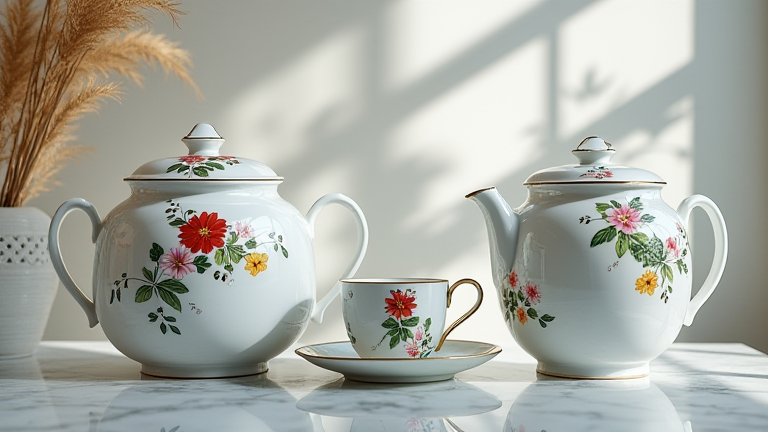
TL;DR: Porcelain, often called “white gold,” is far more than a delicate ceramic—it is a 1,000-year-old cultural artifact that traces China’s imperial power, global trade routes, and artistic innovation. This review explores why porcelain’s history is a story of technology, luxury, and cross-cultural exchange that still shapes modern collectibles and tableware today.
Why Porcelain Became the “White Gold” of Empires
When Arab traders first encountered Chinese porcelain in the 9th century, they were stunned. Unlike earthenware or stoneware, this material was translucent, ringing like a bell, and impervious to water. The secret lay in kaolin clay and petuntse, fired at over 1,300°C—a technique Chinese potters perfected during the Tang dynasty (618–907 AD). By the Song dynasty (960–1279), kilns in Jingdezhen produced pieces so refined that emperors reserved them for court rituals. The name “white gold” emerged not from monetary value but from the fact that porcelain was traded ounce-for-ounce with silver along the Silk Road and maritime routes.
If you want to dig deeper, check out our guide on Porcelain History & Culture: A Beginner’s Guide to Porcelain.
The Ming dynasty (1368–1644) turned porcelain into a political statement. The iconic blue-and-white vases, painted with cobalt imported from Persia, were not just art—they were diplomatic gifts that signaled China’s dominance. When the Ottoman Empire and later European royals received these pieces, they commissioned local imitations, leading to the birth of Delftware in Holland and Meissen in Germany. This cultural cross-pollination is the product’s greatest feature: every piece carries a layered narrative of conquest, theft, and admiration.
Feature Highlights: What Makes Porcelain History Products Unique
Modern porcelain history products—whether reproduction Tang horses or Ming-style tea sets—offer three standout features. First, material authenticity: high-end replicas use actual kaolin and high-fire glazes, preserving the original translucency and resonance. Second, decorative storytelling: patterns like the “dragon and phoenix” or “hundred antiques” are not random; they encode Confucian virtues, imperial ranks, and seasonal luck. Third, provenance documentation: reputable sellers include certificates tracing the design to a specific dynasty and kiln, turning a purchase into a historical lesson.
Compared to generic ceramic dinnerware, which often uses low-fire earthenware with printed decals, porcelain history products demand a higher price—typically $80–$300 for a small vase versus $20 for a mass-market bowl. However, the tactile difference is immediate: a true porcelain piece feels cool, dense, and rings for several seconds when tapped. In contrast, stoneware thuds. For collectors, the value also lies in scarcity—many historical patterns are no longer produced, making each piece a tangible link to a vanished workshop.
Comparisons: Historical Reproductions vs. Contemporary Art Porcelain
While contemporary artists like Zhan Wang push porcelain into conceptual sculptures, historical reproductions offer a different reward: exactness. A Ming-style blue-and-white bowl from a specialist studio (e.g., Jingdezhen’s Ancient Kiln Museum shop) replicates the original cobalt brushstrokes and foot-ring marks, whereas a modern designer piece may sacrifice glaze depth for minimalist aesthetics. If you prioritize cultural education, the reproduction wins. If you prefer innovation, contemporary works are bolder. My recommendation for first-time buyers is to start with a Song-dynasty celadon tea bowl—it is versatile for daily use and instantly recognizable as a historical icon.
Call-to-Action: Own a Piece of the Story
Don’t just read about porcelain—hold its history in your hands. Visit a reputable online dealer like the Victoria and Albert Museum Shop or a certified Jingdezhen exporter, and choose a piece from a dynasty that resonates with you. Begin with a small, affordable item (a tea cup or plate) to learn the tactile difference. Then, as your appreciation grows, invest in a larger vase or a curated set. Every meal becomes a conversation starter,
Leave a Reply