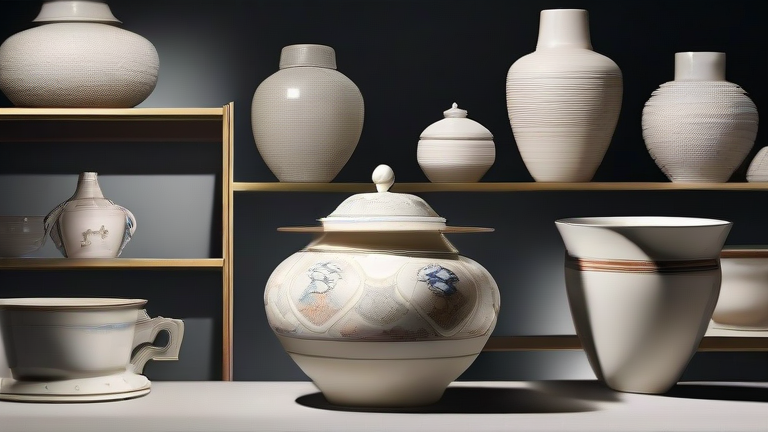
TL;DR: Explore the cultural evolution of porcelain from its secret origins in Tang Dynasty China to its global influence on art, trade, and domestic life. This guide outlines the key historical periods and artisanal techniques that defined porcelain as a symbol of status and aesthetic refinement.
Step 1: Uncover the Tang Dynasty Origins
Begin your journey by studying the early development of porcelain in China during the Tang Dynasty (618–907 AD). Focus on the discovery of high-temperature firing techniques using kaolin clay. Understand how these innovations allowed for the creation of a white, translucent body that was distinct from earlier earthenware. Tip: Research the “White Porcelain” of Xingzhou to see the earliest examples of true porcelain production.
Step 2: Analyze the Song Dynasty Aesthetic
Next, examine the Song Dynasty (960–1279 AD), a period celebrated for minimalist beauty and monochromatic glazes. Study the five great kilns, including Ru, Guan, and Jun, which produced wares with subtle color variations and crackle patterns. This era shifted the cultural focus from utilitarian objects to artistic expression. Tip: Look for images of “celadon” glazes to appreciate the greenish hues that became a hallmark of East Asian ceramic aesthetics.
Step 3: Trace the Global Trade Routes
Investigate how porcelain traveled the Silk Road and maritime routes to Europe during the Ming and Qing Dynasties. Learn about the “Chinoiserie” trend in European art, where painters imitated Chinese motifs on their own ceramics. This section highlights how porcelain became a luxury commodity that influenced global fashion and interior design. Tip: Read about the Dutch East India Company’s role in transporting massive quantities of blue-and-white porcelain to Western markets.
4. Step 4: Decode the European Imitation
Explore the European quest to replicate Chinese porcelain. Focus on the breakthroughs in Meissen, Germany, and Sèvres, France, which developed their own distinct styles while borrowing from Asian traditions. Understand how the discovery of suitable local clay deposits allowed Europe to end its dependence on imports. Tip: Compare the delicate, thin-walled Chinese wares with the heavier, more robust European equivalents to identify stylistic differences.
Step 5: Appreciate Modern Cultural Significance
Conclude by reviewing the current status of porcelain in contemporary culture. Discuss its role in modern design, from high-end tableware to sculptural art installations. Recognize how porcelain remains a symbol of purity, fragility, and enduring beauty. Tip: Visit local museums to see how modern artists reinterpret traditional forms using digital printing and new material science.
FAQ
Q: Why was porcelain such a valuable trade item?
A: Its rarity, fragility during transport, and superior aesthetic qualities made it a luxury symbol for the elite in both Eastern and Western societies.
Q: What is the main difference between porcelain and stoneware?
A: Porcelain is fired at higher temperatures, making it translucent and vitrified, whereas stoneware is opaque and less dense, typically used for utilitarian purposes.
Q: How did porcelain influence European art?
A: It inspired the Chinoiserie movement, where artists and designers incorporated Chinese motifs, landscapes, and figures into paintings, textiles, and interior decor.
Leave a Reply