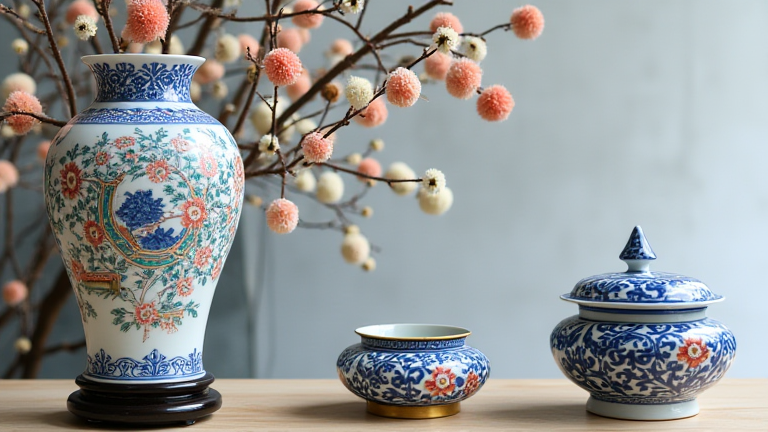
TL;DR: Porcelain is a high-fired ceramic born in China around 600–900 CE, prized for its translucency, hardness, and whiteness. This guide walks you through its dynastic origins, the secret of kaolin clay, the global trade routes that made it a cultural icon, and how to appreciate antique versus modern pieces.
Step 1: Understand the Core Recipe (Kaolin + Petuntse)
Porcelain is not just white clay. It requires two ingredients: kaolin (a pure, white clay) and petuntse (a feldspathic rock). Fired at 1,200–1,400°C, the petuntse vitrifies, fusing with the kaolin into a glass-like, non-porous body. This is why porcelain rings like a bell when tapped. Tip: If you see a chip, check the break—true porcelain is dense and smooth, not chalky like earthenware.
If you want to dig deeper, check out our guide on Porcelain History & Culture: A Business Guide.
Step 2: Trace the Dynastic Timeline
Start with the Tang dynasty (618–907) for the earliest true porcelains, though they were grayish. The Song dynasty (960–1279) perfected the iconic celadon and qingbai glazes. The Ming dynasty (1368–1644) is the golden age—blue-and-white ware using cobalt from Persia, exported worldwide. The Qing dynasty (1644–1912) added famille rose (pink enamels) and famille verte (green). Tip: For beginners, remember this mnemonic: “Tang for gray, Song for green, Ming for blue, Qing for pink.”
Step 3: Learn the Cultural Significance in China
Porcelain was not just tableware. In Chinese culture, it symbolized purity, scholar refinement, and imperial power. The emperor’s kilns at Jingdezhen (the “Porcelain Capital”) produced exclusive pieces for court rituals, while commoners used simpler celadon. Gift-giving porcelain was a diplomatic tool—monarchs sent it to foreign rulers as a display of wealth. Tip: When studying a piece, ask who owned it. A dragon motif means imperial; a lotus flower means Buddhist purity; a fish means abundance.
Step 4: Explore the Global Trade & Cross-Cultural Impact
By the 14th century, porcelain traveled the Silk Road and maritime routes to the Middle East and Europe. The Ottomans and Persians copied Chinese blue-and-white, while Europeans—desperate to unlock the secret—called it “white gold.” In the 18th century, Meissen in Germany finally cracked the formula, then Sèvres in France and Wedgwood in England adapted it. Tip: Look for “chinoiserie” (European art imitating Chinese style) to see how culture blended. For example, Dutch Delftware is actually tin-glazed earthenware, not true porcelain—a common beginner mistake.
Step 5: Identify Antique vs. Modern Pieces
Antiques (pre-1900) show hand-painted irregularities, slightly uneven glaze, and a foot rim that is often unglazed (called “biscuit”). Modern porcelain is machine-perfect, uniformly glazed, and often marked with a factory stamp. Tip: Use a magnifying glass—antique cobalt blues show brush strokes; modern prints show dot-matrix patterns. Also, check the base: genuine Ming pieces have a gritty, sand-like texture from kiln supports.
Step 6: Start a Small Collection on a Budget
Don’t start with rare Ming vases. Buy 19th-century export porcelain (Chinese pieces made for the West) or modern studio porcelain from local potters. Visit museum websites to train your eye—look at the shape, glaze thickness, and decorative motifs. Tip: Always buy from reputable dealers with a guarantee; fake “Ming” vases are rampant in flea markets. For culture, read “The Book of Tea” by Okakura Kakuzō, which explains how Japanese tea masters prized imperfect Korean and Chinese porcelain.
<h
Leave a Reply