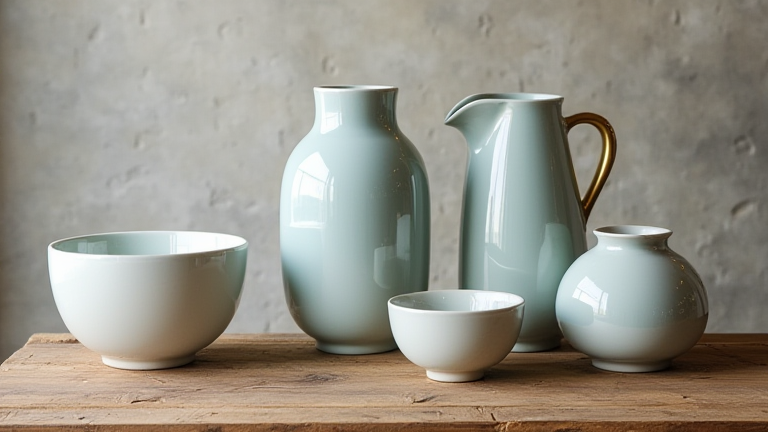
TL;DR: Porcelain isn’t just fragile tableware—it’s a living archive of trade, empire, and personal taste. By tracing its journey from Chinese kilns to European parlors, you can turn daily dining into a mindful act of cultural connection and slow living.
The Kiln That Shaped the World
When you hold a porcelain cup, you’re holding a piece of global history that traveled the Silk Road before airplanes existed. Invented in China during the Eastern Han dynasty (circa 200 AD), porcelain was the first high-tech material—translucent, hard, and waterproof. For centuries, the secret of its recipe (kaolin clay plus feldspar fired at 1,300°C) was guarded like a state treasure. European monarchs called it “white gold,” and alchemists spent decades trying to replicate it. The result? A cultural obsession that drove exploration, sparked smuggling (a Jesuit missionary stole the formula in 1712), and eventually birthed entire cities like Meissen in Germany and Limoges in France. Today, that history lives in your kitchen cabinet.
If you want to dig deeper, check out our guide on Porcelain History & Culture: A Complete Business Guide.
Travel Through Your Tableware
Porcelain is a passport to place. A blue-and-white Ming plate carries the maritime energy of Zheng He’s fleets. A delicate Japanese Imari bowl whispers of Edo-period tea ceremonies and wabi-sabi imperfection. A rustic Portuguese pattern echoes the Age of Discovery, when ships brought Asian aesthetics to Atlantic shores. Instead of buying generic mugs on your next trip, hunt for local porcelain—it’s a souvenir that holds both utility and story. Use your pieces as conversation starters at dinner: ask guests which dynasty they’d want to eat from, or serve tea in a cup that once inspired a royal trade war. This turns a meal into a mini travelogue, no plane ticket required.
Slow Living, Fired Not Faked
Porcelain demands attention. Unlike mass-produced stoneware, fine porcelain is thin, resonant, and slightly translucent—ring it with a fingernail and it sings. That fragility is a teacher. It forces you to slow down, to hold your cup with both hands, to notice the glaze’s crackle or the painter’s brushstroke. In a world of disposable plastics, a porcelain bowl is an act of rebellion. Start small: buy one handmade teacup from a local potter, or inherit a grandma’s dinner set. Use it daily, not just for guests. Hand-washing becomes meditation; a chip becomes a memory. This is personal growth through material culture—learning that durability isn’t about toughness, but about care.
From Collecting to Curating
You don’t need a museum budget to engage with porcelain culture. Visit a local ceramics studio and ask to see the kiln—most potters love explaining the firing process. Read “The Porcelain Thief” by Huan Hsu, a hilarious memoir about digging up family pots in wartime China. Or visit a flea market and buy one mismatched plate; look for the unglazed foot ring on the bottom, a signature of authenticity. The point is not accumulation but curation. Choose pieces that resonate with a memory—a blue bowl that reminds you of a Mediterranean holiday, a white cup that echoes a minimalist Kyoto café. Let your shelf tell your personal migration story, fired in clay and glaze.
FAQ
Q: How can I tell if my porcelain is antique or just old?
A: Look for the “unmarked” rule—most antique porcelain has no manufacturer stamp on the base; instead, it shows a hand-painted signature, a seal, or a rough, unglazed foot ring. Also, hold it to light: genuine antique porcelain is thinner and more translucent than modern reproductions. If you tap it and it dings (not thuds), that’s a good sign.
Q: Is it safe to use antique porcelain for food and drink?
A: Yes, if it’s not cracked or crazed (tiny surface lines). However, pre-1900 pieces may contain lead
Leave a Reply