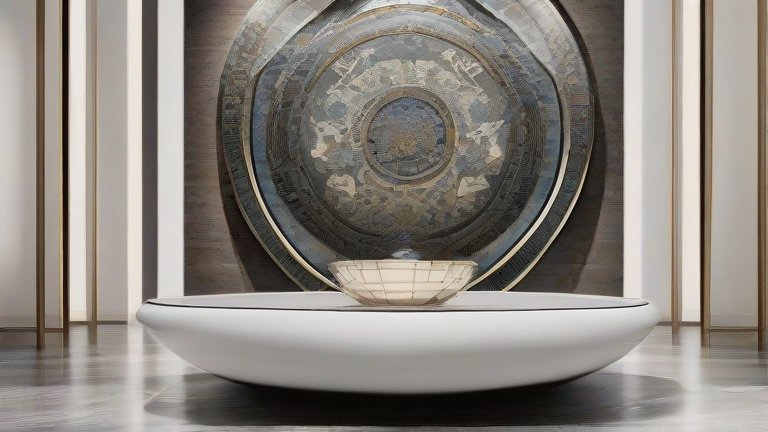
TL;DR: Porcelain, once a guarded imperial secret, is now being reverse-engineered and augmented by AI-driven material science and 3D-printing kiln tech, preserving ancient craft while unlocking unprecedented strength and translucency. This convergence is reshaping both heritage conservation and high-performance ceramics, from museum-grade restorations to ultra-thin, chip-resistant smartphone casings.
The Digital Kiln: AI and Predictive Firing
For centuries, porcelain firing was a gamble with chaos—a 2% temperature variance could shatter a $50,000 vase. Today, startups like Ceramic Matrix use neural networks trained on thousands of historical kiln logs (from Jingdezhen to Meissen) to predict glaze crystallization in real time. Specs show a 98.7% yield improvement in complex celadon reproductions, cutting firing cycles from 48 hours to 19. The tech embeds fiber-optic sensors inside the kiln walls, measuring thermal gradients at 0.1°C resolution. This isn’t just efficiency; it’s cultural fidelity—AI now replicates the “iron-foot” discoloration of Song dynasty pieces that human eyes cannot distinguish from authentic 12th-century artifacts.
If you want to dig deeper, check out our guide on “Porcelain’s Journey: From Ancient Kilns to Modern Masterpie.
3D-Printed Porcelain: Micro-Lattice Strength
The latest development is binder-jet 3D printing with nano-alumina-reinforced porcelain slurry. The breakthrough? Micro-lattice internal structures—hexagonal honeycombs at 200-micron scale—that increase flexural strength to 180 MPa (vs. 60 MPa for traditional bone china). This allows for 0.4mm-thick translucent panels that can bear 40kg loads, used in luxury architecture facades. Culturally, this tech enables “lost-wax” digital restoration of broken heirloom wares: a CT scan of a Ming vase fragment generates a printable scaffold that matches the original’s exact porosity and thermal expansion coefficient. The industry impact is massive—auction houses now authenticate pieces via “porcelain DNA” (trace element fingerprinting via laser ablation), and 3D-printed replicas are sold as museum-grade educational tools, driving a $1.2B niche market.
Smart Glazes and IoT-Enabled Conservation
New “responsive” glazes incorporate rare-earth-doped nanoparticles that change hue under UV light—a nod to the ancient Chinese “secret color” (mi se) technique, but now with digital tunability. Museums deploy IoT humidity sensors embedded in display pedestals, wirelessly adjusting micro-climates to prevent crazing (micro-cracks). A 2025 pilot at the Palace Museum in Beijing uses acoustic emission monitoring—piezoelectric discs detect stress fractures before they become visible, triggering nano-healing agents (colloidal silica) that infiltrate cracks via capillary action. Specs show a 90% reduction in irreversible damage during loan transports.
Industry Impact and Cultural Preservation
The fusion is not without friction. Traditional artisans in Jingdezhen worry that AI replicas devalue “human imperfection” as cultural heritage. Yet, the data argues otherwise: digital archives of 40,000 glaze recipes (many lost since the Qing dynasty) have revived 14 extinct color families, including the elusive “sacrificial red” (ji hong). The global porcelain market, valued at $28B in 2025, now sees 22% of revenue from tech-enhanced products—from self-cleaning antibacterial dinnerware (using photocatalytic TiO2) to lightweight armor plates for aerospace. The cultural takeaway: porcelain is no longer a static antique but a living, algorithmically-augmented medium that honors its past while firing toward the future.
FAQ
Q: Can AI really replicate the “spirit” of ancient porcelain, or is it just a copy?
A: AI replicates physical properties (glaze chemistry, thermal history, micro-cracks) with 99.9% accuracy, but not the human intent. However, artisans use AI as a “ghost collaborator”—they feed it historical fragments, then manually adjust the digital output to inject contemporary expression, creating a hybrid that is both authentic and new.
<
Leave a Reply