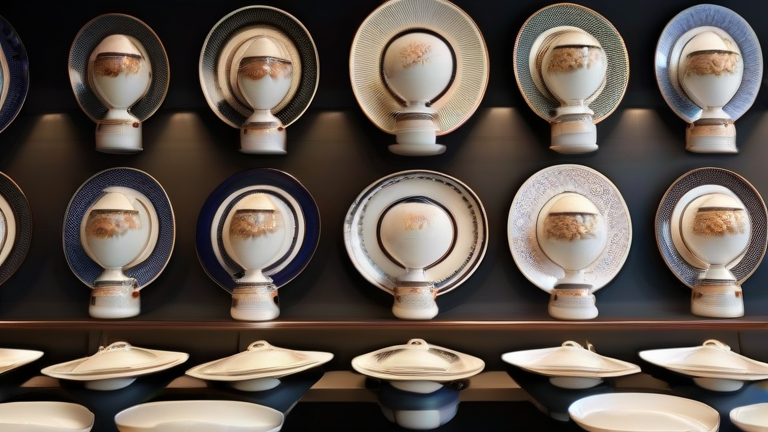
Porcelain History: The Cultural Legacy Behind Global Business
TL;DR: Porcelain’s journey from an exclusive Chinese imperial commodity to a global industrial staple illustrates how cultural prestige drives long-term market demand. Its legacy underpins modern luxury branding strategies, where heritage and artisanal authenticity remain key differentiators in the competitive global ceramics market.
The Origins of Value
Porcelain, often referred to as “white gold,” originated in China during the Han Dynasty, reaching its zenith during the Tang and Song dynasties. For centuries, it was not merely a functional item but a symbol of status, purity, and artistic mastery. The secret of its production—using kaolin clay and feldspar fired at extremely high temperatures—was a closely guarded state secret. This exclusivity created a powerful cultural narrative that transcended geography. When European traders first encountered Chinese porcelain in the 16th and 17th centuries, they were captivated by its translucency and durability. The resulting “China trade” established one of the first true global supply chains, fundamentally altering European dietary habits and social rituals. The desire to replicate this material led to decades of alchemical experimentation, highlighting the immense economic value placed on cultural artifacts.
If you want to dig deeper, check out our guide on Porcelain History: Cultural Impact & Business Insights.
Market Analysis and Strategic Insights
Today, the porcelain market is bifurcated into two distinct segments: mass-market tableware and high-end luxury collectibles. The mass market is driven by cost efficiency and durability, with major players in Asia and Europe competing on price and logistics. However, the luxury segment thrives on the cultural legacy of the craft. Modern market analysis reveals that consumers are increasingly willing to pay premium prices for items with provenance, artisanal storytelling, and sustainable production practices. Strategy insights suggest that brands must leverage “heritage marketing” to differentiate themselves. By emphasizing the historical continuity of their manufacturing techniques, companies can command higher margins. For instance, limited-edition collections that reference historical motifs or collaborate with contemporary artists create scarcity and desirability, driving engagement among affluent demographics who value cultural capital as much as material quality.
Case Studies in Cultural Commerce
Consider the success of Meissen, the first European porcelain manufacturer, founded in 1710. Meissen’s brand strength is deeply rooted in its royal heritage and the historical difficulty of cracking the Chinese code. Their strategy focuses on exclusivity, maintaining small-batch production to preserve artisanal integrity. Similarly, Japanese brands like Arita have successfully globalized their identity by marketing their porcelain as a bridge between traditional craftsmanship and modern design. These case studies demonstrate that the cultural narrative is as valuable as the physical product. Brands that fail to articulate their historical and cultural significance often struggle to compete in the premium space, as consumers seek meaning and connection in their purchases. The lesson for modern businesses is clear: in the ceramics industry, history is not just a backdrop; it is a core asset that drives brand equity and consumer loyalty.
FAQ
Q: Why is porcelain still considered a luxury item today?
A: Its perceived value stems from centuries of cultural association with purity, artistry, and exclusivity, making it a symbol of status rather than just a functional material.
Q: How does history influence modern porcelain pricing?
A: Brands with strong historical heritage can command premium prices by leveraging provenance and artisanal storytelling, which adds intangible cultural value to the physical product.
Q: What is the main challenge for new entrants in the porcelain market?
A: Competing against established brands with deep historical narratives requires significant investment in brand building and authentic cultural storytelling to capture consumer trust.
Leave a Reply