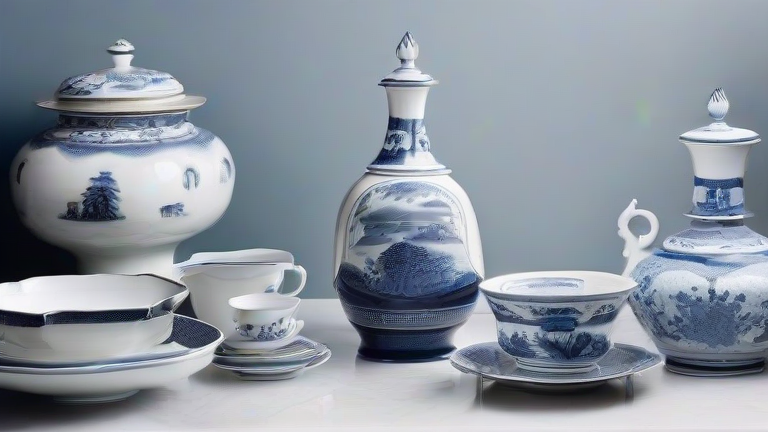
TL;DR: Fine china transformed luxury from a royal privilege into a global cultural currency, embedding itself in dining rituals, trade routes, and personal identity. Its journey from Chinese kilns to European cabinets shows how a fragile material became a durable symbol of status, taste, and connection.
The Alchemy of Empire: From Secret Recipe to Global Obsession
Long before silk or spices, porcelain was the original “white gold.” In the 7th century, Chinese artisans at Jingdezhen perfected a recipe of kaolin and petuntse, fired at 1,300°C to create a translucent, ringing material that Europeans could not replicate. For centuries, the West paid in silver for these delicate wares, which adorned royal tables from Istanbul to Versailles. The Portuguese called it “porcellana” after the cowrie shell’s smooth surface, while the Dutch East India Company shipped millions of pieces—each one a tiny ambassador of Chinese aesthetic philosophy. To own a single blue-and-white plate in 1600s Amsterdam was to signal that you had traveled the world without leaving your dining room.
If you want to dig deeper, check out our guide on Here are a few options, all under 70 characters:
1. **The H.
Dining as Theater: The Ritual of the Table
Porcelain did more than hold food—it choreographed social life. In 18th-century France, the invention of the service à la française (multiple dishes served at once) demanded dozens of matching plates, tureens, and sauceboats. Meissen in Germany cracked the Chinese code in 1708, but it was Sèvres in France that turned dinner into a performance: hand-painted floral borders, gilded rims, and custom scenes of pastoral romance. The meal became a narrative arc—soup course on a shallow bowl, fish on an oval platter, dessert on a scalloped dish—each piece a stage direction. Today, inheriting a grandmother’s bone china is less about utility and more about inheriting her script for hosting, for gathering, for making strangers feel like family.
Cultural Migration: From Palace to Pop
The 19th century democratized porcelain through industrial transfer printing, yet the mystique persisted. Victorian middle-class homes displayed a “parlor china” cabinet, rarely used, as a shrine to upward mobility. Meanwhile, Japanese Imari and English Wedgwood jasperware blended into eclectic global styles, proving that porcelain is a cultural sponge: it absorbs local motifs (Chinese dragons, Dutch tulips, French rococo) while remaining instantly recognizable. In modern lifestyle, a single handmade teacup from a Kyoto studio or a rustic Italian ceramica bowl carries the same weight—not as antiques, but as tactile links to slower, more intentional living. The slow-living movement has revived the ritual of afternoon tea, not for caffeine, but for the pause it forces: the warm weight of a cup, the clink of spoon on porcelain, the conversation that follows.
Personal Growth Through Fragility
There is a quiet philosophy in porcelain’s fragility. Unlike steel or glass, it demands care—and that care transfers to the self. Handling a 200-year-old plate teaches patience, mindfulness, and acceptance of imperfection (kintsugi, the Japanese art of gold-repairing cracks, celebrates breaks as history). Collectors often speak of “using the good china” as a metaphor for not saving joy for a special occasion. The real luxury isn’t the object’s price; it’s the permission it gives you to treat every Tuesday dinner as a ceremony. Traveling to a porcelain capital—Jingdezhen, Delft, Limoges—offers a masterclass in provenance: you see the clay, the hands, the fire, and suddenly your own morning coffee feels connected to a thousand-year chain of human artistry.
FAQ
Q: Why did Europeans call porcelain “fine china” if it was also made in Europe?
A: The name stuck from the 17th-century trade era when all high-quality porcelain came from China. Even after Meissen and Sèvres produced local wares, “china” became a generic term for any translucent,
Leave a Reply