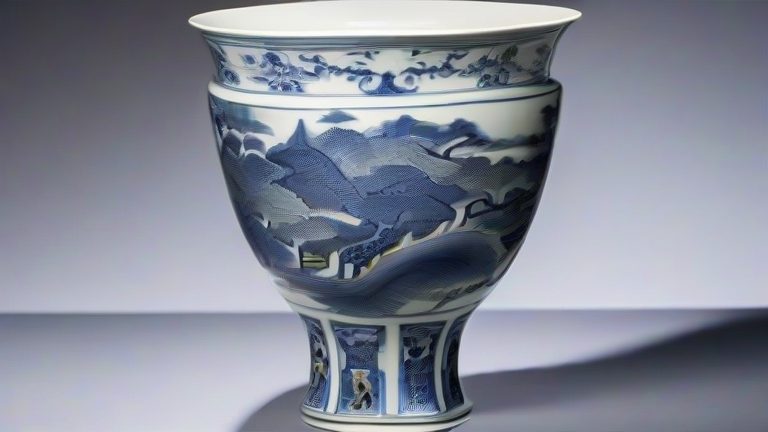
TL;DR: Modern technology has revolutionized China’s porcelain industry by integrating AI-driven design, 3D printing for prototyping, and advanced glazing chemistry, significantly enhancing both artistic precision and production efficiency. These innovations have transformed traditional ceramics into high-value tech-culture products, revitalizing global market interest and preserving intricate historical techniques through digital archiving.
The Digital Renaissance of Porcelain
The intersection of ancient craftsmanship and cutting-edge technology is reshaping the landscape of Chinese porcelain. Historically, the creation of fine ceramics relied entirely on manual skill and empirical knowledge passed down through generations. Today, however, the industry is leveraging sophisticated digital tools to bridge the gap between traditional aesthetics and modern scalability. This shift is not merely about automation; it is about augmenting human creativity with data-driven insights, ensuring that the cultural integrity of porcelain remains intact while meeting contemporary demands for customization and consistency.
If you want to dig deeper, check out our guide on The Enduring Allure of Porcelain: A Journey Through History.
Latest Developments and Technical Specifications
Recent advancements in additive manufacturing have allowed artisans to produce complex, organic shapes that were previously impossible to mold by hand. High-resolution 3D printers now use specialized ceramic pastes with particle sizes as small as 20 microns, enabling intricate lattice structures and delicate floral patterns. Furthermore, AI algorithms analyze vast datasets of historical kiln temperatures and firing times to optimize energy consumption and reduce defect rates. Modern electric kilns equipped with IoT sensors can maintain temperature variations within a narrow range of ±2°C, crucial for achieving the signature “ice-blue” glazes of Jingdezhen. These precise controls ensure that the vitrification process occurs uniformly, resulting in superior translucency and durability. The integration of digital color matching systems allows for exact replication of historical glaze recipes, preserving the authentic hues that define different dynastic periods. This technological precision ensures that every piece meets rigorous quality standards, appealing to both collectors and industrial clients who require consistent material properties.
Industry Impact and Cultural Preservation
The economic impact of these technologies is profound, expanding the market for porcelain beyond traditional decorative items into high-end consumer electronics and medical applications. Porcelain’s biocompatibility, enhanced by precise manufacturing controls, has opened avenues for dental implants and microfluidic chips. Culturally, digital archiving projects are using photogrammetry to create 3D models of antique porcelain, allowing museums to share high-fidelity replicas with the public while preserving fragile originals. This democratization of access fosters a deeper global appreciation for China’s artistic heritage. The industry is also seeing a resurgence in “smart” ceramics, where embedded sensors allow porcelain objects to interact with digital environments, blending physical art with virtual experiences. As these technologies mature, they promise to sustain the longevity of porcelain as a vital cultural symbol while driving innovation in materials science and artistic expression, ensuring that this ancient art form remains relevant in a rapidly evolving digital world.
FAQ
Q: How does AI improve porcelain design?
A: AI analyzes historical patterns to generate new, culturally resonant designs, optimizing symmetry and complexity that may be difficult for humans to conceive manually.
Q: What are the key specs of modern ceramic 3D printing?
A: Key specifications include particle sizes under 30 microns, layer thicknesses of 100-200 microns, and the ability to handle high-temperature sintering processes without warping.
Q: Does technology replace traditional artisans?
A: No, technology serves as a tool to augment artisan skill, handling repetitive tasks and precise measurements, while humans focus on artistic interpretation and final detailing.
Leave a Reply