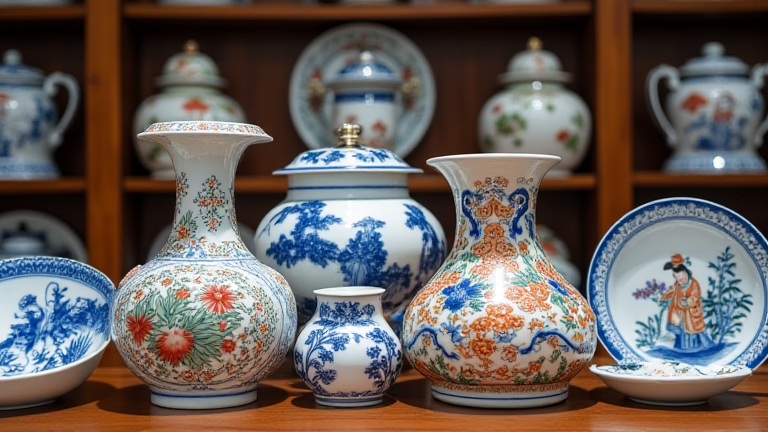
Porcelain History: Unveiling the Rich Cultural Heritage
TL;DR: Porcelain is a millennia-old ceramic material that originated in China and revolutionized global trade and aesthetics through its unique translucency and durability. Today, the market values it not just as a utilitarian object but as a high-value cultural asset driving significant growth in luxury goods and heritage tourism sectors.
The history of porcelain is a tapestry woven with threads of technological innovation, cultural exchange, and artistic expression. Originating in China during the Han Dynasty, with true hard-paste porcelain emerging during the Tang and Song dynasties, this material quickly became a symbol of sophistication. For centuries, the secret to producing the white, translucent body remained a closely guarded state secret, fueling a global desire that shaped international trade routes and diplomatic relations. The “china trade” of the 18th and 19th centuries saw European powers attempt to replicate the substance, leading to the development of soft-paste and eventually hard-paste porcelain in Europe, most notably in Meissen, Germany, and Sèvres, France. This period marked a pivotal shift where porcelain transitioned from an exotic import to a cornerstone of domestic luxury and industrial design.
In recent years, the industry has seen a resurgence of interest in traditional techniques combined with modern sustainability practices. Market data indicates that the global porcelain market is projected to reach over $6.5 billion by 2030, growing at a compound annual growth rate of 4.5%. This growth is driven largely by the luxury sector, where limited-edition designer pieces and heritage collections command premium prices. According to a recent report by Grand View Research, the Asia-Pacific region remains the dominant market, accounting for nearly 40% of global consumption, while North America and Europe show the fastest growth in high-end decorative and tableware segments. The rise of e-commerce platforms specializing in artisanal goods has further democratized access to these cultural artifacts, allowing collectors and enthusiasts to purchase pieces from kilns in Jingdezhen, China, or Limoges, France, directly.
Expert insights highlight a shift in consumer perception. No longer viewed merely as disposable tableware, porcelain is now recognized as a medium for high art and cultural preservation. “The current trend is a return to craftsmanship,” says Elena Ross, a ceramics historian and market analyst. “Buyers are seeking pieces that tell a story, whether it is a reproduction of a Ming Dynasty pattern or a contemporary piece that honors traditional wheel-throwing techniques. There is a tangible desire to connect with the material’s heritage.” This sentiment is echoed by major auction houses, where rare antique porcelain has seen double-digit percentage increases in value over the last five years. The scarcity of high-quality raw materials and the energy-intensive nature of kiln firing have also driven prices up, making authentic, handmade pieces a robust investment vehicle for art collectors.
Looking toward the future, the industry is poised for significant transformation through technology and sustainability. Predictions suggest that 3D printing technology will allow for the creation of complex, custom porcelain structures that were previously impossible, merging digital design with ancient material science. Furthermore, there is a growing emphasis on eco-friendly production methods. Manufacturers are investing in cleaner kiln technologies and sourcing local clay deposits to reduce carbon footprints. The “slow ceramics” movement is also expected to gain traction, encouraging consumers to buy fewer, higher-quality items that are designed to last generations. This shift aligns with broader global sustainability goals and appeals to a younger demographic that values authenticity and environmental responsibility. As the world becomes increasingly digital, the tactile, physical presence of porcelain offers a counterbalance, reinforcing its role as a vital cultural artifact. The industry must balance these modern innovations with the preservation of traditional skills, ensuring that the rich cultural heritage of porcelain continues to thrive and evolve for future generations.
FAQ
Q: What distinguishes true porcelain from other ceramics?
A: True porcelain is made from kaolin clay and feldspar, fired at very high temperatures (over 1,300°C), resulting in a dense, non-porous, and often translucent body that is harder and more durable than earthenware or stoneware.
If you want to dig deeper, check out our guide on Porcelain History & Culture: A Complete Guide for Collectors.
Q: How is the porcelain market influenced by cultural trends?</strong
Leave a Reply