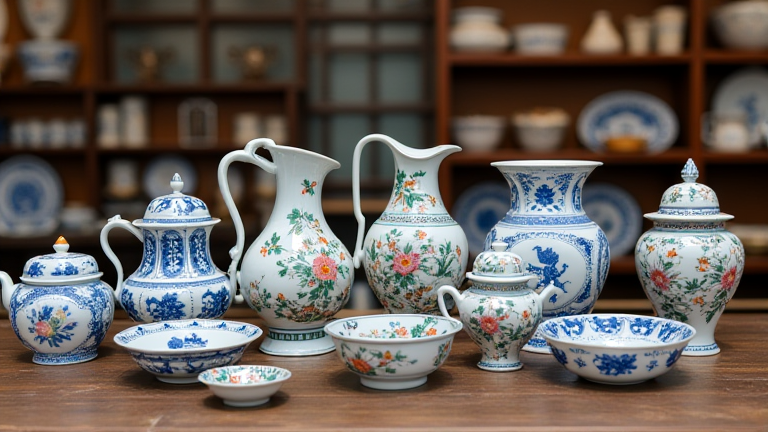
TL;DR: Porcelain is not merely a decorative object but a tangible record of human ingenuity, evolving from secret Chinese alchemy to global cultural exchange. Its history reflects shifting aesthetic values, trade dynamics, and the profound interplay between art and daily life across centuries.
The Alchemy of Earth and Fire
The story of porcelain begins in the kilns of ancient China, where craftsmen discovered that kaolin clay, fired at extreme temperatures, could produce a material that was both incredibly strong and beautifully translucent. Unlike earthenware, which is porous and fragile, true porcelain is vitrified, creating a non-porous surface that resonates with a distinct, musical clarity. This discovery was so valuable that it remained a closely guarded state secret for centuries, making Chinese porcelain a symbol of imperial power and sophistication. The material itself demanded precision; the clay had to be pure, the glaze perfectly formulated, and the firing temperature exact. Any deviation resulted in failure, making each successful piece a testament to the artisan’s mastery over natural elements. As these objects traveled along the Silk Road, they captivated audiences in Persia, the Middle East, and eventually Europe, where they were initially mistaken for a type of superior stone or marble. The mystery surrounding their creation fueled decades of European experimentation, driving innovations in chemistry and ceramics that would eventually reshape the global artistic landscape.
If you want to dig deeper, check out our guide on Porcelain History: Unveiling the Culture Behind the White Go.
Cultural Exchange and Domestic Revolution
As porcelain spread, it transformed domestic rituals and cultural perceptions worldwide. In Europe, the arrival of Chinese export porcelain inspired local potters to develop their own distinct styles, such as the blue and white patterns of Delft in the Netherlands or the elaborate tableware of Meissen in Germany. These imitations were not just copies; they were reinterpretations that reflected local tastes and available resources. The mass production of porcelain in the eighteenth century democratized elegance, allowing the middle class to possess fine tableware that was previously the exclusive domain of the aristocracy. Today, the legacy of porcelain extends beyond the dinner table. It influences contemporary design, fashion, and even digital aesthetics, where its smooth, reflective qualities are emulated in modern technology. Collecting porcelain is no longer just about accumulating valuable antiques; it is about engaging with a continuous narrative of cross-cultural dialogue. Each piece holds a story of trade, adaptation, and artistic evolution, reminding us that material culture is a living archive. By exploring the history of porcelain, we gain insight into how societies have valued beauty, utility, and innovation throughout time. It invites us to slow down and appreciate the craftsmanship behind everyday objects, fostering a deeper connection to the tangible world around us.
FAQ
Q: What makes porcelain different from other types of ceramics?
A: Porcelain is made from kaolin clay and fired at very high temperatures, resulting in a non-porous, vitrified body that is stronger and more translucent than earthenware or stoneware.
Q: Where did the first true porcelain originate?
A: The first true porcelain originated in China, specifically during the Tang Dynasty, though it reached its peak of refinement and global influence during the Ming Dynasty.
Q: How has porcelain influenced modern lifestyle design?
A: Modern design often borrows porcelain’s clean lines and reflective qualities, influencing everything from minimalist home décor to the matte finishes seen in contemporary technology products.
Leave a Reply