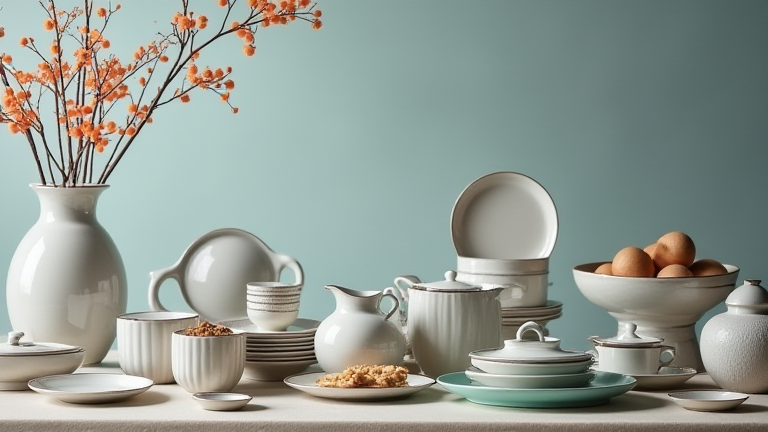
TL;DR: The global porcelain market is experiencing significant growth driven by a fusion of historical appreciation and modern minimalist design. Businesses can capitalize on this by positioning products as cultural artifacts that blend artisanal heritage with contemporary aesthetics, rather than just functional tableware.
Market Analysis: The Renaissance of Fine Porcelain
The porcelain industry is no longer a stagnant sector dominated solely by mass-market utility. Recent market data indicates a robust resurgence in demand for high-end, culturally significant porcelain, particularly in North America and Western Europe. This shift is fueled by a growing consumer interest in sustainable, long-lasting goods and the desire for home decor that tells a story. The market has bifurcated into two distinct segments: the accessible artisanal market and the luxury collector’s market. Both segments are expanding, but for different reasons. The artisanal segment sees growth as consumers seek unique, handcrafted items that resist the homogenization of fast fashion and mass-produced goods. Meanwhile, the collector’s market is driven by an appreciation for the historical lineage of porcelain, from the secret of Chinese kaolin clay to the innovation of Meissen and Sèvres. Understanding this duality is crucial for any business entering the space. Consumers are willing to pay a premium for provenance. They are not just buying a cup; they are buying a piece of history. Therefore, marketing materials must emphasize the cultural weight of the product, highlighting the specific traditions, firing techniques, and historical periods that influence the final piece. This narrative approach allows brands to differentiate themselves in a crowded marketplace, creating an emotional connection that transcends the physical utility of the object.
If you want to dig deeper, check out our guide on Porcelain History: A Guide to Business & Culture.
Strategic Insights: Leveraging Cultural Heritage
Success in the porcelain business requires a strategy that respects the past while embracing the present. The first key insight is the importance of authenticity. In an era of counterfeits and mass imitation, customers are increasingly savvy. Brands must be transparent about their sourcing, manufacturing processes, and the origins of their designs. Collaborating with living artisans or supporting heritage workshops can add significant value to a brand’s story. Second, design must bridge the gap between historical motifs and modern living spaces. Traditional floral patterns or imperial dragon motifs, while beautiful, may not suit every contemporary interior. Successful brands have found ways to reinterpret these classic elements using modern color palettes, minimalist forms, or geometric structures. This allows the cultural heritage to remain visible and respectful without feeling dated or out of place. Finally, education is a powerful marketing tool. Creating content that explains the history of porcelain, the difficulty of achieving the perfect glaze, or the significance of specific marks and signatures helps demystify the product. This educational approach builds trust and positions the brand as an authority, encouraging customers to view porcelain as an investment in culture rather than a disposable commodity. By educating the consumer, businesses can cultivate a loyal community of enthusiasts who are more likely to make repeat purchases and recommend the brand to others.
Case Studies: Learning from the Leaders
Consider the case of a European manufacturer that successfully revitalized its brand by focusing on the historical technique of sgraffito. By releasing a limited-edition collection that highlighted this ancient carving method, the company attracted media attention and a new demographic of younger collectors who were interested in the tactile and visual complexity of the work. Another example is a Asian brand that partnered with modern interior designers to create a line of porcelain tiles for high-end residential projects. By moving beyond traditional tableware and into architectural applications, they expanded their market reach significantly while maintaining their reputation for quality and cultural depth. These examples demonstrate that flexibility in product application, combined with a strong historical narrative, can unlock new revenue streams. They also show that limiting a brand to a single product category can be risky. Diversification, when done thoughtfully and in alignment with the brand’s cultural core, can drive long-term sustainability and growth. The key takeaway is that the history of porcelain is not just a backdrop; it is the primary asset that drives value and engagement.
FAQ
Q: Why is provenance so important in the porcelain market?
A: Provenance adds cultural value and authenticity, allowing buyers to connect with the historical and artistic significance of the piece, which justifies premium
Leave a Reply