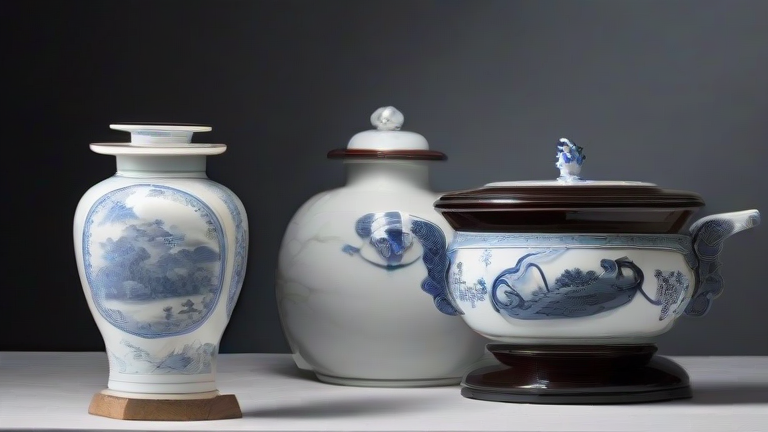
TL;DR: Porcelain is a high-fired ceramic born in China around 2,000 years ago, prized for its translucency, whiteness, and strength. This guide gives you a step-by-step path to understand its key historical milestones, cultural significance, and how to start collecting or appreciating it.
Step 1: Know the Three Essential Firing Facts
Before diving into history, memorize the “triple-fire” rule. True porcelain is fired at 1,200–1,400°C (2,200–2,550°F), which vitrifies the body—making it non-porous and glass-like. It contains kaolin (white clay) and petuntse (feldspathic rock). If a piece clinks like a bell when tapped and shows light through a thin edge, it’s likely porcelain. Skip anything labeled “bone china” unless you want a specific 18th-century English variant (it adds bone ash for extra whiteness).
If you want to dig deeper, check out our guide on Porcelain History & Culture: A Business Guide.
Step 2: Trace the Chinese Origins (Tang to Ming)
Start your timeline in the Tang dynasty (618–907 CE) when early white wares emerged. Move to the Song dynasty (960–1279) for the first true porcelains, especially the celadon and qingbai glazes. Then focus on the Ming dynasty (1368–1644) at Jingdezhen—the “Porcelain Capital.” Here, cobalt-blue underglaze painting on white bodies created the iconic blue-and-white style that later flooded global markets. Tip: Look for the reign mark (e.g., “Xuande”) on the base, but remember many later copies used fake marks.
Step 3: Understand the Silk Road & Maritime Trade Impact
Porcelain was not just art—it was currency. From the 9th century, it traveled the Silk Road by land and later by sea via the Maritime Jade Road and European trade routes. By the 16th century, Portuguese and Dutch ships carried thousands of pieces to Europe, where porcelain was called “white gold.” This exchange shaped global taste: Persian and Ottoman rulers commissioned custom shapes, while African elites used shards as currency. Tip: Study the “Kraak” porcelain—Chinese export ware with thin rims and paneled borders—to see how trade influenced design.
Step 4: Explore the European Obsession & Imitation
Europeans failed to replicate porcelain for centuries, calling it “alchemy.” The breakthrough came in 1708 at Meissen, Germany, when Johann Böttger produced the first hard-paste porcelain in the West. Then follow the rise of Sèvres in France (soft-paste, famous for rose and turquoise grounds) and Wedgwood in England (creamware and Jasperware). Tip: Compare a Meissen piece’s crossed-swords mark with a Chinese underglaze mark—Western marks are usually painted over the glaze, while Chinese marks are under it.
Step 5: Appreciate Cultural Rituals & Symbolism
Porcelain is deeply embedded in rituals. In China, it was used for tea ceremonies, ancestor offerings, and imperial gifts. In Japan, the Arita and Imari wares developed for tea and seasonal displays. In Europe, porcelain became a symbol of aristocratic refinement—displayed in “porcelain rooms” and used for dinner services that conveyed political power. Tip: When viewing a piece, ask: Who used this? For tea, food, or display? The answer reveals its cultural role.
Step 6: Start Your First Collection on a Budget
You don’t need museum-grade pieces. Visit antique fairs or online auctions for 20th-century Japanese or German porcelain, which are affordable. Look for chips or hairlines—these reduce value but help you learn glaze types. Tip: Buy a small magnifying glass to inspect the glaze for bubbles (indicates hand-painting) vs. smoothness (machine-made). Always ask for provenance, but trust your hands—run your finger over the rim; true porcelain feels cool and smooth.
<h
Leave a Reply