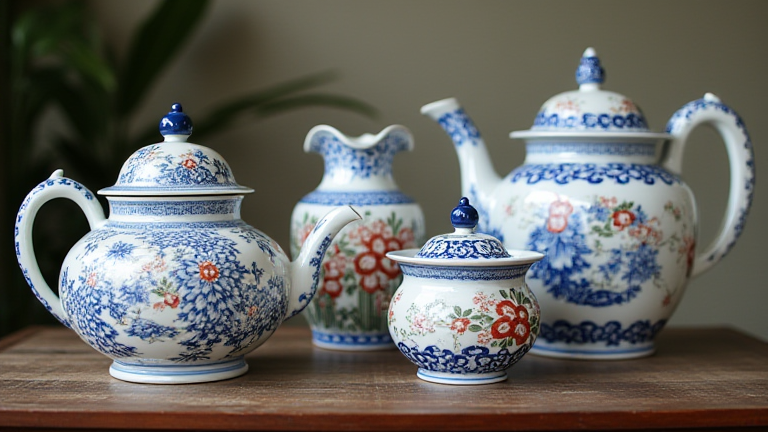
TL;DR: The global porcelain market is experiencing robust growth driven by a resurgence in cultural appreciation and sustainable luxury trends. Businesses should leverage storytelling and digital heritage to capture high-value segments seeking authentic, artisanal connections.
Market Analysis: The Rise of Cultural Luxury
The porcelain industry is no longer defined solely by utility or mass production. Current market data indicates a shift toward “experiential luxury,” where consumers pay premium prices for items with deep historical narratives. The global fine ceramics market is projected to expand significantly over the next five years, fueled by increased disposable income in emerging economies and a renewed Western interest in Asian art forms. Specifically, collectible porcelain and high-end dining ware show the strongest growth trajectories. This segment is characterized by low price elasticity; buyers are less sensitive to cost and more sensitive to provenance, craftsmanship, and cultural significance. The digital marketplace has further accelerated this trend, allowing niche brands to reach global audiences without the overhead of traditional retail. However, competition is intensifying. Mass-market ceramics are under pressure from fast-fashion home goods, forcing heritage brands to differentiate through exclusivity and education.
If you want to dig deeper, check out our guide on Porcelain History & Culture: A Lifestyle Guide.
Strategy Insights: Bridging History and Modernity
To succeed, businesses must adopt a strategy that marries historical authenticity with contemporary design. First, invest in provenance documentation. Consumers today demand transparency. Providing detailed histories of the kilns, artisans, or specific historical periods associated with a piece adds tangible value. Second, embrace digital storytelling. Utilize augmented reality (AR) to allow customers to view the historical context of a piece virtually. Third, focus on sustainability. Porcelain production is energy-intensive. Highlighting eco-friendly firing technologies and durable, long-lasting materials appeals to environmentally conscious luxury buyers. Collaborations with museums or historical societies can also lend credibility and access to new customer bases. By positioning porcelain not just as a product, but as a piece of living history, brands can command higher margins and foster brand loyalty.
Case Studies: Success in Heritage Retail
Consider the case of Meissen, the oldest porcelain manufacturer in Europe. By strictly limiting production volumes and emphasizing the hand-painted nature of their wares, Meissen maintains an aura of exclusivity. Their marketing heavily features the history of the Saxon court, appealing to traditionalists. Conversely, a modern Chinese startup, “Jade & Clay,” successfully targeted the millennial demographic by collaborating with digital artists to create limited-edition pieces that blend traditional Song Dynasty aesthetics with modern geometric patterns. They used social media micro-influencers to educate followers on the cultural significance of specific glazes. This approach resulted in a 40% increase in online sales within six months, proving that modernizing the narrative does not dilute the value of the heritage.
FAQ
Q: What is the primary driver of porcelain market growth?
A: The primary driver is the consumer shift toward experiential luxury, where buyers seek items with rich historical narratives and cultural authenticity rather than mere utility.
Q: How can small porcelain businesses compete with mass manufacturers?
A: Small businesses should focus on niche storytelling, limited-edition exclusivity, and digital heritage marketing to appeal to high-value segments that value provenance and artisanal craftsmanship over low price points.
Q: Is sustainability a significant factor in porcelain purchasing decisions?
A: Yes, sustainability is increasingly important, as luxury consumers prefer durable, long-lasting items produced with eco-friendly technologies, viewing them as investments rather than disposable goods.
Leave a Reply