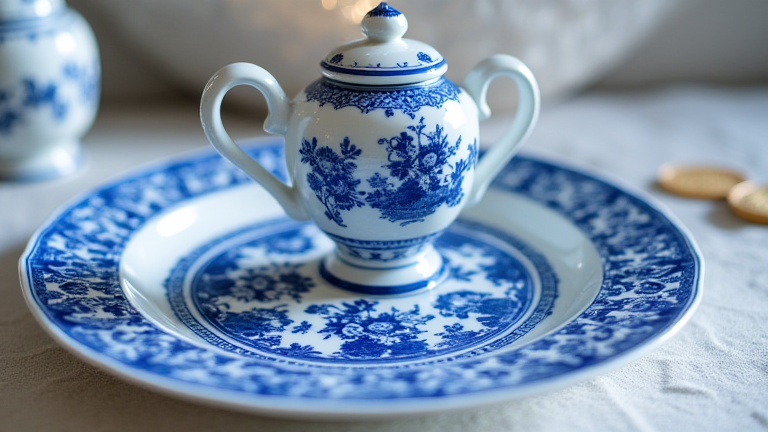
TL;DR: The blue-and-white porcelain trade wasn’t just an artistic triumph—it was a 1,000-year case study in supply chain monopolies, cultural localization, and brand signaling. Modern businesses can replicate its success by anchoring heritage craftsmanship to scalable storytelling and region-specific product lines.
The Cobalt Monopoly: How a Mineral Built an Empire
Porcelain’s “blue” was never accidental. From the Tang dynasty (618–907) to the Ming era, Chinese kilns at Jingdezhen used imported cobalt from Persia, creating a color that no local competitor could replicate. This created a two-tier market: domestic celadon for local consumption and blue-and-white for export. The strategic insight? Scarcity of a single input (cobalt) became a barrier to entry. For modern brands, this translates to proprietary pigments, patented glazes, or exclusive sourcing agreements—not just for cost efficiency, but to create a defensible product story.
If you want to dig deeper, check out our guide on Porcelain History & Culture: A Business Guide for Collectors.
Market Analysis: The Global Craze and Its Modern Echo
By the 16th century, blue-and-white porcelain was the world’s first global luxury product. European royals paid in silver; Ottoman and Japanese elites commissioned custom shapes. The market was segmented by design: dense patterns for the Middle East, floral motifs for Europe, and minimalist landscapes for Japan. Today, the global decorative porcelain market is valued at $8.2 billion (2024), with a 5.1% CAGR driven by premium homeware and museum-licensed reproductions. The key shift? Consumers now buy “heritage” as much as utility. Brands like Wedgwood and Villeroy & Boch survive by licensing historical patterns, while Chinese revival brands (e.g., Nanyang Ceramics) target domestic millennials with Ming-inspired tableware for social media aesthetics.
Strategy Insights: The “Blue” Playbook
Three strategies emerge from porcelain’s history. First, co-creation with local distributors: Dutch East India Company traders didn’t just ship—they sent sample plates with Dutch tulip motifs to Jingdezhen, forcing Chinese artisans to adapt. Modern exporters should use regional sales data to modify designs, not just export standard SKUs. Second, authenticity as a premium trigger: Ming prototypes with “imperial marks” fetch 100x more than generic reproductions. Brands must invest in provenance certificates, kiln-site storytelling, and limited “numbered” runs. Third, diversify risk via cultural fusion: 18th-century French “chinoiserie” imitations failed commercially because they lacked the original’s technical quality—but they succeeded as cheap substitutes. Today, that means offering a “mass-premium” line (machine-made, hand-painted accents) alongside a “collector” line (fully handmade, 30-day production time).
Case Study: Royal Copenhagen’s “Blue Fluted” Turnaround
In 2012, Royal Copenhagen’s iconic “Blue Fluted” pattern (1780) was declining—seen as old-fashioned. Their turnaround: they launched a “Heritage Meets Street” campaign, collaborating with Danish tattoo artists to redesign the pattern for limited-edition skateboard decks and phone cases. Sales among 25–40-year-olds rose 34% in two years. The lesson? Historical IP can be re-licensed for adjacent categories without diluting the core tableware line. Similarly, Japanese brand Noritake used its 1904 cobalt-and-white pattern to create a “Kyoto Modern” sub-line, priced 22% higher, targeting boutique hotels—proof that geographic storytelling still commands a premium.
FAQ
Q: Why is blue-and-white porcelain considered a business case, not just art?
A: Because its success hinged on controlled raw material supply (cobalt), standardized production at scale (Jingdezhen’s assembly-line kilns), and aggressive international market segmentation—all modern business practices.
Q: Can a
Leave a Reply