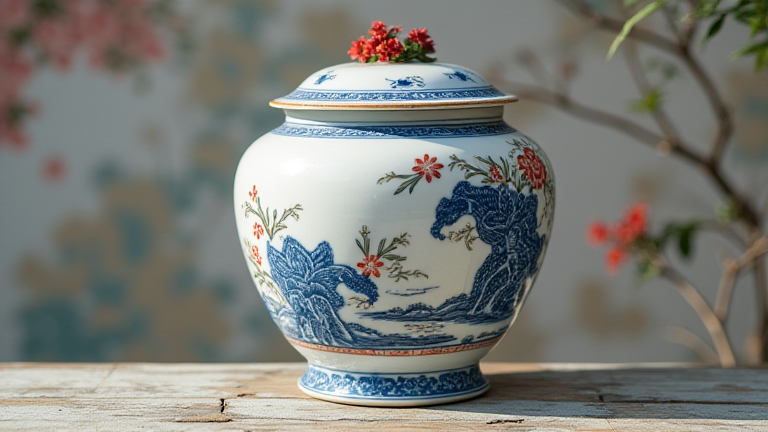
Porcelain History & Culture: A Complete Tech Guide
TL;DR: Porcelain is a ceramic material made by firing clay, feldspar, and quartz at high temperatures, resulting in a vitrified, translucent, and durable product. Its evolution from ancient Chinese innovation to modern industrial manufacturing has revolutionized materials science, art, and functional technology.
The Genesis of Hard-Paste Porcelain
For centuries, porcelain was a closely guarded secret in imperial China. The term “porcelain” itself derives from the Portuguese word porcelana, meaning seashell, reflecting the material’s distinctive translucency and white finish. Unlike earthenware or stoneware, true hard-paste porcelain requires firing temperatures exceeding 1,300°C. This process fuses the silica in the quartz with the feldspar, creating a glass-like matrix that is dense, impermeable, and acoustically resonant. The discovery of kaolin, a pure white clay, was pivotal in achieving the desired whiteness and plasticity needed for complex forms. This technological breakthrough allowed artisans to create thin-walled vessels that could transmit light, a feat unachievable with lower-fired ceramics.
If you want to dig deeper, check out our guide on Porcelain History: The Tech Behind China’s Ceramic Revolutio.
Modern Industrial Specifications and Manufacturing
Today, porcelain production is a highly sophisticated industrial process governed by precise material specifications. The primary raw materials remain kaolin, feldspar, and silica, but modern formulations often include additives like dolomite or magnesium oxide to adjust thermal expansion and improve mechanical strength. High-tech manufacturing facilities utilize automated ball mills to grind raw materials into a fine slurry, ensuring particle size consistency below 75 microns. This uniformity is critical for achieving a homogeneous body structure. Modern kilns use computer-controlled gas or electric heating systems to maintain precise temperature curves, preventing warping or cracking. The result is a material with a water absorption rate of less than 0.5%, making it highly resistant to staining and chemical attack. Furthermore, contemporary porcelain tiles and technical ceramics are engineered for specific applications, such as biomedical implants or electronic substrates, where purity and thermal stability are paramount.
Cultural Impact and Contemporary Trends
Porcelain’s cultural significance extends far beyond its utility. It served as a primary driver of global trade, influencing diplomatic relations and artistic styles across Europe and Asia. The “China trade” in the 18th century led to the development of transfer-printing technologies, which allowed for mass-production of decorated porcelain. Today, the industry is witnessing a resurgence in artisanal and eco-friendly practices. Manufacturers are increasingly focusing on sustainable sourcing and energy-efficient kilns to reduce the carbon footprint of production. Simultaneously, digital fabrication technologies like 3D printing are being adapted for ceramic prototyping, allowing designers to create intricate geometries that were previously impossible to mold by hand. This convergence of traditional craftsmanship and advanced digital tools is redefining the possibilities of porcelain in contemporary design and architecture.
Industry Impact and Future Outlook
The porcelain industry continues to evolve with advancements in glaze chemistry and surface finishing technologies. Nanotechnology is being applied to develop self-cleaning and antimicrobial glazes, enhancing hygiene in food service and medical settings. In the construction sector, large-format porcelain slabs are replacing natural stone due to their superior durability and lower maintenance requirements. As demand for high-performance materials grows, researchers are exploring hybrid composites that combine porcelain with polymers or metals, creating multi-functional materials for aerospace and automotive industries. The future of porcelain lies in its ability to adapt to new technological demands while preserving its historical and cultural heritage.
FAQ
Q: What is the primary difference between porcelain and stoneware?
A: Porcelain is fired at higher temperatures, resulting in a denser, more vitrified body with lower water absorption and greater translucency compared to stoneware.
Q: How does modern technology improve porcelain manufacturing?
A: Digital controls and automated systems ensure precise temperature and material consistency, reducing defects and allowing for complex, high-precision shapes via digital fabrication.
<strong
Leave a Reply