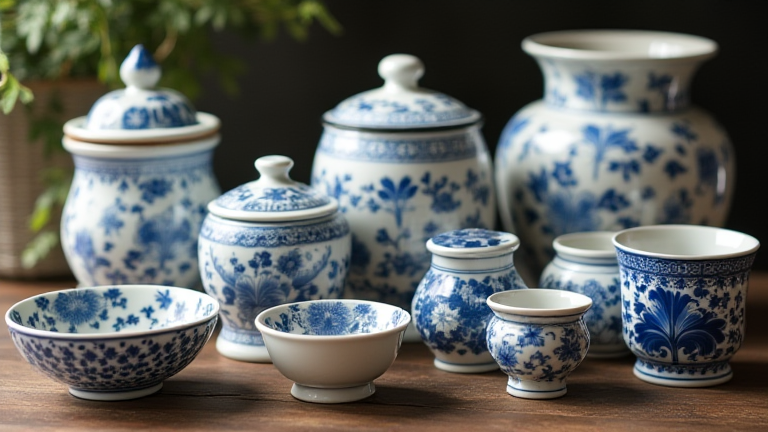
TL;DR: Porcelain’s commercial value is rooted not in fragility, but in its 1,200-year legacy of technological monopoly and cultural symbolism—from Chinese imperial kilns to European aristocratic fakes. For business leaders, the sector rewards those who leverage provenance storytelling, scarcity economics, and modern sustainability, rather than competing on price alone.
From Imperial Secret to Global Commodity: The Historical Lever
Porcelain’s business history begins in 7th-century China, where kaolin clay and high-temperature kilns created a translucent, non-porous material that the world had never seen. For nearly 800 years, China held a brutal monopoly—the secret of porcelain was state-protected, and its export via the Silk Road and maritime routes generated wealth comparable to modern oil revenues. The strategic lesson is unchanged: proprietary process knowledge, guarded fiercely, creates pricing power. When the secret leaked to Meissen (Germany) in 1708, Europe’s response was not cheaper copies, but “Oriental-style” luxury branding—a case study in how imitation can elevate a category’s perceived value.
If you want to dig deeper, check out our guide on Porcelain History & Culture: The Ultimate Beginner’s Guide.
Market Analysis: The $48 Billion Cultural Asset
Today’s global porcelain market (including tableware, art, and architectural ceramics) is valued above $48 billion, growing at 4.2% CAGR. The key shift is demand bifurcation. Mass-market machine-made porcelain (e.g., IKEA) competes on utility, with margins under 15%. Conversely, heritage and handcrafted segments—such as Japanese Arita, French Limoges, and Chinese Jingdezhen—command 300–500% premiums. Millennial and Gen Z buyers, who prioritize authenticity and imperfection (wabi-sabi), are driving a revival of “slow ceramics.” Simultaneously, B2B demand is rising in luxury hospitality and interior design, where porcelain’s cultural pedigree justifies high price points. The threat is oversupply of low-end, cheap imports from emerging factories, which dilutes brand equity—but also creates acquisition opportunities for heritage houses.
Strategy Insights: Provenance, Scarcity, and the Circular Economy
Three strategic pillars define success. First, provenance as a moat. Businesses should invest in documented lineage—kiln certificates, artisan signatures, and regional appellations (like Champagne for wine). Case study: Japanese brand 1616 Arita, which revived a 400-year-old kiln, now sells a single cup for $120 by partnering with contemporary designers, bridging history and minimalism. Second, scarcity through limited editions. Porcelain’s fragility is a feature—each breakage increases the value of surviving pieces. Brands like Royal Copenhagen release annual “historical” decorations, creating collectible cycles that boost repeat purchases. Third, sustainability as a differentiator. Traditional porcelain firing is energy-intensive; modern businesses that adopt electric kilns or recycled clay can market “carbon-neutral heritage.” The 2024 “Porcelain for Tomorrow” initiative in Limoges cut carbon 30% and gained shelf placement in eco-luxury hotels—proof that green credentials can be monetized.
Case Study: The Meissen Turnaround (2018–2024)
Meissen, the 300-year-old German manufacturer, was losing money by 2017 due to aging clientele. Leadership pivoted from “museum piece” to “cultural experience.” They launched a direct-to-consumer platform with augmented reality that shows a vase’s painting process, and a “Heritage Repair” service—restoring old pieces for a fee, creating recurring revenue. By 2023, Meissen’s revenue grew 22%, with 40% of sales from under-45 customers. The takeaway: heritage is not a static asset; it must be programmed like content. Second case: Chinese brand Jingdezhen Collective aggregated 50 small kilns into a cooperative, using blockchain to trace each piece’s origin. This restored trust in a market flooded with fakes and raised export prices by 18%.
Leave a Reply