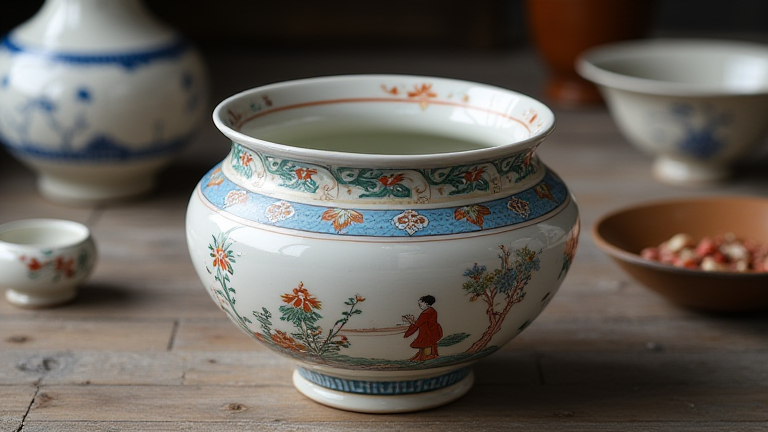
TL;DR: Porcelain is not merely ceramic—it is a 1,000-year-old dialogue between imperial ambition, trade winds, and kiln fire, born in China and perfected through global exchange. This review explores how its cultural DNA—from Song dynasty minimalism to Meissen’s cobalt—shapes modern collectibles, and why owning a piece is owning a fragment of human connectivity.
Feature Highlights: What Makes Porcelain a Living Archive
Unlike stoneware or earthenware, true porcelain (kaolin + petuntse fired at 1,300°C) achieves vitrification—a glass-like density that rings like a bell. The cultural payoff is threefold. First, translucency: hold a thin-walled bowl to light, and you see the fingerprint of the potter’s wheel, a skill passed down through 40 generations in Jingdezhen. Second, cobalt underglaze: the iconic blue-and-white pattern was not a Chinese invention but a Persian import, adapted by Yuan dynasty artisans for Mongol rulers—proof that porcelain is a hybrid, not a monolith. Third, the “kiln god” ritual: every firing was (and still is) preceded by offerings to Tong Bin, a legendary artisan who threw himself into the flames to perfect a glaze. That story isn’t myth; it’s a reminder that each piece carries labor, risk, and sometimes sacrifice.
If you want to dig deeper, check out our guide on Porcelain History: The Tech & Culture Behind the White Gold.
Comparisons: Ancient Craft vs. Modern Reproductions
Museum-grade Ming vases command $20M+ at auction, but the accessible market offers two tiers. Antique shards and “kiln wasters” (seconds discarded in ancient dumps) cost $50–$500 and let you touch original glaze chemistry—perfect for historians. Contemporary studio porcelain (e.g., from Limoges or Arita) replicates the chemistry but loses the irregular charm of wood-fired ash deposits. For a middle path, consider “export porcelain” replicas (18th-century patterns re-issued by heritage brands like Wedgwood or Herend). They lack the clay’s historic mineral content, but their hand-painted cobalt and gilding honor the original aesthetic. Avoid machine-printed “porcelain” from big-box stores—those are often bone china with 30% synthetic additives, which dulls the ring and erases cultural texture.
Why This Matters for Your Collection
Porcelain is the only craft that crossed the Silk Road, survived the Opium Wars, and inspired European alchemy (the secret of hard-paste porcelain was cracked in Meissen in 1708). Buying a piece—even a modest teacup—is a vote for preserving that narrative. Pair your purchase with a small book on kiln history, and you’ll never see a dinner plate the same way again.
Call to Action
Don’t just read about history—hold it. Start with a single “shard study set” (available from museum gift shops or Etsy sellers specializing in excavation finds) for under $75. Or commission a live-thrown bowl from a Jingdezhen artisan via platforms like Etsy or Novica; watch the maker’s video, then drink your morning tea from a vessel that took 72 steps to create. Your shelf will thank you, and so will the ghosts of the kiln gods.
FAQ
Q: How can I tell real porcelain from fake without a lab?
A: Tap it gently—real porcelain emits a clear, sustained ring (3+ seconds), while fakes thud. Also, hold it to light: genuine porcelain is translucent at the rim, whereas “porcelain-like” ceramic is opaque.
Q: Is antique porcelain safe for daily food use?
A: Only if it’s glazed and free of cracks. Pre-1900 pieces may contain lead in overglaze paints, so use them for display or dry snacks, not
Leave a Reply