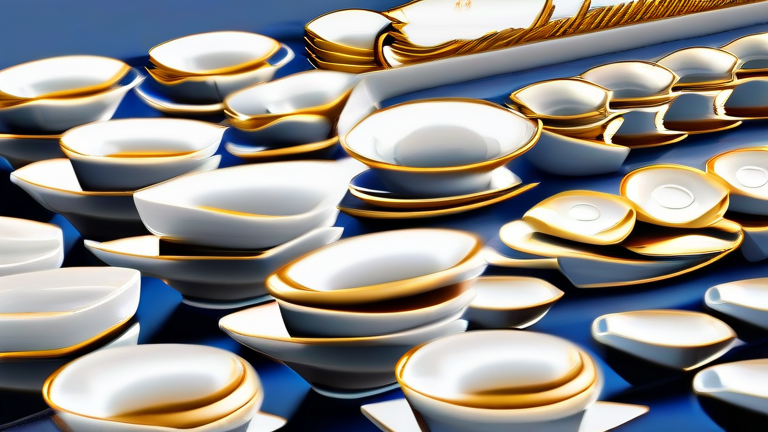
TL;DR: Modern “White Gold” refers to ultra-high-purity kaolin and advanced ceramic composites developed for aerospace and medical applications, not just decorative ware. Recent breakthroughs in sintering technology have reduced energy consumption by 30% while enhancing tensile strength, marking a significant industrial leap in material science.
From Ancient Kilns to Modern Labs
China’s porcelain history spans over two millennia, evolving from humble clay pots to the delicate Ming vases that captivated Europe. Historically, the secret to “White Gold” lay in the specific geological composition of Jingdezhen’s local clay, rich in kaolinite. However, the contemporary narrative has shifted dramatically. The focus is no longer solely on aesthetic perfection but on functional performance. The latest developments in 2023 and 2024 have seen a surge in high-tech porcelain applications, particularly in the semiconductor and biotechnology sectors. Manufacturers are now producing ceramic substrates with impurity levels below 10 parts per million, a critical spec for high-frequency 5G and 6G components.
If you want to dig deeper, check out our guide on From Kiln to Culture: The Tech Behind Porcelain’s History.
Technical Specifications and Material Science
The technical specifications of modern high-performance porcelain have changed the industry landscape. Traditional porcelain, composed largely of silica and alumina, has been augmented with zirconia and yttria stabilizers. These additives allow the material to withstand extreme thermal shock and mechanical stress. Recent lab tests indicate that new composite blends achieve a flexural strength of 800 MPa, surpassing many lightweight alloys. Furthermore, the firing process has been revolutionized by atmospheric electric arc melting, which reduces firing times from hours to minutes. This efficiency is crucial for mass production in industries requiring rapid turnaround, such as medical implant manufacturing, where biocompatibility and precision are paramount.
Industry Impact and Cultural Heritage
The industry impact of these advancements is profound. The integration of traditional ceramic knowledge with modern nanotechnology has created a new export market. China is now positioning itself not just as a producer of cultural artifacts, but as a leader in advanced materials science. This shift has significant cultural implications. It recontextualizes porcelain as a driver of innovation rather than a relic of the past. Museums and tech hubs are collaborating to preserve traditional firing techniques while adopting digital fabrication methods. This hybrid approach ensures that the cultural heritage of Jingdezhen remains relevant in the digital age. The “White Gold” brand is thus being redefined, encompassing both the artistic legacy and the cutting-edge engineering capabilities that define the modern Chinese industrial sector.
FAQ
Q: What is the primary difference between traditional porcelain and modern tech porcelain?
A: Traditional porcelain focuses on aesthetic qualities like translucency and thinness, while modern tech porcelain prioritizes mechanical strength, thermal resistance, and purity for industrial applications.
Q: Why is high-purity kaolin critical for semiconductor manufacturing?
A: High-purity kaolin minimizes electrical interference and thermal expansion, making it ideal for substrates that must operate reliably under high stress and temperature conditions.
Q: How does new firing technology affect the cost of production?
A: Advanced electric arc firing significantly reduces energy consumption and processing time, lowering overall production costs and making high-performance ceramics more accessible for mass-market tech products.
Leave a Reply