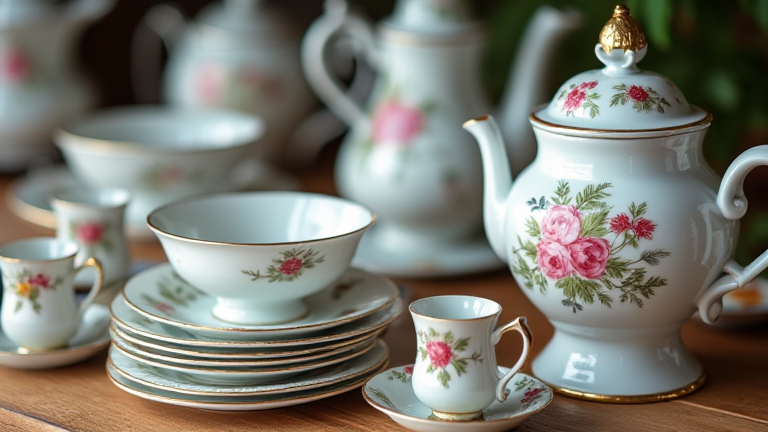
Porcelain History: Unlocking the Culture Behind Fine China
TL;DR: Porcelain is not merely a material but a cultural artifact that has shaped global trade, art, and diplomatic relations for centuries. Understanding its history transforms a simple dinnerware set into a profound connection with millennia of craftsmanship and cross-cultural exchange.
The Alchemy of Fire and Earth
For centuries, porcelain was a closely guarded secret in China, known as “white gold” in the West. Its creation required precise temperatures and specific kaolin clay deposits, making it a symbol of prestige and technological superiority. The history of fine china is deeply intertwined with the Silk Road, where these delicate wares traveled thousands of miles, influencing artistic styles from Meissen in Germany to Sèvres in France. Each era’s porcelain reflects the societal values of its time, from the minimalist aesthetics of Song Dynasty wares to the opulent baroque designs of 18th-century European factories.
If you want to dig deeper, check out our guide on Porcelain History & Culture: A Complete Tech Guide.
Feature Highlights of Historical Collections
When selecting porcelain today, enthusiasts often look for pieces that honor this legacy. High-quality modern reproductions feature hand-painted motifs that mirror historical patterns, such as the iconic blue-and-white floral designs. Authentic vintage pieces, like those from the Qing Dynasty, display unique glaze textures and kiln marks that serve as fingerprints of their origin. Modern artisanal collections often blend traditional techniques with contemporary forms, offering a bridge between past and present. Key features to look for include high-fired durability, translucent quality when held to light, and resonant sound when tapped, all indicators of proper firing and material quality.
Comparing Eras and Origins
Comparing Chinese and European porcelain reveals distinct philosophical approaches. Chinese porcelain often emphasizes balance, harmony, and the beauty of nature, using subtle color palettes. In contrast, early European porcelain, particularly from Meissen, frequently displayed more dramatic contrasts and intricate gold gilding, reflecting the aristocratic taste for opulence. While Chinese craftsmanship focused on the purity of the white body, European makers initially struggled to achieve similar whiteness, leading to the development of bone china, which added animal bone ash to the mixture for enhanced strength and opacity. This comparative study highlights how cultural values dictate material innovation.
Unlocking Your Collection
To truly appreciate fine china, one must look beyond the object to the story it tells. Whether you are a casual diner or a serious collector, exploring the provenance of your pieces adds depth to every meal. We encourage readers to research the specific marks on their porcelain bases to identify the factory and era. Start your journey by acquiring a single, historically significant piece, such as a replica of a famous Ming Dynasty plate, and build your knowledge from there. The culture behind fine china is waiting to be unlocked by those willing to dig deeper.
FAQ
Q: What makes Chinese porcelain different from European bone china?
A: Chinese porcelain is typically made from kaolin clay and fired at high temperatures, resulting in a pure white, translucent body, whereas European bone china adds bone ash to the mix for increased durability and a distinct creamy opacity.
Q: How can I identify authentic antique porcelain?
A: Look for specific factory marks, glaze crazing patterns, and the weight of the piece; consulting with a certified appraiser is recommended for high-value items to verify authenticity and age.
Q: Why was porcelain so valuable in the 18th century?
A: Its rarity, the difficulty of production, and its status as a symbol of wealth and sophistication made it a coveted luxury item that drove massive international trade and influenced diplomatic relations.
Leave a Reply