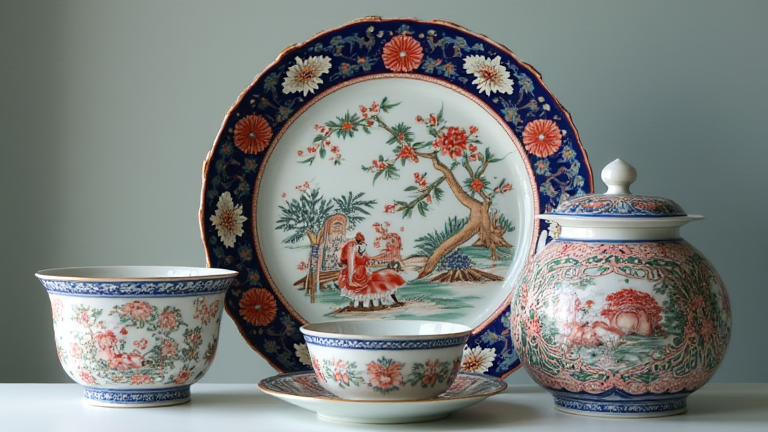
TL;DR: Porcelain is not just ceramic—it is a 1,000-year-old timeline of imperial power, trade piracy, and artistic rebellion, encoded in translucent clay. This guide unpacks the craft’s milestones, compares modern collectibles vs. museum-grade reproductions, and tells you how to start a meaningful collection.
Feature Highlights: Why Porcelain Matters Beyond the Shelf
The magic of porcelain lies in its “body” — fired at 1,300°C with kaolin, it becomes vitrified, glass-like, and impermeable. But the cultural payload is richer. From Tang dynasty’s first grey-green proto-porcelain to Ming’s cobalt-blue-and-white (a pigment imported from Persia, paid for in silk), every piece is a geopolitical map. The Qing dynasty’s famille rose enamels, developed under Jesuit supervision, represent the first true East-West fusion. When you hold a shard of Jingdezhen ware, you’re touching the exact material that sparked Europe’s “white gold” obsession — the reason Augustus the Strong traded a regiment of dragoons for 151 Chinese vases in 1717.
If you want to dig deeper, check out our guide on Porcelain History & Culture: A Complete Beginner’s Guide.
For modern buyers, the key feature to inspect is “paste” density and translucency. Hold a piece to light — fine porcelain glows amber, not chalky white. Also check foot rings: hand-painted cobalt bleeds slightly into glaze, while machine-applied decals sit flat. Authentic antique shards show “orange peel” texture, a firing artifact no chemical replica can fake.
Comparisons: Antique vs. Modern Reproduction vs. Living Craft
Museum-grade antiques (pre-1800) are investment assets, but you’ll pay $5,000+ for a cracked cup. Modern “heritage reproductions” from Jingdezhen’s state kilns (e.g., 2018 re-fires of Yongle-era dragon bowls) offer 90% visual fidelity at $150–$400, but they lack the period’s “organic impurity” — ancient clay had trace iron, creating subtle blue-grey shadows. Contemporary studio porcelain (e.g., Dutch designer Ann Van Hoey) pushes glaze chemistry into sculptural forms, but sacrifices historical narrative. For history lovers, the best “value” is a late-Qing export piece (1850–1900): affordable ($80–$200), heavily documented, and often hand-painted with Canton scenes that tell colonial trade stories.
Call to Action: Start With a Shard, Not a Dynasty
Don’t buy a full vase. Purchase a “shard lot” from a reputable auction house (e.g., 10 Ming kiln-ware fragments for $25). Study the breakage patterns, the blue’s depth, the sandy unglazed base. Then, borrow a UV flashlight — genuine old glaze fluoresces a dull violet, whereas modern epoxy repairs glow bright green. Once you can read those clues, upgrade to a single 19th-century plate. Your coffee table will become a lecture on maritime silk roads — and you’ll never drink from a mass-produced mug the same way again.
FAQ
Q: How can I tell real porcelain from bone china or stoneware?
A: Hold it against a light — real porcelain is translucent (fingers visible). Bone china is brighter but heavier, and stoneware is opaque. Tap it: porcelain rings a clear, bell-like tone lasting 2+ seconds; stoneware thuds.
Q: What is the single most important historical porcelain site to study?
A: Jingdezhen (Jiangxi, China) — the “Porcelain Capital” from 1004 AD. Its imperial kilns produced 95% of all court porcelain, and its excavation layers (Song to Qing) are a 700-year unbroken stratigraphy of glaze evolution.
Q: Is it ethical to buy antique porcelain shards from archaeological sites?
A: Only if the
Leave a Reply