TL;DR: Porcelain is more than delicate china—it is a 1,000-year-old story of imperial craft, global trade, and artistic rebellion. By understanding its history, you can curate your home and table with pieces that carry depth, not just decoration.
The Fired Earth: Where It All Began
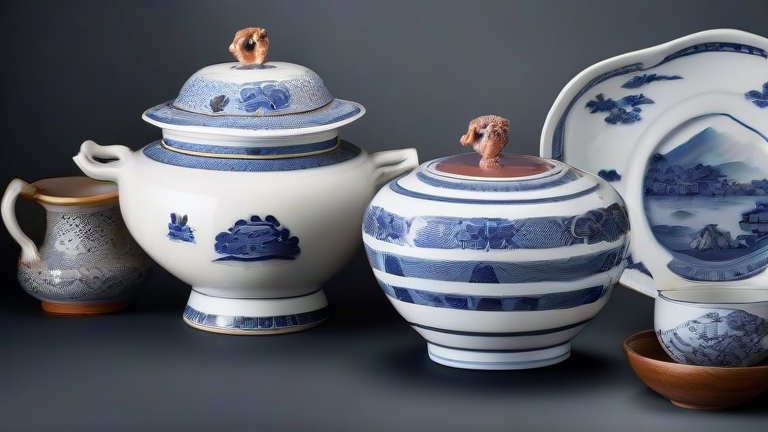
Porcelain was born in China during the Eastern Han dynasty (circa 200 AD), but it reached its luminous peak under the Tang and Song dynasties. The secret wasn’t just the white clay—kaolin—but the kiln temperatures above 1,300°C that fused the body into a glass-like, translucent surface. By the Yuan dynasty (1271–1368), blue-and-white porcelain became the world’s first global luxury item, traded along the Silk Road and into the Middle East. European royals paid in gold for these “white gold” vessels, and the obsession sparked centuries of imitation, from Meissen in Germany to Sèvres in France.
If you want to dig deeper, check out our guide on Porcelain History & Culture: A Business Guide for Collectors.
Culture in Your Cup: Tea, Ritual, and Connection
Porcelain is inseparable from the tea ceremony—a practice that elevates daily life into art. In Japan, the rustic raku style contrasts with Chinese imperial porcelain, yet both teach the same lesson: mindfulness. When you hold a thin-walled porcelain cup, you feel the warmth of the liquid through the glaze, a tactile reminder to slow down. For a lifestyle shift, adopt a “one-cup ritual”: brew a single serving of oolong or sencha, pour it into a hand-painted porcelain cup, and sip without screens. This small act trains your attention and connects you to a lineage of tea masters who believed that beauty in everyday objects cultivates inner calm.
Collecting with Intention: From Antique to Modern
You don’t need a museum budget to live with porcelain. Start by exploring modern artisan studios—many potters in Jingdezhen, China, still use ancient techniques but with contemporary shapes. Look for imperfections: a slightly off-center rim or a hand-painted stroke that wobbles. These “flaws” are signatures of human touch, unlike mass-produced factory ware. For vintage finds, visit flea markets for 19th-century European transferware (ironstone) or Japanese Noritake, which often sell for under $50. Display them not in a locked cabinet but on open shelves, where they catch light and invite touch. Use a chipped bowl for your keys or a saucer for your rings—porcelain is meant to live, not just to be admired.
Personal Growth Through Fragility
The Japanese concept of kintsugi—repairing broken porcelain with gold lacquer—offers a profound metaphor. Instead of hiding cracks, kintsugi celebrates them as part of the object’s history. Apply this to your own life: when a routine breaks or a plan fails, don’t discard it. Mend it visibly, with patience and a touch of beauty. Each repaired seam makes you more resilient and more interesting. Start small: glue a broken porcelain handle back with gold-toned epoxy, and keep it on your desk as a daily reminder that imperfection is not a flaw—it’s a story.
FAQ
Q: What is the difference between porcelain, ceramic, and bone china?
A: Porcelain is a type of ceramic made from kaolin and fired at high heat for translucency; bone china adds bone ash for extra whiteness and strength. Regular ceramic (earthenware) is fired at lower temperatures and is more porous.
Q: How do I safely clean antique porcelain without damaging the glaze?
A: Hand-wash with mild dish soap, warm water, and a soft sponge—never use abrasive scrubbers or dishwashers. For stubborn stains, soak in a baking soda paste, but avoid harsh chemicals that can dull the glaze or remove gold trim.
Q: Can I use porcelain in the microwave and oven?
A: Yes, if it’
Leave a Reply