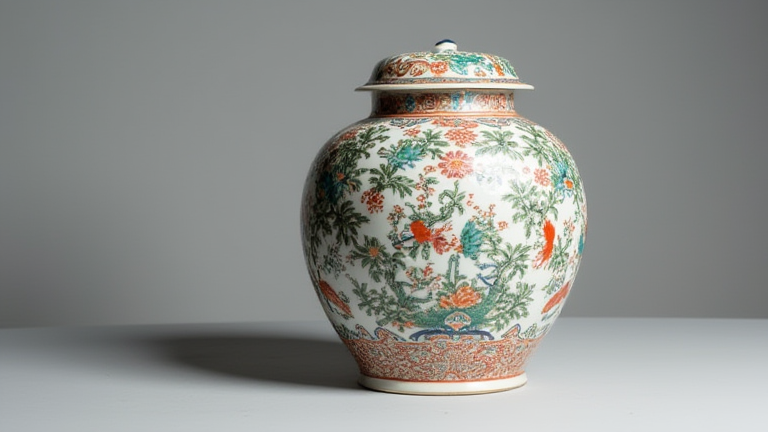
TL;DR: Porcelain’s transition from imperial Chinese secret to global luxury commodity hinges on scarcity, craftsmanship, and cultural storytelling. Modern brands profit by pairing heritage techniques with contemporary design, leveraging provenance as a premium pricing lever.
The Throne of Clay: From Imperial Kilns to Global Boardrooms
Porcelain’s business narrative begins in 7th-century China, where the Tang dynasty’s translucent whiteware was a state monopoly. By the Ming era, blue-and-white export pieces were the world’s first global luxury brand—coveted by Persian elites, Ottoman sultans, and European royals. The strategic insight? Scarcity engineered through imperial control (only Jingdezhen kilns could fire at 1,300°C) created an aura of unattainability that fueled 400 years of trade premiums. Today, that same logic drives auction houses: a Ming vase’s value is 60% provenance, 30% condition, 10% material.
If you want to dig deeper, check out our guide on Porcelain History: Unveiling the Cultural Secrets of Fine Ch.
Market Analysis: The $45 Billion Renaissance
The contemporary luxury porcelain market (tableware, décor, art) is projected to grow 5.2% CAGR through 2030, driven by Asia’s affluent middle class reconnecting with heritage and Western collectors seeking “authentic craftsmanship” over mass-produced ceramics. Key segments: collectible art pieces (auction-driven, low volume, high margin) and designer tableware (bridal, hospitality, and gifting). The threat? Cheap bone-china imports from Vietnam and Turkey, which undercut prices by 70% but lack the “cultural DNA” that justifies premium positioning.
Strategy Insights: The Heritage-Digital Playbook
Winning brands deploy a three-part strategy: 1) Origin storytelling—e.g., Meissen (Germany) still uses 18th-century molds and cobalt formulas, marketing “unglazed foot” imperfections as authenticity markers. 2) Collaborative scarcity—Hermès partners with Japanese kilns to produce 100-piece limited runs, merging French fashion cachet with wabi-sabi aesthetics. 3) Experiential retail—Royal Copenhagen’s flagship stores host live porcelain painters, converting tourists into collectors via “watch-the-process” demos that justify $500 dinner plates. Crucially, digital platforms like 1stDibs now serve as global showrooms, where a 19th-century Sèvres vase sells for $80,000 purely on verified provenance metadata.
Case Studies: Two Paths to Profit
Case 1: Wedgwood (UK)—After bankruptcy in 2009, the brand pivoted from mass-market to “neo-heritage” by licensing its Jasperware patterns to fashion houses (e.g., Versace) and launching a $2,000 teapot series with hand-painted gold leaf. Result: 18% revenue growth in three years, proving that heritage can be re-priced if tied to modern status symbols. Case 2: Qianlong Era Revival (China)—A private Shanghai gallery repurchases imperial kiln debris from museum storage, re-fires them with modern glazes, and sells “restored fragments” as conversation pieces for $15,000–$50,000. This monetizes history without forging, appealing to collectors who want tangible antiquity without auction-house legal risks.
FAQ
Q: Is porcelain still a viable luxury investment in 2025?
A: Yes, but only for verified antique pieces with documented kiln origin and chain-of-custody; contemporary studio porcelain appreciates only if the artist has gallery representation and a secondary-market track record of 10+ years.
Q: How do brands fight cheap imitations?
A: By emphasizing “kiln-fired” vs. “mold-cast” production, using holographic QR codes linked to batch certificates, and investing in museum partnerships that authenticate designs—imitations lack the provenance paperwork
Leave a Reply