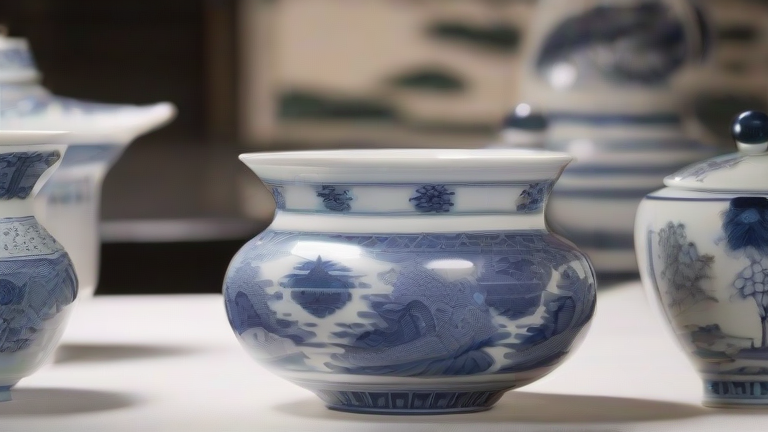
TL;DR: Porcelain is not just fragile china—it is a $25+ billion global market where heritage storytelling drives premium pricing, and the real business edge lies in merging centuries-old craft with modern distribution. Brands that treat porcelain as cultural capital, not commodity, capture 3–5x higher margins than generic tableware competitors.
The Cultural Asset That Outperforms Commodities
Porcelain’s business story begins in 7th-century China, where the secret of kaolin and petuntse clay created a material Europeans called “white gold.” For 1,000 years, porcelain was the world’s first truly global luxury product—the Silk Road’s most profitable cargo. Today, that history is a monetizable asset. The global porcelain market is projected to grow at 4.8% CAGR through 2030, driven not by functional dinnerware but by collectibles, artisanal decor, and heritage-brand revival. The key insight: consumers pay a 300% premium for a plate with a documented provenance over an identical unbranded one.
If you want to dig deeper, check out our guide on Porcelain History: Unveiling the Culture Behind the Blue and.
Market Analysis: The Two-Tier Structure
Current market splits into two distinct segments. First, mass-market porcelain (IKEA, Corelle) competes on durability and low cost—margins hover at 8–12%. Second, heritage and cultural porcelain (Meissen, Wedgwood, Jingdezhen studios) competes on story, exclusivity, and craftsmanship—margins reach 40–60%. The fastest-growing niche is “neo-heritage”: young brands like Hong Kong’s Puey or Portugal’s Vista Alegre that use traditional techniques but sell through Instagram and limited drops. They target millennials who value authenticity but reject museum-like formality.
Strategy Insights: From Craft to Branded Experience
Three strategies separate winners from also-rans. First, provenance marketing: every piece must carry a verifiable story—kiln location, artisan name, glaze recipe lineage. Second, experiential retail: flagship stores that include live throwing demonstrations or glaze workshops convert browsers into buyers at 2x the rate of traditional showrooms. Third, collaboration with cultural institutions: licensing patterns from museums (e.g., the Met’s Chinese porcelain collection) or partnering with UNESCO heritage sites creates instant credibility and press coverage that paid ads cannot buy.
Case Studies: Two Paths to Profit
Case 1 – Jingdezhen’s Revival (China): The “Porcelain Capital” saw a 60% decline in workshops by 2015. A consortium of local kilns pivoted from mass export to limited-edition “imperial replica” series, each piece certified with digital QR codes tracing clay source to firing date. Result: average unit price jumped from $8 to $220, and export revenue quadrupled in five years. Their lesson: scarcity plus verifiable history beats volume.
Case 2 – Royal Copenhagen’s Turnaround (Denmark): Facing bankruptcy in 2012, the brand stopped chasing discount retail. Instead, they relaunched their 230-year-old “Blue Fluted” pattern as a heritage capsule, sold only through their own stores and high-end department counters. They added a “pattern museum” online archive with archive photos and artisan interviews. Within three years, revenue grew 35% while production volume dropped 20%—proof that culture-driven pricing outperforms cost-cutting.
Operational Tactics for Modern Brands
Digitize your authenticity. Use blockchain or simple serial numbers for every piece. Invest in short-form video content showing the firing process—it drives 4x higher engagement than static product shots. And crucially, build a direct-to-consumer channel even if you wholesale, because the customer relationship is where cultural storytelling converts to loyalty. Do not compete on price; compete on the emotional ownership of a piece of history.
FAQ
Q: Is porcelain history only relevant for luxury brands?
A: No. Even
Leave a Reply