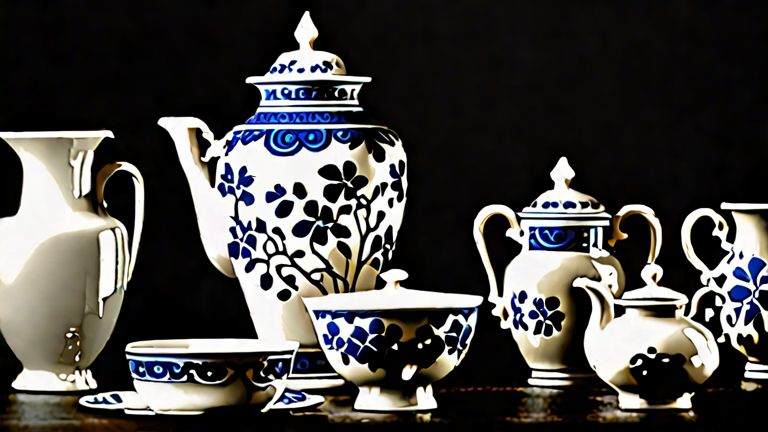
Porcelain History: Unlocking the Cultural Secrets of Chinese Business
TL;DR: Porcelain serves as a historical bridge demonstrating how China leveraged cultural heritage to drive global trade and establish brand prestige. Modern businesses can unlock market success by integrating authentic cultural narratives into product strategy to create high-value, differentiated consumer experiences.
Market Analysis: The Renaissance of Heritage Goods
The global luxury goods market is witnessing a significant shift toward “cultural authenticity.” Consumers, particularly in the Gen Z and Millennial demographics, are increasingly rejecting mass-produced uniformity in favor of items with deep historical roots and artisanal provenance. Porcelain, often referred to as “white gold” during the Ming and Qing dynasties, represents one of the most successful examples of China’s early export-oriented economy. Today, the market for Chinese ceramics has expanded beyond traditional blue-and-white patterns to include contemporary interpretations that blend ancient techniques with modern aesthetics. This sector is no longer just about utility; it is about identity and status. Data indicates a steady growth in the import of high-end Chinese ceramics in Western markets, driven by a desire for tangible connections to history. The key insight here is that the value proposition has shifted from material quality alone to the narrative embedded within the object. Businesses that can articulate the story behind the kiln, the glaze, and the cultural symbolism are commanding premium prices.
If you want to dig deeper, check out our guide on Porcelain History: A Cultural Journey for Your Brand.
Strategy Insights: Branding Through Legacy
For modern enterprises, the strategy involves leveraging the “halo effect” of China’s millennia-old porcelain tradition. Unlike fast-moving consumer goods, porcelain products allow for a slower, more deliberate branding approach. Companies should focus on storytelling that highlights the complexity of the firing process, the rarity of specific minerals, and the artistic intent behind each piece. This creates an emotional connection that transcends the physical product. Furthermore, digital marketing strategies must utilize high-quality visual storytelling to convey the tactile nature of the product. Since online shoppers cannot touch the goods, the narrative must compensate for this sensory gap. Partnerships with cultural institutions or museums can also lend credibility and exclusivity, positioning the brand as a custodian of heritage rather than just a retailer. This approach mirrors the historical success of the Jingdezhen potters, who used state-sponsored workshops to control quality and standardize excellence, thereby creating a global brand that is still recognized today.
Case Study: The Modern Revival of Jingdezhen
A notable case study is the recent revitalization of Jingdezhen, the historic porcelain capital. Local entrepreneurs have successfully pivoted from purely industrial manufacturing to boutique, design-led businesses. One such initiative involved collaborating with international designers to create limited-edition series that interpret traditional motifs through a minimalist lens. By restricting production runs and emphasizing the handcrafted nature of each piece, they were able to sell at prices significantly higher than standard industrial ceramics. This strategy not only boosted local economic activity but also rebranded Jingdezhen as a hub for contemporary art and innovation. The success lies in balancing respect for tradition with the boldness required to appeal to modern global tastes. It demonstrates that historical assets are not static relics but dynamic resources that can be reinterpreted to meet contemporary market demands, proving that the secret to Chinese business success often lies in the intelligent application of cultural capital.
FAQ
Q: How does porcelain history influence modern Chinese business strategy?
A: It provides a powerful narrative framework that allows brands to differentiate themselves through authenticity, heritage, and high-perceived value, moving away from price-based competition.
Q: What are the key risks for companies entering the cultural heritage market?
A: The primary risk is cultural appropriation or superficial engagement. Companies must ensure they have deep, respectful knowledge of the traditions they are marketing to avoid alienating both local and international consumers who value authenticity.
Q: Can small businesses compete in the porcelain and heritage goods sector?
A: Yes, small businesses often have an advantage in this sector because they can offer personalized, limited-edition products and direct storytelling, which appeals to niche markets seeking unique, artisanal experiences over mass-produced goods.