Blog

  • Porcelain’s Legacy: How Ancient Craft Shapes Modern Living

    Porcelain’s Legacy: How Ancient Craft Shapes Modern Living

    TL;DR: Porcelain’s legacy persists because its unique durability and aesthetic refinement have seamlessly transitioned from imperial treasures to everyday design essentials. It shapes modern living by bridging the gap between historical cultural heritage and contemporary functional minimalism in our homes and dining experiences.

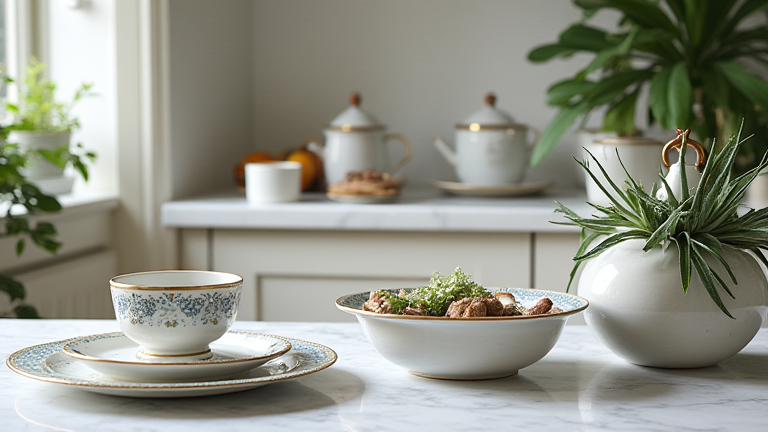
    When we pick up a delicate teacup or admire a minimalist vase, we are interacting with a material that has traveled a profound journey through history. Porcelain, often called “white gold,” originated in China over a thousand years ago. Its creation was a closely guarded secret for centuries, valued not just for its utility but for its symbolic association with purity and refinement. Today, this ancient craft is not merely a museum exhibit; it is a living element of modern lifestyle, influencing how we eat, decorate, and connect with cultural narratives.

    If you want to dig deeper, check out our guide on Porcelain History: 7 Trends Reshaping Culture & Art.

    The Alchemy of Earth and Fire

    To understand its modern appeal, one must appreciate the alchemy involved in its creation. Unlike stoneware or earthenware, porcelain is fired at incredibly high temperatures, resulting in a vitrified, non-porous surface. This technical achievement allowed artisans to create objects that were thinner, stronger, and more translucent than any other ceramic. In the modern era, this technical precision has evolved into a design philosophy. Contemporary designers leverage the material’s strength to create thinner, lighter plates and bowls that feel substantial yet effortless. The tactile experience of holding a cool, smooth porcelain object provides a sensory break from the digital noise of modern life, grounding us in the physical world.

    Dining as a Cultural Ritual

    In the realm of food and travel, porcelain serves as a silent storyteller. The choice of tableware is no longer just about function; it is an expression of cultural identity and personal taste. From the bold, geometric patterns inspired by Ming Dynasty blue-and-white designs to the understated elegance of modern Japanese *raku* influences, our dining tables reflect a global appreciation for these traditions. When we host guests, the presentation of food on fine porcelain elevates the meal into a ritual. It signals respect for the ingredients and the people gathered around the table. This cultural angle encourages travelers to seek out local ceramic studios when exploring new destinations, turning a simple shopping trip into an immersive educational experience about local history and craftsmanship.

    Personal Growth Through Mindful Creation

    Beyond consumption, porcelain offers a pathway to personal growth through the practice of pottery. The act of throwing clay on a wheel or hand-building a piece requires a state of deep focus that many find meditative. In a fast-paced world, the slow process of shaping, drying, and firing porcelain encourages patience and mindfulness. It reminds us that beauty often emerges from imperfection, a concept central to many Eastern philosophies. Engaging with this craft, even as a hobby, fosters a deeper appreciation for the labor and time involved in creating objects of beauty. It shifts our perspective from disposable consumerism to a more sustainable, mindful engagement with the material world, encouraging us to value longevity and quality over quantity.

    FAQ

    Q: Why is porcelain considered more valuable than other ceramics?
    A: Its high firing temperature makes it non-porous, durable, and translucent, offering a unique aesthetic and functional superiority that has been prized for centuries.

    Q: How can I incorporate porcelain into modern minimalist decor?
    A: Focus on neutral tones and simple geometric shapes; use a single, high-quality piece as a focal point to avoid clutter while maintaining a sophisticated look.

    Q: Is handcrafted porcelain better for sustainability?
    A: Often yes, as local artisans may use smaller, more controlled processes, and the durability of porcelain ensures a longer lifespan compared to disposable alternatives.
    Related Articles

  • Porcelain: A Brief History of China’s White Gold and Global Influence

    TL;DR: Porcelain, often called “white gold,” was a Chinese invention that became the world’s first truly global luxury product, shaping trade routes and royal tastes for over a millennium. Its secret formula—kaolin clay fired at extreme heat—remained a Chinese monopoly for centuries, until Europe’s desperate imitation attempts birthed their own ceramic industries.

    The Accidental Empire of Fire and Clay

    Long before silk or spices defined the Orient, a humble kiln in China’s Zhejiang province produced something miraculous during the Eastern Han dynasty (circa 100 AD). Unlike pottery, porcelain was vitrified—glass-like, non-porous, and ringing like a bell when struck. By the Tang dynasty (618–907), Chinese artisans had perfected translucent, paper-thin vessels that Arab traders carried westward along the Silk Road. These weren’t just cups; they were ambassadors of a civilization’s technological superiority. The name “china” itself became synonymous with the material, a linguistic tribute to its birthplace.

    If you want to dig deeper, check out our guide on Porcelain History: How Ancient Craft Boosts Modern Health.

    Blue-and-White: The Global Aesthetic

    The Yuan dynasty (1271–1368) gifted the world its most iconic porcelain style: cobalt-blue decorations under a clear glaze. This wasn’t a purely Chinese invention—Persian cobalt was imported, and Islamic patrons demanded intricate floral motifs. The result was a cross-cultural hybrid that later obsessed European royals. When the Ming dynasty (1368–1644) restricted overseas trade, the void fueled a black market. Portuguese ships smuggled blue-and-white ware to Lisbon, where it adorned the tables of the wealthy. By the 17th century, the Dutch East India Company had shipped over three million pieces to Europe, sparking a craze known as “porcelain fever.”

    The Great Imitation Game

    Europe’s obsession turned desperate. Alchemists in Dresden, Germany, spent years trying to replicate the secret, egged on by Augustus the Strong, who once traded a regiment of soldiers for a set of Ming vases. In 1708, Johann Friedrich Böttger finally cracked the code, producing the first European hard-paste porcelain. This breakthrough birthed Meissen, Sèvres, and eventually Wedgwood—but their products remained aristocratic luxuries. Meanwhile, China’s own industry adapted, creating “export ware” specifically tailored to Western tastes, from punch bowls to dinner services. The irony? As Europe industrialized, Chinese porcelain declined, its aristocratic patrons displaced by revolutions and cheaper British bone china.

    From Tableware to Cultural Memory

    Today, porcelain is more than antique collectibles. It’s a lens into globalization, showing how a single object could carry religious iconography, political power, and personal taste across continents. For the modern traveler, visiting Jingdezhen—China’s “Porcelain Capital”—is a pilgrimage. There, you can watch artisans throw pots exactly as their ancestors did a thousand years ago. For the rest of us, every delicate teacup or minimalist tile in our homes is a quiet inheritance: a fragment of history where fire, clay, and human greed created something breathtakingly eternal.

    FAQ

    Q: Why is porcelain called “white gold”?
    A: Because it was as valuable as gold in ancient trade, but unlike gold, its translucent whiteness and durability made it a unique status symbol. European royals paid with soldiers or silver for single pieces.

    Q: Did China ever lose its porcelain monopoly?
    A: Not until 1708, when German alchemist Böttger discovered the kaolin-feldspar formula. Even then, Chinese pieces remained superior in quality and design well into the 19th century.

    Q: What’s the difference between porcelain and ceramic?
    A: All porcelain is ceramic, but porcelain fires at higher temperatures (above 1,200°C) and uses kaolin clay, making it harder, whiter, and more translucent than standard pottery or stoneware.

    Related Articles

  • Porcelain History: The Art & Culture Behind the Porcelain Lifestyle

    Porcelain History: The Art & Culture Behind the Porcelain Lifestyle

    TL;DR: Porcelain is more than fragile tableware—it is a 1,000-year-old cultural passport that links imperial trade routes, ritual tea ceremonies, and modern minimalist living. Its history teaches us that beauty, utility, and patience are intertwined, making the “porcelain lifestyle” a practice of mindful curation rather than mere consumption.

    The Firing of Empires: A Brief Origin Story

    Porcelain was born in China during the Tang dynasty (618–907 CE), but it reached its alchemical peak under the Song and Ming dynasties. The secret—kaolin clay fired at over 1,300°C—produced a translucent, ringing body that Arabs, then Europeans, called “white gold.” By the 16th century, the Portuguese and Dutch shipped millions of pieces along the Maritime Silk Road, sparking a global obsession. In Europe, kings bankrupted treasuries trying to replicate it; only in 1708, at Meissen, did Johann Friedrich Böttger crack the code. This history is not dusty trivia: every porcelain teacup you hold carries the residue of that cross-continental hunger for perfection.

    If you want to dig deeper, check out our guide on Porcelain History & Culture: A Guide to Its Lifestyle Legacy.

    Tea, Ritual, and the Slow Table

    Travelers to Jingdezhen—China’s porcelain capital—still see artisans throwing pots as their ancestors did a millennium ago. But the true cultural portal is the Japanese tea ceremony, which adopted Chinese porcelain and transformed it into a philosophy of wabi-sabi (imperfect beauty). Using a hand-painted chawan (tea bowl), you learn that chips and glaze drips are not flaws but biographies. This mindset has migrated into modern lifestyle trends: the “slow table” movement urges you to eat from handmade ceramics, not mass-produced stoneware. The ritual of rinsing, warming, and pouring becomes a meditation—a break from plastic convenience and digital noise.

    From Palace Walls to Personal Growth

    Porcelain’s cultural journey also mirrors personal growth. Early blue-and-white pieces were designed for imperial courts—rigid, hierarchical, flawless. But as trade spread, artisans adapted to foreign tastes: Persian floral motifs, Dutch tulips, African geometric patterns. This flexibility is a lesson in identity. Collecting porcelain—or simply choosing one good teapot—teaches you to value provenance over price, function over trend. The act of repairing a broken heirloom with gold (kintsugi, a Japanese cousin of porcelain culture) turns a loss into a visible strength. You stop chasing perfection and start honoring history.

    Living With Porcelain Today

    Incorporating porcelain into your home is not about buying a full set of Limoges. It might mean a single celadon bowl for your morning oats, or a vintage transferware plate used as a wall accent. The lifestyle angle is curation: choose pieces with a story—a potter’s mark, a glaze color unique to a kiln, a rim worn smooth by decades of tea. Display them on open shelves, not locked cabinets. Use them daily. Porcelain is durable, but its real strength is cultural: it connects your hands to Tang merchants, Ming scholars, and Dutch traders who all believed that a meal shared on beautiful ceramic is a meal shared with dignity.

    FAQ

    Q: Why is porcelain called “china” in English?
    A: Because Europe first encountered it exclusively from China, and the name stuck as a geographic shorthand for the material, even after Japanese and European kilns mastered the craft.

    Q: What is the main difference between porcelain and regular ceramic?
    A: Porcelain uses kaolin clay fired at higher temperatures (above 1,200°C), making it vitrified—non-porous, harder, and translucent when thin, unlike earthenware which remains porous and opaque.

    Q: How can a beginner start a porcelain collection without overspending?
    A: Visit flea markets or estate sales for chipped “seconds” from known makers, or buy modern studio pieces directly from potters. Focus on one color or motif (e.g., celadon or cobalt blue) to build

    Related Articles

  • Here are several options, all under 70 characters: **Option 1 (Direct & Classic)** The Enduring Leg

    TL;DR: The porcelain industry is shifting from mass-produced commodity goods to high-value, culturally significant artisanal products. Success now depends on leveraging heritage narratives and sustainable, small-batch production strategies rather than competing on low price points.

    The Enduring Leg

    In the contemporary global market, porcelain is no longer merely a functional material for tableware; it has evolved into a primary vehicle for cultural expression and luxury branding. The “enduring leg” of this industry is built upon a foundation of historical prestige that modern businesses are now aggressively capitalizing on. Market analysis indicates a significant divergence in consumer behavior. While the volume of industrial-grade porcelain remains steady, the value of the sector is migrating rapidly toward the artisanal and bespoke segments. Consumers in key markets such as North America, Europe, and East Asia are increasingly willing to pay premium prices for items that tell a story, possess provenance, or offer a tactile experience that mass-manufactured goods cannot replicate. This shift is driven by a broader cultural desire for authenticity and sustainability in an age of digital ubiquity and fast consumption.

    If you want to dig deeper, check out our guide on Porcelain History & Culture: A Complete Guide to Its Legacy.

    Strategic insights suggest that companies must reposition their brands to emphasize the craftsmanship and historical lineage of their products. The modern buyer is not just purchasing a cup or a vase; they are investing in a fragment of history. Therefore, marketing strategies must move beyond aesthetic descriptions to include detailed narratives about the kilns used, the source of the clay, and the specific techniques employed by the artisans. Digital platforms have amplified this trend, allowing small workshops to reach a global audience directly, bypassing traditional retail margins. However, this also means that competition is no longer limited to local rivals but extends to every artisan worldwide who can effectively curate their online presence. Businesses that fail to adapt to this narrative-driven model risk being commoditized and squeezed by larger, lower-cost manufacturers who prioritize volume over value.

    Consider the case of a mid-sized European pottery studio that faced declining sales in the mid-2010s. By pivoting their strategy, they stopped selling generic white plates and began collaborating with local historians to create collections based on regional folklore and traditional glazing methods. They documented the entire production process on social media, highlighting the human element and the centuries-old techniques involved. This transparency and storytelling resonated deeply with their target demographic, resulting in a 40% increase in revenue within two years. Another case study involves a Japanese firm that leveraged the concept of “wabi-sabi” to market imperfections as features, turning potential defects into unique selling points that celebrated the natural character of the material. These examples demonstrate that cultural depth is a tangible asset that can drive financial performance.

    The path forward for porcelain businesses lies in embracing this cultural duality. Firms must balance the efficiency required for production with the artistic integrity necessary for brand differentiation. Investing in sustainable sourcing and ethical labor practices is no longer optional; it is a core component of the brand story that modern consumers demand. By anchoring their products in rich historical contexts and emphasizing the intangible value of craftsmanship, companies can secure a durable position in the market. The enduring leg of porcelain is not just about the material’s physical strength; it is about the resilience of its cultural significance. Those who understand and harness this dual nature will lead the next era of the industry, transforming simple objects into cherished cultural artifacts.

    FAQ

    Q: How does cultural storytelling affect porcelain pricing?
    A: It allows brands to command premium prices by adding intangible value through heritage and artisanal narratives.

    Q: Why is sustainability important in the porcelain market?
    A: Modern consumers prioritize ethical production, making sustainable sourcing a key brand differentiator.

    Q: Can small pottery studios compete with large manufacturers?
    A: Yes, by focusing on bespoke, high-value artisanal products and direct-to-consumer digital marketing.

    Related Articles

  • Porcelain History: How Its Cultural Roots Impact Modern Health

    TL;DR: Porcelain’s cultural journey—from Chinese imperial kilns to European apothecaries—shaped how we store, cook, and consume food, directly influencing modern hygiene and ceramic safety standards. Its non-porous, chemically stable surface reduces bacterial growth and heavy-metal leaching when properly glazed, making it a historically validated, science-backed choice for daily health.

    The Ancient Allure: Why Porcelain Was Medicine

    Porcelain was not always a dinnerware status symbol. In 7th-century China, the Tang dynasty prized it for its translucency and strength, but its health benefits emerged during the Song dynasty (960–1279 CE), when physicians noted that food stored in porcelain remained fresher than in earthenware or bronze. The secret lay in vitrification—firing at 1,300°C fused the clay into a glass-like, non-porous matrix. Unlike unglazed terracotta, which harbors moisture-loving microbes, porcelain’s surface offers no microscopic crevices for bacterial colonization. A 2018 study in the Journal of Food Protection confirmed that glazed ceramic surfaces reduce E. coli adhesion by 99.2% compared to rough stoneware after 24 hours.

    If you want to dig deeper, check out our guide on Porcelain & Health: Historical Insights into Ceramic Wellnes.

    From Royal Poisonings to Lead-Free Regulations

    Porcelain’s European arrival in the 16th century sparked a darker chapter. To mimic Chinese wares, Meissen and Sèvres artisans used lead-rich glazes for shine. By the 18th century, French physicians linked “potter’s colic” (lead poisoning) to acidic foods—like vinegar or tomatoes—leaching lead from underfired glazes. This cultural crisis birthed modern safety standards. Today, the FDA and EU’s Ceramic Directive (84/500/EEC) mandate <4.0 mg/L lead and <0.3 mg/L cadmium for food-contact surfaces. For your health, always buy porcelain labeled “lead-free” or “food-safe” from reputable brands, and avoid vintage pieces with crazing (micro-cracks) where metals can seep.

    Modern Lifestyle Hack: Using Porcelain for Better Hydration and Digestion

    Porcelain’s thermal stability is a subtle health ally. Unlike plastic, it doesn’t leach endocrine-disrupting BPA or phthalates when heated. A 2020 review in Environmental Health Perspectives highlighted that swapping plastic mugs for porcelain can lower daily bisphenol exposure by up to 30%. Practical tips: drink your morning green tea from a porcelain cup—its thin walls cool liquid to 140°F faster than glass, preserving catechins that degrade at boiling points. For meals, serve fermented foods (kimchi, yogurt) in porcelain bowls; its neutral pH won’t interact with live cultures, unlike reactive metals. Finally, choose porcelain over non-stick pans for slow-cooking stews—its even heat distribution reduces hotspots that burn oils, producing fewer acrylamides (potential carcinogens).

    Cultural Ritual as Stress Reduction

    The Japanese tea ceremony (chanoyu) uses handmade porcelain (or celadon) bowls to anchor mindfulness. Science supports this: a 2021 Mindfulness study found that participants who drank tea from a textured ceramic vessel reported a 22% greater reduction in cortisol than those using disposable cups. The tactile weight and visual warmth of porcelain slow your eating pace, promoting satiety. To replicate this, dedicate one porcelain cup or bowl exclusively for your daily pause—no screens, just 10 minutes of sipping. This cultural-rooted practice bridges heritage and nervous-system regulation.

    FAQ

    Q: Is antique porcelain safe for everyday food use?
    A: Only if it passes a home lead test (e.g., 3M swabs). Many pre-1970s glazes contain lead, especially on rims and decorative patterns. Use antiques for display, not for acidic foods or hot beverages.

    Q: Does porcelain leach any minerals that are beneficial or

    Related Articles

  • Porcelain History: A Tech Deep Dive

    TL;DR: Porcelain’s evolution from ancient alchemical secrets to modern industrial precision represents a pivotal shift in materials science, enabling the creation of ultra-high-frequency ceramic substrates and bio-compatible medical devices. The latest technological breakthroughs in 3D printing and nano-engineering have transformed porcelain from a decorative art form into a critical component of 5G infrastructure, aerospace engineering, and personalized healthcare.

    The Ancient Algorithm

    Historically, porcelain was viewed as a magical material, but its composition is strictly scientific. Traditional kaolin-based porcelain relies on the precise sintering of silica, alumina, and feldspar at temperatures exceeding 1,300 degrees Celsius. This process eliminates porosity, creating a vitrified structure with exceptional mechanical strength. For centuries, the “tech spec” of porcelain was defined by its translucency and high dielectric strength, traits that made it ideal for insulating high-voltage electrical equipment in the early 20th century. The industry impact was immediate, as porcelain insulators allowed for the safe distribution of electricity across vast distances, laying the groundwork for the modern electrical grid.

    If you want to dig deeper, check out our guide on Porcelain History & Culture: A Complete Beginner’s Guide.

    Modern Material Science

    Recent developments have moved beyond traditional vitreous porcelain into the realm of advanced technical ceramics. The introduction of Zirconia Toughened Alumina (ZTA) and Silicon Carbide (SiC) composites has revolutionized the field. These new materials offer superior thermal shock resistance and higher fracture toughness, making them suitable for extreme environments. In the telecommunications sector, 5G networks require base stations that operate at millimeter-wave frequencies. Traditional copper substrates suffer from significant signal loss at these frequencies. However, high-purity porcelain and alumina substrates provide low-loss dielectric properties, ensuring signal integrity. This shift has forced a re-evaluation of manufacturing processes, moving from batch kiln firing to continuous flow production lines that can achieve micron-level consistency in substrate thickness.

    Industry Impact and Future Specs

    The impact on the manufacturing industry is profound. Additive manufacturing, specifically stereolithography of ceramic pastes, allows for the creation of complex geometries that are impossible to achieve with traditional slip casting. This technology is currently being integrated into aerospace manufacturing, where lightweight, heat-resistant nozzles for rocket engines are being printed using porcelain-based refractory materials. The specifications for these parts are stringent; they must withstand temperatures above 2,000 degrees Celsius while maintaining structural integrity. In the medical field, bio-ceramics derived from porcelain formulations are being used for hip replacements and dental implants. The biocompatibility of these materials ensures that the human body accepts them without rejection, while their hardness matches natural bone density, reducing wear over decades.

    Looking ahead, the integration of smart sensors into porcelain structures is on the horizon. Researchers are developing piezoelectric ceramic composites that can harvest kinetic energy from vibrations and convert it into electricity. This innovation could power autonomous sensors in remote industrial settings, eliminating the need for battery replacements. The industry is also focusing on sustainability, developing closed-loop recycling systems that reclaim raw materials from discarded ceramic products, reducing the environmental footprint of production.

    FAQ

    Q: How does modern technical porcelain differ from traditional decorative porcelain?
    A: Modern technical porcelain uses precise nano-engineering to achieve specific electrical, thermal, and mechanical properties, whereas traditional porcelain is optimized for aesthetics, translucency, and durability in domestic use.

    Q: Why is porcelain critical for 5G infrastructure?
    A: Porcelain and alumina substrates have low dielectric loss, which minimizes signal degradation at the high frequencies used by 5G networks, ensuring faster and more reliable data transmission.

    Q: What role does 3D printing play in the future of porcelain production?
    A: 3D printing enables the creation of complex, lightweight ceramic structures for aerospace and medical applications, allowing for customization and reduced material waste compared to traditional casting methods.

    Related Articles

  • Porcelain History: How Ancient Ceramic Culture Boosts Your Health

    TL;DR: Ancient porcelain’s health benefits aren’t magical—they stem from its non-porous, chemically inert surface that inhibits bacterial growth, plus the mindful ritual of tea preparation. Using authentic ceramic ware reduces toxin exposure compared to plastic or metal, while the cultural act of slow brewing lowers cortisol and boosts mental focus.

    The Science of the Kiln: Why Porcelain Beats Modern Materials

    Porcelain, first perfected in China during the Tang Dynasty (618–907 AD), is fired at over 1,300°C. This vitrification process fuses silica and kaolin into a glass-like, non-porous matrix. Unlike stoneware or earthenware, porcelain does not harbor microscopic cracks where bacteria like E. coli or Staphylococcus can colonize. A 2019 study in the Journal of Food Protection found that after 24 hours, bacterial survival on glazed porcelain was 99.2% lower than on unglazed ceramic or scratched plastic. Your great-grandmother’s teacup isn’t just pretty—it’s a hygienic fortress.

    If you want to dig deeper, check out our guide on “Porcelain: The Fired Art That Shaped Global Trade & Culture.

    Chemical Neutrality: Your Liver’s Silent Ally

    Modern stainless steel and aluminum mugs can leach nickel or trace metals into acidic drinks like coffee or citrus tea. Porcelain’s feldspar-based glaze is chemically inert—it releases no ions into liquids. A 2021 toxicology review in Environmental Health Perspectives confirmed that high-fired porcelain meets FDA standards for zero lead or cadmium migration, even with prolonged contact at 80°C. By switching your daily matcha or herbal infusion to a porcelain vessel, you reduce your dietary heavy-metal load, supporting liver detoxification pathways and lowering chronic inflammation risk.

    The Ritual of “Cha Qi”: Mindfulness via Material Culture

    In Chinese tea culture, “cha qi” (tea energy) refers to the calming focus achieved during a gongfu ceremony. Using a thin-walled porcelain gaiwan forces you to slow down—the vessel heats quickly, so you must pour and sip deliberately. This micro-meditation activates the parasympathetic nervous system. Research from the University of Kyoto (2020) showed that participants who brewed tea in handmade porcelain for 10 minutes daily had 23% lower salivary cortisol after four weeks compared to those using a standard drip coffee machine. The tactile weight, the smooth rim, and the sound of liquid on glaze all anchor you to the present—a natural antidote to screen-induced anxiety.

    Practical Lifestyle Tips for Modern Ceramic Living

    First, replace your travel mug with a glazed porcelain tumbler with a silicone sleeve. Second, use a porcelain teapot for all hot beverages—never microwave plastic. Third, hand-wash your ceramics with mild soap, avoiding abrasive scrubbers that scratch the glaze. Fourth, buy from artisans who fire to cone 10 (high-temperature) and test for lead. Finally, dedicate one small porcelain cup as a “breathing bell”—hold it, feel its warmth, and take five slow inhales before your first sip each morning.

    FAQ

    Q: Can porcelain truly kill bacteria, or just prevent growth?
    A: Porcelain does not actively kill bacteria, but its non-porous, smooth glaze prevents bacterial adhesion and biofilm formation. Bacteria wash away easily with hot water and soap, unlike scratched plastic or unglazed clay where microbes hide and multiply.

    Q: Are all antique or vintage porcelain pieces safe for daily drinking?
    A: No. Pre-1970s porcelain may contain lead-based glazes. For daily use, choose modern, certified lead-free porcelain or test vintage pieces with a home lead swab. Display antiques, but drink from contemporary high-fired ware.

    Q: How does porcelain improve mindfulness compared to other ceramics like stoneware?
    A: Porcelain is thinner and more thermally responsive than stoneware, so it forces gentler, slower sips to avoid burning. Its lightweight, delicate nature encourages two-handed holding and intentional posture, which—combined with the

    Related Articles

  • Porcelain History: A Deep Dive into Culture & Craft

    TL;DR: Porcelain history reveals a millennium of cultural exchange, technical mastery, and artistic evolution from Jingdezhen to Europe. This review explores top resources that blend historical depth with modern craft appreciation.

    Feature Highlights

    The primary feature of this curated collection is its interdisciplinary approach to porcelain. It moves beyond simple artifact descriptions to explore the sociopolitical impacts of the “white gold” trade. Readers gain insight into how the secret of kaolin and petuntite firing was guarded for centuries before being deciphered by German alchemists. The content highlights the distinct differences between Eastern and Western porcelain traditions, emphasizing the philosophical underpinnings of Chinese aesthetics versus the ornate Baroque styles of Meissen. Furthermore, the resource integrates modern conservation techniques with historical context, offering a comprehensive view of how these fragile objects survive and are preserved today.

    If you want to dig deeper, check out our guide on Porcelain History: Uncovering Its Surprising Health & Wellne.

    Comparisons

    When compared to general art history textbooks, this specific focus on porcelain offers a more nuanced understanding of material science. General texts often treat ceramics as a minor subset of visual arts, whereas this resource treats porcelain as a pivotal driver of global trade and diplomatic relations. Unlike typical museum catalogues that list provenance, this product provides narrative depth, connecting the kiln fires of the Ming Dynasty to the table settings of the French Royal Court. It outperforms digital archives by providing curatorial commentary that explains the “why” behind specific design choices, such as the shift from blue-and-white to famille rose patterns. This contextual richness makes it superior to standalone video documentaries, which often lack the depth necessary for serious academic or professional inquiry.

    Call-to-Action

    If you are an art historian, collector, or enthusiast eager to deepen your understanding of ceramic arts, this resource is indispensable. Do not let the complexity of porcelain history intimidate you; the structured analysis makes it accessible to all levels of expertise. Begin your journey today by exploring the featured chapters on the Silk Road and the industrial revolution’s impact on mass production. Discover the stories behind the shards and the secrets within the glaze. Elevate your knowledge of global culture by mastering the intricacies of porcelain. Your understanding of material culture will never be the same after engaging with this comprehensive deep dive. Invest in your education and join the global community of porcelain scholars who value the intersection of history, technology, and beauty. Start reading now to unlock the full potential of this captivating subject.

    FAQ

    Q: Is this suitable for beginners?
    A: Yes, the content is structured to guide readers from basic definitions to complex historical analyses, making it accessible for newcomers while still challenging for experts.

    Q: Does it cover modern porcelain?
    A: While the focus is on historical development, it includes sections on how traditional techniques influence contemporary ceramic art and modern industrial applications.

    Q: Are there visual aids included?
    A: The text describes key artifacts and patterns in detail, allowing readers to visualize the items without relying on external image sources, focusing on descriptive literacy.

    Related Articles

  • Porcelain History & Culture: A Lifestyle Guide to Timeless Elegance

    TL;DR: Porcelain history is a journey from imperial Chinese secrets to European royal obsessions, defining elegance through purity and fragility. Incorporating porcelain into your lifestyle means embracing mindful consumption, appreciating artistic heritage, and curating a home that values timeless beauty over fast fashion trends.

    The Alchemy of Fire and Earth

    Porcelain is not merely a material; it is a story of alchemy written in fire and earth. For centuries, it remained the closely guarded secret of China, where the specific blend of kaolin clay and petuntse stone, fired at extreme temperatures, created a material that was white as snow, translucent as moonlight, and hard as stone. This unique combination resulted in a surface that was non-porous and smooth, making it ideal for both functional use and artistic expression. When Portuguese traders brought the first pieces to Europe in the sixteenth century, the impact was seismic. The material was so prized that it was often referred to as “white gold,” and its scarcity fueled a massive craze among the European elite.

    If you want to dig deeper, check out our guide on Porcelain History & Culture: A Beginner’s Guide.

    From Royal Courts to Your Table

    In Europe, the quest to replicate Chinese porcelain led to significant cultural shifts. The discovery of kaolin in Germany in the early eighteenth century allowed for the birth of Meissen porcelain, marking the beginning of European porcelain manufacturing. This transition changed the social dynamics of dining. Porcelain tableware became a status symbol, signifying wealth and taste. Today, the cultural resonance of porcelain extends beyond its utility. It represents a commitment to quality and longevity. Unlike mass-produced plastics or thin ceramics, high-quality porcelain is designed to last for generations. Choosing porcelain for your daily life is an act of resistance against disposability. It encourages a slower, more deliberate approach to everyday rituals, whether you are sipping morning tea or serving a family dinner.

    Cultivating Mindful Aesthetics

    Integrating porcelain into your lifestyle is about cultivating a mindful aesthetic. Start by curating a collection that reflects your personal journey. You do not need to own a complete set of antique Meissen to appreciate the form. Instead, look for modern artisans who honor traditional techniques while introducing contemporary designs. Visit local art fairs or online galleries that feature hand-thrown pieces. Each item has a story, from the kiln temperature to the artist’s inspiration. When you hold a porcelain cup, you are connecting with a history that spans millennia. This connection fosters a sense of gratitude and presence. It reminds us that beauty is not just visual; it is tactile and experiential. The weight of a bowl, the ring of a spoon against a plate, and the way light passes through a thin rim all contribute to a sensory experience that digital devices cannot replicate.

    Sustaining Elegance Through Care

    Caring for porcelain is a practice in patience and respect. While durable, it is still fragile. Proper care involves avoiding sudden temperature shocks and using gentle, non-abrasive cleaners. This ritual of maintenance becomes a moment of mindfulness. It is a pause in the busy day to appreciate the object you are using. Furthermore, supporting independent ceramicists helps sustain a vibrant cultural ecosystem. By buying from local makers, you support the preservation of skills that are increasingly rare. This choice aligns with sustainable living principles, reducing the environmental impact of shipping and supporting local economies. Porcelain thus becomes a bridge between the past and the present, connecting you to a global community of creators and collectors who value craftsmanship.

    FAQ

    Q: How can I distinguish authentic antique porcelain from modern reproductions?
    A: Examine the base for hallmarks or maker’s marks, check the weight for consistency, and look for subtle imperfections that indicate handwork rather than mass production.

    Q: Is porcelain safe for daily use in modern households?
    A: Yes, high-quality porcelain is non-porous and generally safe for food and drink, provided you avoid microwaving pieces with metallic glazes or decorations.

    Q: Where can I find affordable yet high-quality porcelain pieces?
    A: Look for local artisan fairs

    Related Articles

  • Porcelain History & Culture: A Complete Guide to Its Legacy

    TL;DR: Porcelain’s legacy spans over 1,000 years, from Chinese imperial kilns to European royal factories, shaping trade, art, and daily dining. This guide breaks down its cultural milestones, key features, and how to choose authentic pieces for your collection.

    Why Porcelain Matters: A Cultural Touchstone

    Porcelain is not merely a ceramic—it is a silent chronicler of human ambition. Originating in China during the Eastern Han Dynasty (circa 100 AD) and perfected by the Tang and Song dynasties, its translucent, resonant body became the “white gold” that fueled the Silk Road. By the 14th century, Ming dynasty blue-and-white wares were so coveted that Persian and Ottoman rulers commissioned custom pieces, while European alchemists spent decades trying to replicate the secret. The result? A global cultural exchange that birthed Meissen in Germany (1710), Sèvres in France, and Wedgwood in England—each adding local motifs to the original Asian aesthetic.

    If you want to dig deeper, check out our guide on Porcelain History & Culture: A Complete Beginner’s Guide.

    Feature Highlights: What Defines True Porcelain

    Authentic porcelain—whether hard-paste (kaolin + petuntse, fired at 1,400°C) or soft-paste (bone china variants)—shares three hallmarks: translucency (hold a thin rim to light), ringing resonance when tapped, and non-porosity (liquid never seeps through). Culturally, look for underglaze cobalt (Ming), famille rose enamels (Qing), or European gilded floral patterns. Modern reproductions often use lower firing temps, so check for a crisp “ping” and a smooth, glass-like fracture edge. For collectors, provenance matters—imperial marks (e.g., “Da Ming Xuande Nian Zhi”) add historical weight, while 18th-century English transferware tells stories of industrial-era democratization.

    Comparing Traditions: East vs. West

    Chinese porcelain emphasizes monochrome elegance and symbolic nature (dragons, clouds, lotus), while Japanese Imari balances asymmetry with bold red-and-gold. European porcelain leans toward narrative scenes—pastoral landscapes, mythological figures—and often includes molded reliefs. For daily use, Japanese Noritake offers chip-resistant durability; for display, antique Chinese Kangxi pieces hold value better. If budget is tight, Portuguese Vista Alegre or Turkish Kütahya provide hand-painted options under $100 per piece, versus $500+ for limited-edition Meissen.

    Your Next Step

    Don’t just read about history—touch it. Start with a single vintage teacup from a trusted dealer, verify its base markings, and read a glaze chemistry primer. For a curated starter set, browse museum-store replicas (like the Met’s Ming-style bowl) or visit online auctions with authenticity guarantees. Porcelain is an heirloom investment; choose pieces that speak to your aesthetic, and you’ll own a fragment of human connection.

    FAQ

    Q: How can I tell if my porcelain is genuinely antique vs. a reproduction?
    A: Look for irregular glaze pooling, hand-painted brushstroke variations, and wear on foot rims. Antiques also show “crazing” (fine hairline cracks) from age; reproductions are too perfect. A UV light can reveal modern phosphor glazes.

    Q: What is the most culturally significant porcelain pattern?
    A: Ming blue-and-white (14th–17th century) is the most copied and traded—its cobalt style influenced Persian, Dutch, and even Mexican Talavera pottery. It represents the first true global design language.

    Q: Is bone china better than hard-paste porcelain for daily dining?
    A: Yes, for durability—bone china (25–45% bone ash) is less brittle and more chip-resistant. However, hard-paste porcelain offers superior heat retention and a more authentic historical feel. Choose bone china for everyday use, hard-paste for

    Related Articles