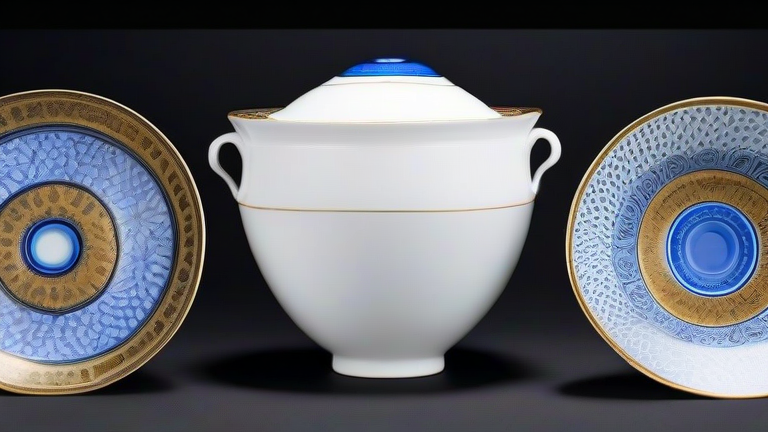
TL;DR: Porcelain’s 2,000-year journey from Chinese imperial kilns to global studios is now being rewritten by digital kiln control, AI glaze formulation, and 3D-printed molds that replicate ancient micro-cracks. The latest tech doesn’t replace artisans—it preserves the unpredictable “fire magic” while making production 40% more energy-efficient.
The Firing Revolution: Precision Meets Ancient Clay
Porcelain’s core recipe—kaolin, feldspar, quartz—has barely changed since the Tang dynasty. What has changed is the kiln. Modern electric kilns with silicon carbide heating elements now achieve 1,400°C with ±2°C variance, a spec that was unthinkable in wood-fired dragon kilns. This precision allows studios to replicate the famous “egg-shell” thinness of Yongle-era vases (0.8mm walls) without the 20% breakage rate of traditional firing. Sensors embedded in kiln shelves now measure thermal gradient in real-time, adjusting oxygen flow to create the exact reduction atmosphere that produces celadon’s jade-green or flambé’s crimson—a process once left to chance and decades of intuition.
If you want to dig deeper, check out our guide on Porcelain History & Culture: A Beginner’s Guide to Porcelain.
AI and 3D Printing: The New Ming Dynasty
The latest breakthrough is AI-driven glaze chemistry. Using spectroscopy data from 10,000 historical shards, machine learning models now predict how trace iron and copper oxides will react under specific cooling curves. In 2024, a Jingdezhen lab used this tech to recreate the lost “chicken liver red” glaze from Ming imperial records—a color that had defied reproduction for 400 years. Meanwhile, binder-jet 3D printing creates porous plaster molds with internal cooling channels, reducing casting time from 24 hours to 90 minutes. These molds also replicate the microscopic spiral marks left by ancient wheel-throwing, a texture that collectors pay a premium for. However, the human hand remains irreplaceable: AI still cannot predict the exact “warp” of a large vase during drying, so master throwers set the final shape before any digital assist.
Industry Impact: Sustainability and Heritage Data
The global porcelain market—valued at $18.2 billion in 2025—has seen a shift toward “tech-heritage” products. Brands like Royal Copenhagen now offer QR-coded pieces that link to a blockchain record of firing curves and clay provenance, fighting counterfeits that cost the industry $1.4 billion annually. More critically, waste heat recovery systems in modern tunnel kilns have cut energy use per kilogram by 38%, while AI-controlled glaze recycling reduces toxic wastewater by 60%. Yet the biggest disruption is digital archiving: LIDAR scans of 12th-century Song vases now feed generative design software, letting contemporary artists remix historical silhouettes with modern structural reinforcements—creating pieces that honor tradition but survive dishwasher cycles.
FAQ
Q: Can AI fully replicate a master porcelain artisan’s work?
A: No. AI can optimize glaze chemistry and firing schedules, but the artisan’s tactile judgment—how to center clay, when to stop trimming, how to feel moisture in the body—remains impossible to codify. Tech is a collaborative tool, not a replacement.
Q: Is 3D-printed porcelain considered “authentic” by collectors?
A: It depends on the definition. If the piece uses traditional clay and glaze but a 3D-printed mold, most auction houses accept it as “studio porcelain.” However, pieces that have zero hand contact are often classified as “ceramic art objects” and fetch 30–50% lower prices than wheel-thrown equivalents.
Q: What is the biggest risk of modern tech in porcelain?
A: Homogenization. If every studio uses the same AI glaze database, regional styles (like Japanese Hagi’s rough texture or German Meissen’s crisp relief) could disappear. The industry is now building “style-preserving” algorithms that penalize output deviating from a region’s historical variance—a digital guardrail
Leave a Reply