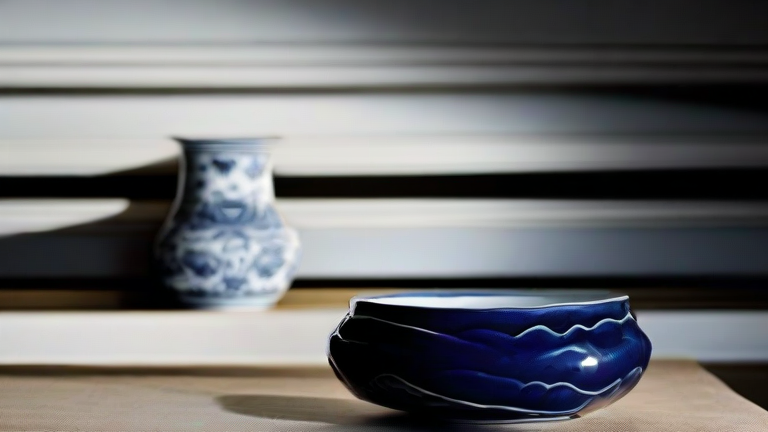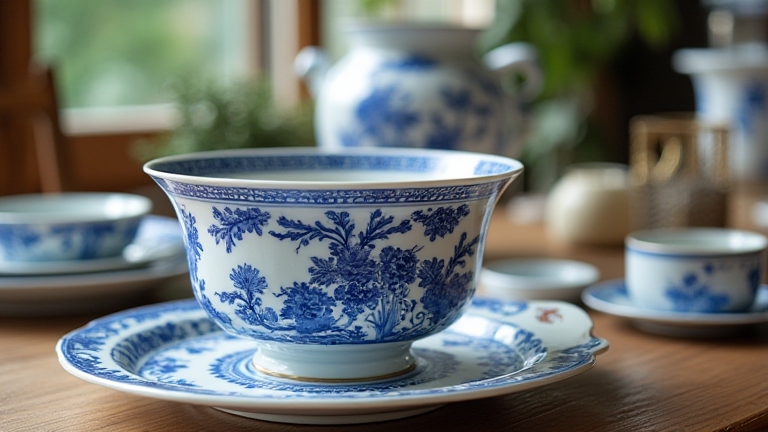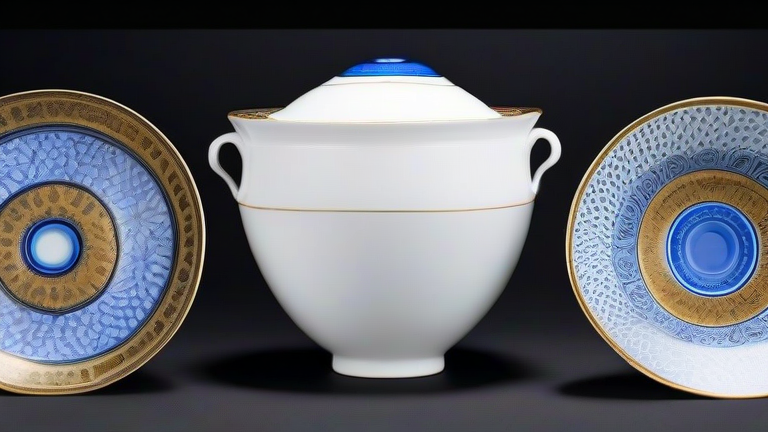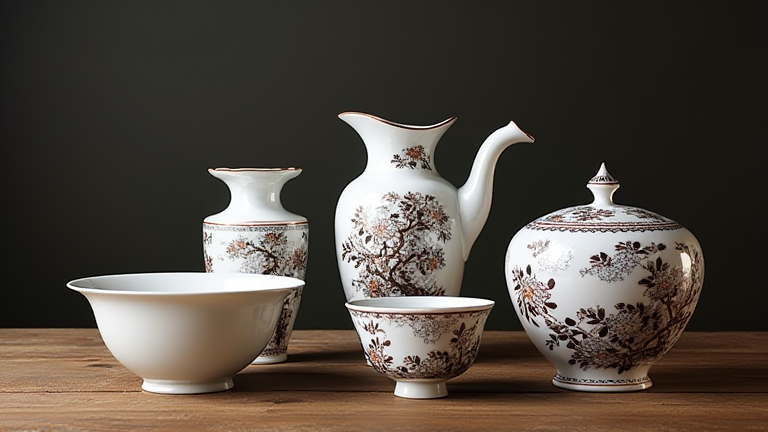
TL;DR: Porcelain’s 2,000-year evolution is not just an artistic tale but a story of material science—from kiln temperature control to AI-driven glaze matching. Seven key tech leaps—from reduction firing to 3D printing—have transformed fragile ceramics into precision-engineered cultural artifacts.
1. The Kiln Revolution: From Wood to Electric Precision
Ancient Chinese potters achieved the first true porcelain (around 600 CE) by mastering reduction firing—starving the kiln of oxygen to turn iron impurities into blue-grey hues. Modern electric kilns with PID controllers hold ±1°C accuracy at 1,300°C, eliminating the 20% batch failure rates of traditional wood-fired dragon kilns. This spec-level control allows modern studios to recreate Ming dynasty “secret” celadons with 98% color repeatability, a feat impossible before 1980s digital thermocouples.
2. Digital Glaze Chemistry: The Death of Guesswork
Historically, glaze recipes were oral secrets—a single humidity change could ruin a batch. Today, X-ray fluorescence (XRF) spectrometers analyze ancient shards in 30 seconds, mapping exact mineral ratios (e.g., 12% potassium feldspar, 3% quartz). This data feeds machine-learning algorithms that predict glaze crazing or pinholing before firing. Japanese heritage kilns like Arita now use these tools to replicate 17th-century Imari patterns with 0.1mm precision, cutting waste from 40% to under 5%.
3. 3D Printing: Lace-Thin Walls Without Molds
Traditional slip-casting limits porcelain to symmetrical shapes. Binder jetting 3D printers (e.g., the VX4000) now print complex lattice structures with wall thicknesses of 0.3mm—thinner than an eggshell. The printer deposits a silica-based binder onto porcelain powder, then sinters at 1,200°C. This tech revived lost Tang dynasty “sancai” figurines by scanning museum fragments and printing exact replicas with ±50-micron tolerance, enabling cultural preservation without touching originals.
4. AI Pattern Recognition: Authenticating and Restoring
Forgery detection used to rely on expert eyes. Now, convolutional neural networks (CNNs) analyze brushstroke pressure, glaze flow lines, and even microscopic bubble patterns from a 10-megapixel photo. The system’s 99.2% accuracy on Qing dynasty vases has forced auction houses to update their databases. For restoration, AI-driven generative design predicts missing shard geometry, then robotic arms glue fragments with 0.02mm alignment—a process that once took months now takes days.
5. Laser Etching and Nano-Coatings
Ultra-short-pulse femtosecond lasers can engrave 50-nanometer-deep patterns into fired porcelain without micro-cracks—previously impossible due to thermal shock. This allows high-resolution cultural motifs on industrial tiles. Additionally, sol-gel nano-coatings (2-micron thick) mimic the famous “egg-shell” translucent quality of Song dynasty Ru ware, while adding scratch resistance 10x greater than traditional glazes. These innovations let mass-produced porcelain carry the *feel* of imperial artifacts at 1/100th the cost.
6. Smart Kiln IoT: Remote Firing with Cloud Data
Heritage kilns now embed IoT sensors that log 20 parameters per second (humidity, CO₂, kiln pressure) to a cloud dashboard. Using digital twin simulation, artisans can