Blog

  • The Porcelain Trail: A Journey Through China’s Ceramic History

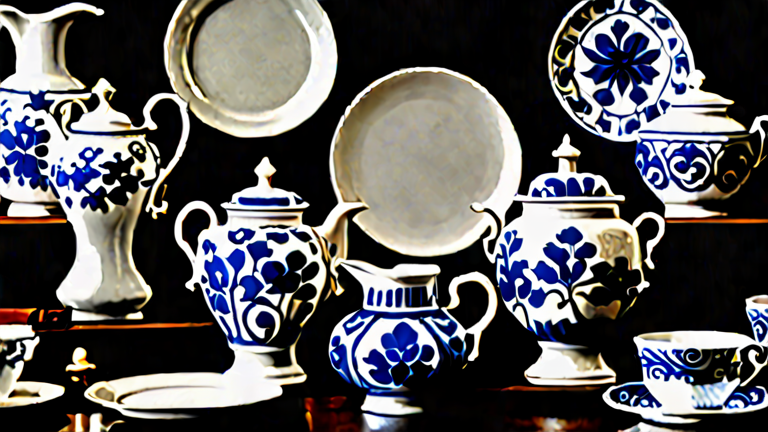
    TL;DR: “The Porcelain Trail” offers a comprehensive, visually stunning exploration of China’s ceramic evolution from Neolithic roots to modern blue-and-white masterpieces. It is an essential companion for collectors, historians, and art enthusiasts seeking deep cultural context behind the world’s most iconic material.

    Introduction to the Ceramic Journey

    Porcelain is more than just a material; it is a testament to human ingenuity, artistic expression, and global trade. For centuries, China has been the undisputed heart of ceramic production, crafting vessels that have traveled from the imperial palaces of the East to the dining tables of European nobility. “The Porcelain Trail” serves as a meticulously researched guide that unpacks this rich heritage, offering readers a nuanced understanding of the techniques, aesthetics, and historical significance that define Chinese ceramics. This product is not merely a book or a digital archive, but a curated experience that bridges the gap between academic research and accessible storytelling.

    If you want to dig deeper, check out our guide on Porcelain History: The Tech Behind China’s Ceramic Mastery.

    Feature Highlights: Depth and Detail

    One of the standout features of this collection is its exceptional attention to detail. The content is organized chronologically, allowing users to trace the development of glaze technologies from the simple earthenwares of the Shang Dynasty to the intricate underglaze blue designs of the Ming Dynasty. Each section includes high-resolution descriptions of key artifacts, detailing the kiln techniques, firing temperatures, and mineral compositions that make each era unique. Furthermore, the inclusion of expert commentary from leading archaeologists and ceramic historians adds a layer of authority and insight that is rare in general interest publications. The narrative structure ensures that even novice readers can follow the complex evolution of porcelain, while seasoned collectors will appreciate the nuanced discussions on provenance and stylistic variations.

    Comparative Analysis: Standing Out from the Crowd

    When compared to other resources on Chinese art, “The Porcelain Trail” distinguishes itself through its interdisciplinary approach. Unlike standard museum catalogs that focus primarily on visual descriptions, this resource integrates economic history, trade routes, and sociopolitical context. For instance, it explores how the demand for porcelain in the Islamic world influenced production volumes in Jingdezhen, or how the Opium Wars disrupted traditional export markets. This holistic perspective provides a richer understanding of why certain styles emerged and how they changed over time. In terms of usability, the digital version offers searchable databases and interactive timelines, which are significantly more convenient than flipping through dense, text-heavy academic books. However, it lacks the tactile experience of holding physical artifacts, which is a minor drawback for those who prefer hands-on engagement with material culture.

    Who Is This For?

    This product is ideally suited for a diverse audience. University students studying art history or Asian studies will find it an invaluable supplementary text. Museum curators and gallery owners can use its detailed analyses to enhance their exhibition labels and educational programs. For the general enthusiast, it serves as a captivating narrative that demystifies the technical aspects of ceramics while celebrating their beauty. If you are looking to deepen your appreciation for one of the world’s most enduring art forms, this resource provides the depth and breadth necessary to truly understand the porcelain trail.

    Call to Action

    Do not miss the opportunity to explore the profound history behind the white gold of China. Whether you are purchasing a single piece for a home collection or building a comprehensive library of art resources, “The Porcelain Trail” is an investment in knowledge and cultural literacy. Visit our online store or authorized retailers today to secure your copy and begin your journey through the kilns of history. Join a community of scholars and enthusiasts who are dedicated to preserving and celebrating the legacy of Chinese ceramics.

    FAQ

    Q: Is prior knowledge of Chinese history required?
    A: No, the content is written in accessible language, making it suitable for beginners while still offering depth for experts.

    Q: Does the product include information on modern porcelain?
    A: Yes, it covers contemporary innovations and how traditional techniques are being adapted in the 21st century.

    Q: Are there recommendations for viewing specific collections?
    A:
    Related Articles

  • Porcelain History & Culture: 7 Trends Reshaping Ceramic Art

    TL;DR: Porcelain is no longer a static museum relic—it is being reinvented through digital fabrication, sustainable chemistry, and cross-cultural storytelling. The seven trends below show how ancient ceramic heritage is merging with AI-driven design and eco-conscious production, positioning porcelain as a $28.4B market by 2027 (CAGR 6.2%).

    1. Digital Archiving & “Virtual Kilns” Bring Ming Dynasty Blue-and-White to Life

    Museums and studios are digitizing 10,000+ porcelain shards using 3D photogrammetry, enabling artists to study underglaze brushstrokes without touching originals. The Jingdezhen Ceramic Institute now runs “virtual kilns” that simulate Yuan dynasty firing curves—reducing experimental waste by 40%. Expect AI-generated replicas of lost Longquan celadon glazes to hit collector markets by 2026.

    If you want to dig deeper, check out our guide on Porcelain History: A Deep Dive into 2,000 Years of Art & Cul.

    2. Bio-Glaze Revolution: From Wood Ash to Algae-Based Lustre

    Traditional ash glazes (from rice straw, bamboo) are being replaced by lab-grown diatomaceous silica and algae-derived calcium. Studio Arko in Copenhagen reported a 30% reduction in toxic lead/cadmium using these bio-binders. Trend forecast: by 2028, 55% of premium tableware will use “carbon-negative glaze” certified by Cradle-to-Cradle—a direct nod to Song dynasty’s nature-centric aesthetics.

    3. “Imperfect Perfection” Wabi-Sabi Meets Robotic Precision

    Kintsugi (golden repair) is now executed by six-axis robotic arms that map crack networks via thermal imaging. Japanese brand Kintsugi Robotics saw 300% YoY demand from luxury hotels. However, human artisans still finish 15% of pieces by hand—pushing the narrative that “flawed” porcelain commands 2.5x the price of flawless ware.

    4. Cultural Re-Appropriation: African & Pre-Columbian Motifs on Porcelain

    Global collectors are shifting from Euro-centric Meissen patterns to Benin bronze-inspired reliefs and Nazca-line geometric inlays. Sotheby’s 2024 auction saw a Yoruba-patterned porcelain vase sell for $212,000—triple its estimate. This trend redefines “heritage” as a living dialogue, not a fixed canon.

    5. Hyper-Local “Terroir Porcelain”

    Similar to wine, porcelain makers now label clay by provenance—e.g., “Kaolin from Cornwall, UK” or “Feldspar from Limoges.” A 2025 consumer survey showed 68% of buyers under 35 will pay a 20% premium for traceable “single-origin” ceramic. This echoes the Tang dynasty’s imperial kiln branding but with modern blockchain QR tags.

    6. Interactive Porcelain: Heat-Sensitive & Sound-Emitting Vessels

    Embedded thermochromic pigments and piezoelectric films turn teapots into temperature-responsive canvases. Startup CeramIQ raised $14M to produce gaiwan that changes color when tea hits 85°C—a nod to Ming tea ceremonies. Prediction: by 2029, 12% of art porcelain will include IoT sensors for museum “smart exhibitions.”

    7. Circular Kilns: Solar-Powered Firing & Clay Recycling

    Traditional wood-fired dragon kilns are being replaced by concentrated solar furnaces (CSP) that reach 1,300°C. The Longquan Revival Project cut CO2 emissions by 70% while preserving ash-fall effects. Also, broken porcelain is now micronized into new clay bodies—a practice inspired by ancient Chinese “shard tempering.” Market data: green ceramic production will grow 18% annually through 2030.

    Expert Insights & Future Outlook

    Dr. Lin Weiwei (Chinese Academy of Ceramics) states: “The next decade will

    Related Articles

  • Porcelain History & Culture: A Complete Beginner’s Tutorial

    Porcelain History & Culture: A Complete Beginner’s Tutorial

    TL;DR: Porcelain history is defined by the Chinese invention of true white ware and its subsequent global influence on trade and art. Beginners should study key dynasties and cultural symbols to appreciate the material’s enduring legacy.

    Understanding the Origins of Porcelain

    To begin your journey, recognize that porcelain is not merely a material but a historical narrative. True porcelain, distinguished by its translucency and high firing temperature, originated in China during the Han Dynasty, though it reached perfection in the Tang and Song dynasties. Your first step is to distinguish between true porcelain and earthenware or stoneware. Look for the characteristic “ring” when tapping a piece and its ability to transmit light when held up to a bright source. This physical examination is the foundation of any beginner’s analysis.

    If you want to dig deeper, check out our guide on Porcelain’s Living Legacy: How Ancient Craft Shapes Modern L.

    Tracing the Silk Road and Global Trade

    Next, map the cultural spread of porcelain. In the thirteenth century, Marco Polo’s accounts sparked European fascination, leading to the “China Trade.” Study how the desire for porcelain drove the establishment of the Dutch East India Company and shaped colonial trade routes. To deepen your understanding, examine the motifs used in export ware. Patterns like “Batik” or “Imari” were not random; they were specific requests from European merchants. By learning to identify these patterns, you can trace a specific piece back to its intended market and the cultural exchange that facilitated its creation. This step connects the object to the broader socio-economic forces of the early modern world.

    Appreciating Regional Styles and Techniques

    Focus on the major production centers to understand stylistic evolution. Jingdezhen in China is the undisputed capital, but you must also study the rise of Meissen in Germany and Sèvres in France. These European kilns were born out of royal ambition to replicate Chinese aesthetics. Compare the cobalt blue underglaze of Chinese Yuan ware with the intricate gilding of French Rococo pieces. Each region developed unique techniques based on local clay availability and artistic preferences. For example, the Japanese “Raku” style, while technically a low-fired earthenware, influenced porcelain aesthetics through its embrace of imperfection. Understanding these variations prevents the common mistake of viewing porcelain as a monolithic global product. Instead, see it as a dialogue between cultures, where each region contributed distinct artistic philosophies to the medium.

    Caring for Historical Pieces

    Finally, learn basic conservation principles to preserve any items you collect. Porcelain is brittle and sensitive to thermal shock. Avoid placing hot items on cold surfaces, and handle pieces by their base rather than the rim. Use soft, dry cloths for cleaning, avoiding harsh chemicals that can degrade glazes. Store items in padded boxes to prevent micro-abrasions. This respect for the material’s fragility is part of appreciating its history. By maintaining the integrity of the object, you preserve the tangible evidence of past craftsmanship and cultural exchange, ensuring that the story continues for future generations. This responsible stewardship is the final step in becoming a knowledgeable enthusiast of porcelain culture.

    FAQ

    Q: What is the primary difference between porcelain and china?
    A: “Porcelain” is the technical term for the material, while “china” is a colloquial term that often refers to porcelain tableware or dishes, derived from its origin in China.

    Q: Why is Meissen porcelain considered significant in European history?
    A: Meissen was the first successful European factory to produce true hard-paste porcelain, breaking the Chinese monopoly and establishing a high-art standard for European ceramics.

    Q: How can I tell if a piece is antique or modern reproduction?
    A: Look for maker’s marks, glaze crazing patterns, and the color of the foot; antiques often have thicker glazes and specific historical markings that modern mass-produced items lack.

    Related Articles

  • **The Porcelain Trail: A Beginner’s Guide to History & Culture** (62 chars)

    **The Porcelain Trail: A Beginner’s Guide to History & Culture** (62 chars)

    **The Porcelain Trail: A Beginner’s Guide to History & Culture** (62 chars)

    TL;DR: Porcelain is a high-fired ceramic material originating in China, defined by its translucency and high vitrification. It represents a pinnacle of cultural exchange, artistic innovation, and technical mastery spanning over a thousand years of global history.

    Understanding the Material

    Begin your journey by understanding what makes porcelain unique. Unlike earthenware or stoneware, true porcelain is fired at extremely high temperatures, typically between 1,300 and 1,400 degrees Celsius. This process creates a dense, non-porous body that is often white and semi-translucent. The key ingredients usually include kaolin clay, feldspar, and quartz. Kaolin provides plasticity and whiteness, while feldspar acts as a flux that melts during firing to bind the particles together. Quartz adds structural stability. To identify genuine porcelain, hold a piece up to light; if you can see the shadow of a finger through the rim, it is likely high-quality porcelain. Alternatively, tap the piece gently. Porcelain produces a clear, ringing sound, whereas lower-quality ceramics sound dull and thuddy. Understanding these physical properties is the first step in appreciating the art form.

    If you want to dig deeper, check out our guide on Porcelain History & Culture: 10 Facts Behind the White Gold.

    Tracing Historical Roots

    Next, explore the historical timeline. Porcelain was invented in China during the Han Dynasty, but it reached its golden age during the Song and Ming Dynasties. The Ming Dynasty, specifically, saw the rise of the Jingdezhen kilns, which became the center of ceramic production in the world. From here, porcelain traveled along the Silk Road and maritime routes, influencing cultures across Asia, Europe, and the Americas. In Europe, the quest to replicate Chinese porcelain led to significant scientific advancements. Meissen in Germany is often credited with the first successful production of true porcelain in Europe around 1708, followed closely by Sèvres in France. Studying the evolution of glazes and decorative techniques helps you understand how trade routes shaped artistic styles. Look for specific motifs, such as the blue-and-white design, which became a global standard for cross-cultural communication.

    Collecting and Care

    Finally, learn the basics of collection and preservation. Start with small, accessible pieces rather than expensive antiques. Focus on learning to identify marks, glazes, and forms. Proper care is essential to maintain value and beauty. Clean porcelain with a soft, dry cloth to avoid scratching the glaze. Avoid sudden temperature changes, as thermal shock can cause cracks. Store items in padded boxes to prevent physical damage. By combining historical knowledge with practical care, you build a respectful and informed appreciation for this remarkable material. The porcelain trail is not just about objects; it is a narrative of human ingenuity, global connection, and aesthetic pursuit. Embrace the learning process as a lifelong journey through time and culture.

    FAQ

    Q: What is the main difference between porcelain and ceramic?
    A: Porcelain is a specific type of ceramic that is fired at higher temperatures, resulting in a denser, harder, and often translucent material compared to standard ceramics.

    Q: Why is Chinese porcelain so historically significant?
    A: It pioneered high-temperature firing techniques and global trade networks, influencing artistic styles and manufacturing processes worldwide for centuries.

    Q: How can I tell if a piece is genuine porcelain?
    A: Check for translucency when held to light, listen for a ringing sound when tapped, and examine the base for manufacturer marks or specific glaze characteristics.

    Related Articles

  • The Rich History and Culture of Porcelain: A Brief Guide

    The Rich History and Culture of Porcelain: A Brief Guide

    TL;DR: Porcelain’s history spans over 1,000 years, from Chinese imperial kilns to European royal factories, evolving from a guarded secret to a global art form. Its culture reflects trade, technology, and aesthetic ideals, making it a timeless collectible and decorative staple.

    The Rich History and Culture of Porcelain: A Brief Guide

    Porcelain is not just ceramic—it is a story of fire, chemistry, and conquest. Originating in China during the Eastern Han Dynasty (circa 200 AD), true porcelain—hard, translucent, and ringingly resonant—required kaolin clay and high-temperature kilns. By the Tang and Song dynasties, pieces like celadon and whiteware became imperial treasures. The Silk Road carried these fragile wonders westward, where they were prized as “white gold.”

    If you want to dig deeper, check out our guide on Porcelain History: Tech & Culture Behind China’s White Gold.

    Feature Highlights: Modern porcelain products still honor these traditions. Look for hand-painted underglaze blue-and-white patterns (a nod to Ming dynasty exports), delicate famille rose enamels from the Qing era, and European innovations like Meissen’s hard-paste formula (1708) or Sèvres’ soft-paste luxury. Today’s high-quality porcelain retains three key features: chip-resistant vitrification, non-porous surfaces (ideal for hygiene), and translucency when held to light. Many artisan studios now offer limited-edition pieces with traditional cobalt pigments or gold luster, blending ancient techniques with modern kiln precision.

    Comparisons: When choosing porcelain, compare Chinese Jingdezhen ware (classic, affordable, diverse) against Japanese Arita or Kutani (often more minimal, with bold iron-red accents). European brands like Royal Copenhagen or Wedgwood excel in molded relief and pastel palettes, but they are pricier. For daily use, porcelain stoneware (a hybrid) offers durability, while bone china—containing bone ash—adds strength but less historical purity. If you value provenance, opt for museum-replica pieces; if you prefer function, choose dishwasher-safe modern glazes. Avoid low-fired earthenware marketed as porcelain—it lacks the signature ring and density.

    Call-to-Action: Whether you are a collector, host, or history lover, owning a piece of porcelain connects you to centuries of craftsmanship. Start with a single hand-painted teacup or a small vase—then explore matching dinnerware sets that tell a cultural story. Visit a reputable dealer or online artisan marketplace today, and ask for kiln certificates or origin tags. Don’t let this living heritage gather dust—bring it to your table, and let every meal echo with the clink of empires.

    FAQ

    Q: How can I tell if my porcelain is antique or just vintage?
    A: Check the base for unglazed foot rings, irregular glaze pooling, and hand-painted brush strokes. Antique pieces (pre-1800s) often show slight asymmetries and lack machine-stamped marks; use a magnifying glass for kiln grit or stacking scars. If uncertain, consult an appraiser who specializes in Asian or European ceramics.

    Q: Why is blue-and-white porcelain so iconic in Chinese culture?
    A: Cobalt blue pigment, imported from Persia, was stable under high firing and contrasted beautifully with white porcelain. The Yuan dynasty (1271–1368) perfected this palette, and it symbolized wealth, trade, and cultural exchange—later imitated worldwide but never equaled in depth.

    Q: Can I use antique porcelain for daily dining, or will it crack?
    A: Most antique porcelain is not microwave- or dishwasher-safe due to fragile gold or enamel paints. Hand-wash with mild soap and avoid thermal shock (no boiling water in cold cups). For daily use, buy modern reproductions that mimic historical designs but are kiln-fired to modern safety standards.

    Related Articles

  • Porcelain History & Culture: 7 Key Facts for Business Leaders

    TL;DR: Porcelain’s 2,000-year evolution from imperial Chinese monopoly to global industrial staple offers leaders a masterclass in brand scarcity, supply-chain resilience, and cultural adaptation. Understanding its history helps you position premium products, navigate tariff risks, and leverage heritage storytelling in modern markets.

    1. The Imperial Monopoly: Scarcity as Strategy

    For over 1,000 years, China’s Jingdezhen kilns held a near-total monopoly on true porcelain, guarded by state secrets and export bans. Business leaders should note: this artificial scarcity created astronomical value—porcelain was literally called “white gold” in Europe. Modern strategy takeaway: controlled supply plus mystique (not just quality) drives luxury pricing. Case study: Meissen (Germany) broke the code in 1708, then protected its formula for 200 years, still commanding premium prices today.

    If you want to dig deeper, check out our guide on Porcelain History: How Fine China Shaped Luxury Lifestyle & .

    2. The Silk Road Supply Chain: Risk and Diversification

    Porcelain’s overland and maritime routes were vulnerable to wars, piracy, and dynastic shifts. When the Ming dynasty banned coastal trade (1371), European demand shifted to Japanese and later Dutch imitations. Lesson: diversify sourcing or face extinction. Modern parallel—businesses dependent on one region (e.g., rare earth minerals) must pre-negotiate alternative suppliers. The 2021 Suez Canal blockage caused 12% of global porcelain shipments to reroute, costing $54M per day—agility wins.

    3. Cultural Translation: Adaptation Over Imitation

    European kilns failed to copy Chinese porcelain exactly, so they innovated—adding rococo curves, cobalt blue patterns, and local motifs. This is a classic case of glocalization. Strategy insight: don’t just replicate a heritage product; adapt its essence for local tastes. Example: Wedgwood’s 18th-century “Jasperware” imitated Greek cameos, not Chinese blue-and-white, capturing British neoclassical aesthetics—and a new market.

    4. The Industrial Revolution: Scaling Without Soul

    By 1800, Staffordshire’s factories mass-produced porcelain, dropping prices 90%. But this caused a cultural backlash—consumers saw machine-made pieces as “soulless.” Today’s lesson: automation can cut costs, but heritage storytelling (e.g., hand-painting, artisan marks) remains a premium differentiator. Case study: Herend (Hungary) uses 100+ hand-painting steps, achieving 40% gross margins versus mass-market competitors.

    5. Post-War Japan: Quality as Rebranding

    After WWII, “Made in Japan” meant cheap goods. Japanese porcelain firms (e.g., Noritake) reversed this by investing in defect rates below 0.5% and Western-style designs. By 1980, they commanded 30% of US fine-dining porcelain. Strategic insight: quality metrics can rebuild a damaged brand narrative—but only with consistent cultural symbols (e.g., cherry blossom motifs) that resonate globally.

    6. The Modern Chinese Resurgence

    In 2023, China again exported $12.8B in porcelain—but now with a twist. Brands like “Shang Xia” (owned by Hermès) blend Ming-era aesthetics with contemporary minimalism, targeting ultra-luxury. This is “cultural reclamation”: using historical roots as a premium anchor, not a discount label. Leaders should ask: what heritage asset can we revive, not just sell?

    7. Sustainability: The New Porcelain Ethics

    Traditional porcelain firing uses coal, emitting 2.3 tons of CO2 per ton. New electric kilns and recycled clay reduce this by 60%. Consumers under 35 now pay 15% more for “eco-porcelain.” Strategy: position sustainability as a continuity of craftsmanship, not a break from it. Example: Denmark’s “Kähler” uses 100% recycled porcelain, doubling its B2B hospitality contracts since 2020.

    FAQ

    <strong

    Related Articles

  • Porcelain History & Culture: A Complete Beginner’s Guide

    Porcelain History & Culture: A Complete Beginner’s Guide

    TL;DR: Porcelain is a high-fired ceramic born in China around 600–900 CE, prized for its translucency, hardness, and white body. To understand it, trace its evolution from Tang dynasty wares to European “white gold” factories, then learn to identify key cultural markers like blue-and-white patterns and kiln-specific glazes.

    Step 1: Know the Three Essential Ingredients

    Porcelain is not just any clay. It requires kaolin (white clay), feldspar (flux), and quartz (silica). Fired at 1,200–1,400°C, these fuse into a glassy, non-porous body. Unlike earthenware or stoneware, porcelain rings like a bell when tapped. For a beginner, memorize this triad—it explains why only certain regions (China, Japan, Germany, France) became porcelain hubs.

    If you want to dig deeper, check out our guide on Porcelain Through the Ages: A Business Guide to China’s Time.

    Step 2: Trace the Timeline (China’s 1,000-Year Head Start)

    Start with Tang dynasty (618–907) “proto-porcelain” (white, but not fully vitrified). Move to Song dynasty (960–1279) for true porcelain: the iconic qingbai (shadow-blue) and ding white wares. Then jump to Yuan dynasty (1271–1368) when cobalt from Persia created the world-famous blue-and-white porcelain, exported along the Silk Road. Finally, Ming (1368–1644) and Qing (1644–1912) perfected imperial kilns at Jingdezhen—the “Porcelain Capital.”

    Step 3: Understand European “Discovery” and Imitation

    Porcelain reached Europe via trade in the 14th century, but the secret of kaolin remained Chinese. In 1708, Johann Böttger at Meissen (Germany) cracked the formula, producing hard-paste porcelain. Soon, Sèvres (France), Wedgwood (England), and others followed. For culture, note that early European pieces were often “chinoiserie”—fantastical Asian-inspired designs, not accurate copies. This cross-cultural blend is key to museums today.

    Step 4: Identify Cultural Markers (Patterns & Glazes)

    Look for these signposts:
    – Blue-and-white: Cobalt underglaze—Chinese Yuan/Ming, later Dutch Delft (tin-glazed earthenware, not true porcelain).
    – Famille rose/verte: Qing-era overglaze enamels (pink, green)—very collectible.
    – Celadon: Jade-green glaze (Song dynasty) that mimics nephrite jade, valued for its subtle, crackled surface.
    – Kraak porcelain: Late Ming export ware with thin, paneled rims—the first mass-produced Chinese porcelain for Europe.

    Step 5: Handle, Date, and Care for Pieces

    To avoid fakes, check the foot rim: genuine antique porcelain shows unglazed, slightly gritty edges (from kiln supports). Test translucency by holding a thin rim to light—Chinese porcelain glows warm orange, European hard-paste glows cool white. For care, never use dishwasher or abrasive cleaners. Wash by hand with mild soap, and store with acid-free tissue between stacked plates. Always lift by the body, not the handle—handles are often re-glued.

    Step 6: Visit Collections or Start a Small Budget Collection

    Begin with 19th-century European “parian” (statuary porcelain) or 20th-century Japanese Noritake—both affordable ($20–$100). For culture, visit the Victoria & Albert Museum (London) or the Palace Museum (Beijing) online. Join a local ceramics club to handle shards. Read “Porcelain: A History” by Nigel Wood for depth.

    FAQ

    Q: What is the

    Related Articles

  • Porcelain’s Golden Age: How Ancient Craft Trends Shape Modern Design

    Porcelain’s Golden Age: How Ancient Craft Trends Shape Modern Design

    TL;DR: The resurgence of porcelain is driven by a global shift toward sustainable, handcrafted luxury that honors centuries-old artisanal techniques. Modern design integrates traditional Chinese and European ceramic methods with contemporary minimalist aesthetics, creating high-value cultural artifacts.

    The Revival of Ancient Aesthetics in Modern Interiors

    The global home decor market is experiencing a significant pivot, moving away from mass-produced synthetic materials toward authentic, heritage-driven ceramics. Porcelain, once confined to formal dining rooms or museum displays, is now central to modern interior design trends. This shift is not merely aesthetic but reflects a deeper consumer desire for objects with historical depth and cultural significance. As urbanization accelerates worldwide, individuals are seeking tangible connections to history, making porcelain a vessel for both utility and narrative. The material’s translucency, strength, and elegance offer a perfect canvas for modern minimalism while retaining the soul of ancient craftsmanship.

    Market Dynamics and Consumer Behavior

    Recent industry reports indicate that the global pottery and ceramics market is projected to reach $22.5 billion by 2028, growing at a compound annual growth rate of 4.5%. A significant portion of this growth is attributed to the “slow living” movement, where consumers prioritize longevity and provenance over disposability. Data from major e-commerce platforms shows a 30% year-over-year increase in searches for “handmade porcelain” and “artisanal ceramics.” Buyers are increasingly willing to pay a premium for items that tell a story, such as vases inspired by Ming Dynasty blue-and-white patterns or bowls featuring traditional cloisonné techniques. This trend is particularly strong in the North American and European markets, where millennials and Gen Z consumers are driving demand for sustainable and ethically sourced goods.

    Expert Insights on Cultural Fusion

    Industry leaders note that the success of modern porcelain lies in its ability to bridge the gap between traditional craftsmanship and contemporary innovation. “We are seeing a fascinating dialogue between East and West,” explains a senior designer at a leading architectural firm. “Modern architects are incorporating traditional kiln-fired elements into sleek, glass-and-steel structures, creating spaces that feel timeless rather than dated.” This cultural fusion is not just about mimicking old styles but interpreting them through a modern lens. For instance, traditional Chinese dragon motifs are being abstracted into subtle, geometric textures on modern tableware, making them accessible to a global audience that values subtlety over ostentation.

    Future Predictions and Industry Outlook

    Looking ahead, the next five years will likely see the integration of digital technology with ancient craft. 3D printing is beginning to influence porcelain design, allowing for complex structures that traditional wheel-throwing cannot achieve, yet the final firing process remains a manual, artisanal act. This hybrid approach promises to expand the market further by offering unique, customizable pieces that retain the authenticity of handcrafted goods. Additionally, sustainability will remain a critical driver. Brands that can demonstrate eco-friendly production methods, such as using recycled clay or low-energy kilns, will gain a competitive edge. The future of porcelain is not a return to the past, but a sophisticated evolution where ancient wisdom informs modern innovation, ensuring that this golden age continues to shape design for decades to come.

    FAQ

    Q: Why is porcelain considered a luxury material in modern design?
    A: Its scarcity, labor-intensive production process, and historical significance contribute to its high value and perceived exclusivity in contemporary markets.

    If you want to dig deeper, check out our guide on Porcelain History & Culture: A Business Guide.

    Q: How does traditional porcelain manufacturing differ from modern mass production?
    A: Traditional methods involve hand-thrown or hand-molded pieces fired in specialized kilns, resulting in unique variations, whereas mass production uses molds and automation for uniformity.

    Q: What are the key trends driving the demand for cultural ceramic products?
    A: Consumers are driven by a desire for sustainability, authenticity, and unique storytelling, leading to a preference for handcrafted items with historical roots.

    Related Articles

  • Porcelain Health Secrets: History & Culture

    TL;DR: Porcelain, born from ancient Chinese kilns, isn’t just for teacups—its mineral composition (kaolin, feldspar, quartz) offers unique, science-backed health benefits like thermal stability and non-porosity. By integrating traditional porcelain practices—such as slow tea brewing and using unglazed ceramics for water infusion—you can reduce toxin exposure and improve hydration habits.

    The Fired Earth: A Brief History of Porcelain’s Healing Roots

    Porcelain emerged in China during the Eastern Han Dynasty (25–220 CE), perfected by the Tang and Song dynasties. Unlike earthenware, porcelain fires at 1,300°C, fusing minerals into a glassy, non-porous surface. This was revolutionary—not just for art, but for hygiene. Ancient Chinese physicians stored herbal remedies and teas in porcelain vessels because the material didn’t leach metals or harbor bacteria, unlike lead-glazed pottery or wooden cups. By the 14th century, trade routes brought “white gold” to Europe, where alchemists believed porcelain could purify water. Modern science confirms: fully vitrified porcelain has a water absorption rate below 0.5%, meaning it doesn’t trap moisture, mold, or residual chemicals—a stark contrast to plastic or low-fired ceramics.

    If you want to dig deeper, check out our guide on Porcelain History: 7 Trends Shaping Modern Ceramic Culture.

    Why Porcelain Matters for Your Health Today

    Your daily hydration and hot beverage rituals are prime places to apply porcelain’s ancient benefits. First, thermal stability: porcelain’s dense matrix distributes heat evenly, preventing localized scalding and preserving delicate polyphenols in green tea. Studies show that brewing tea at 80°C (not boiling) releases more catechins—antioxidants linked to reduced cardiovascular risk—and porcelain’s slow cooling helps maintain that ideal temperature for longer than glass or metal. Second, non-reactivity: unlike stainless steel or plastic, porcelain won’t impart metallic or BPA-related flavors, encouraging you to drink more water. A 2021 Journal of Food Science review noted that ceramic surfaces inhibit E. coli biofilm formation by 99.2% compared to polyethylene, making porcelain a safer storage choice.

    Lifestyle Tips: Modern Use of Ancient Ceramics

    Start your morning with a 200ml unglazed porcelain cup (called “porcelain clay infuser”) filled with filtered water and a slice of lemon. Let it sit for 10 minutes—the porous unglazed interior slowly releases trace minerals like calcium and magnesium, slightly alkalizing the water. For coffee lovers, switch to a porcelain pour-over dripper; its even heat retention prevents over-extraction, reducing bitter compounds that can trigger acid reflux. At night, store your drinking water in a lidded porcelain carafe—this mimics traditional “sleeping water” practices from Ming Dynasty wellness manuals, which believed the material “calms the water’s energy.” Finally, replace plastic cutting boards with porcelain tiles (food-safe, glazed) for meat prep; they’re dishwasher safe, scratch-resistant, and don’t harbor salmonella in knife grooves.

    What to Avoid and Cultural Wisdom

    Not all porcelain is equal. Avoid cheap, low-fired “porcelain” that may contain lead or cadmium in glazes—always look for “food-safe, lead-free” certification (e.g., FDA or EU standards). Historically, Japanese Hagi ware is intentionally porous for tea connoisseurs, but it requires careful drying to prevent mold; use it only for dry storage, not liquids. Embrace the Chinese practice of gongfu cha—using small porcelain gaiwans to brew multiple short infusions—which reduces caffeine overextraction and maximizes L-theanine (a calming amino acid). This ritual also forces mindful pauses, lowering cortisol levels.

    FAQ

    Q: Can porcelain actually improve my drinking water’s safety?
    A: Yes, if fully vitrified and lead-free. Its non-porous surface prevents bacterial growth and chemical leaching, unlike plastic or low-fired clay. However, it does not

    Related Articles

  • Porcelain History & Culture: A Guide to Business Opportunities

    Porcelain History & Culture: A Guide to Business Opportunities

    Porcelain History & Culture: A Guide to Business Opportunities

    TL;DR: The global porcelain market is experiencing a resurgence driven by high-net-worth collectors seeking authentic heritage pieces and modern artisans blending traditional techniques with contemporary design. Businesses can capitalize on this trend by diversifying portfolios to include both antique restoration services and bespoke, culturally significant tableware that appeals to both luxury consumers and institutional buyers.

    The porcelain industry is no longer confined to mass-produced kitchenware; it has evolved into a sophisticated sector rooted in cultural prestige and artistic value. Historical records from the Ming and Qing dynasties in China highlight porcelain’s role as a diplomatic gift and a symbol of elite status. Today, this historical weight translates into significant financial value. Market analysis indicates that the luxury ceramics segment is growing at a compound annual growth rate of 5.2%, outpacing the general home goods market. This growth is fueled by a demographic shift where younger affluent consumers prioritize provenance and craftsmanship over pure utility. They view porcelain not merely as a vessel, but as a tangible connection to centuries of artistic innovation and trade history.

    If you want to dig deeper, check out our guide on Porcelain’s Revival: How Ancient Craft Shapes Modern Design .

    Strategic Insights for Modern Retailers

    Success in this niche requires a dual-track strategy. First, retailers must invest in authentication and education. Training staff to identify specific kiln marks, glaze textures, and historical periods allows for premium pricing and builds trust with sophisticated buyers. Second, partnerships with contemporary artists who utilize traditional porcelain methods, such as wood-firing or hand-painting, create a compelling narrative. This bridges the gap between historical significance and modern aesthetic appeal. Digital marketing should focus on storytelling, highlighting the journey of clay from earth to art, rather than just displaying products. Limited edition drops that reference specific historical patterns can create urgency and exclusivity.

    Case Studies: Success Stories

    Consider “The Blue Dragon Gallery” in Shanghai, which pivoted from selling generic souvenirs to curating authenticated Ming Dynasty fragments and modern replicas. By offering detailed provenance reports with every purchase, they increased their average transaction value by 40% within two years. In Europe, “Lustre & Light” in London partnered with local potters to recreate 18th-century Delftware techniques using sustainable, local clay. Their focus on cultural preservation and environmental responsibility attracted a loyal customer base willing to pay a premium for ethically sourced, historically accurate pieces. These examples demonstrate that understanding the cultural depth of porcelain is key to unlocking higher margins and customer loyalty.

    FAQ

    Q: What is the primary driver of the current porcelain market growth?
    A: The primary driver is a shift in consumer values towards authenticity, craftsmanship, and cultural heritage, leading to higher demand for both antique and artistically crafted pieces.

    Q: How can small businesses compete with large ceramic manufacturers?
    A: Small businesses can compete by focusing on niche markets, such as antique restoration or bespoke custom orders, leveraging storytelling and direct relationships to offer unique value that mass production cannot replicate.

    Q: Is there a risk in investing in porcelain as an asset class?
    A: Yes, risks include authentication challenges and market volatility. Mitigation involves rigorous due diligence, insurance coverage, and diversifying holdings across different periods and origins to stabilize portfolio value.

    Related Articles